Iran Reimposes Restrictions on Strait of Hormuz Following US Blockade
Iran has reversed course on reopening the Strait of Hormuz, warning that it will continue to block transit through this critical waterway as long as the United States maintains its blockade of Iranian ports. The announcement on Saturday came after US President Donald Trump declared that the blockade "will remain in full force" until Tehran reaches a comprehensive deal with Washington, including on its nuclear program.
Escalating Tensions and Regional Conflict
This development follows Iran's brief reopening of the strait to commercial vessels on Friday. Approximately one-fifth of the world's oil passes through the Strait of Hormuz, and further restrictions could squeeze already constrained global supplies, potentially driving prices higher once again. The situation unfolds against the backdrop of a fragile 10-day truce between Israel and the Iranian-backed Hezbollah militant group in Lebanon, which appears to be holding despite ongoing tensions.
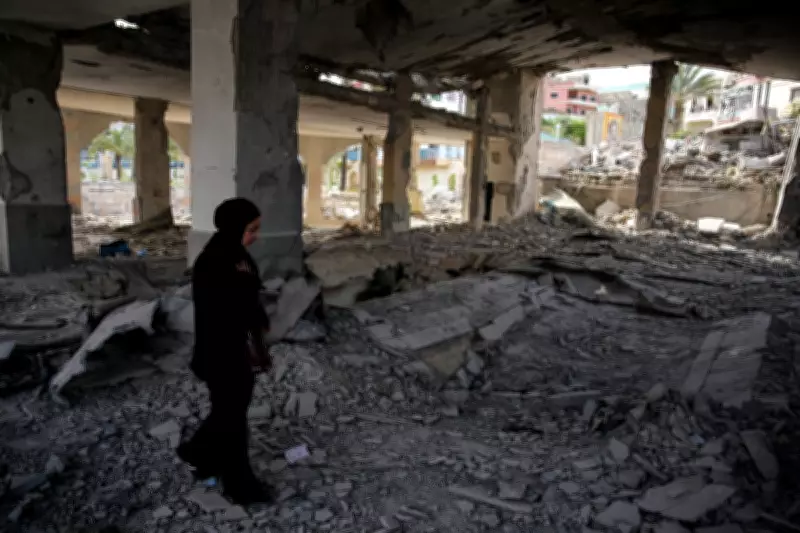
Violence in the region has resulted in significant casualties: at least 3,000 people killed in Iran, nearly 2,300 in Lebanon, 23 in Israel, and more than a dozen in Gulf Arab states. Additionally, thirteen US service members have lost their lives in the conflict.

Military Incidents and Diplomatic Maneuvers
In a related incident, the British military reported that two gunboats from Iran's Revolutionary Guard opened fire on a tanker transiting the Strait of Hormuz after Iran announced the reimposition of restrictions. The United Kingdom Maritime Trade Operations Centre confirmed that the tanker and its crew were safe, though it did not identify the vessel or its destination.
Meanwhile, diplomatic efforts continue. Pakistani officials indicate that the United States and Iran are still moving closer to a potential deal ahead of the April 22 ceasefire deadline. Pakistani Prime Minister Shehbaz Sharif recently concluded a visit to Turkey, where he discussed regional developments with Turkish President Recep Tayyip Erdogan and Qatari Emir Sheikh Tamim bin Hamad Al Thani ahead of the second round of US-Iran talks scheduled to take place in Islamabad early next week.
Iran's Conditions and International Response
Iranian officials have outlined specific conditions for transit through the Strait of Hormuz. Senior lawmaker Ebrahim Azizi stated that only commercial vessels authorized by the Revolutionary Guard are permitted to transit, and they must pay "required tolls" using a route established by Iran last month. He emphasized that "these regulations are determined by Iran, not by social media posts!"
In response, President Trump firmly rejected the notion of Iran imposing tolls or restrictions on the strait, stating, "Nope. No way. No. Nope. They're not going to be tolls."
Iranian Defense Ministry spokesperson Brig. Gen. Reza Talaei-Nik clarified that the Strait of Hormuz is only open during the ceasefire and conditionally, with military vessels and those linked to hostile forces having no right of transit.
Additional Developments
In other related news, Iran has announced a partial reopening of its airspace after a seven-week closure due to the conflict. The Civil Aviation Organization reported that air routes over eastern Iran were reopened, with flights at the country's airports gradually resuming, though no specific timeframe was provided.
Field Marshal Asim Munir, Pakistan's army chief, recently concluded a visit to Tehran, where he met with senior Iranian leaders, including President Masoud Pezeshkian, in an effort to ease tensions between Iran and the United States. Discussions focused on regional security and diplomatic efforts to promote lasting peace.
Lebanese leaders have also been engaged in talks regarding future negotiations with Israel. President Joseph Aoun and Prime Minister Nawaf Salam discussed Lebanon's "readiness for negotiations" during the ceasefire period, marking a significant step as the two countries have been in a state of war since 1948.