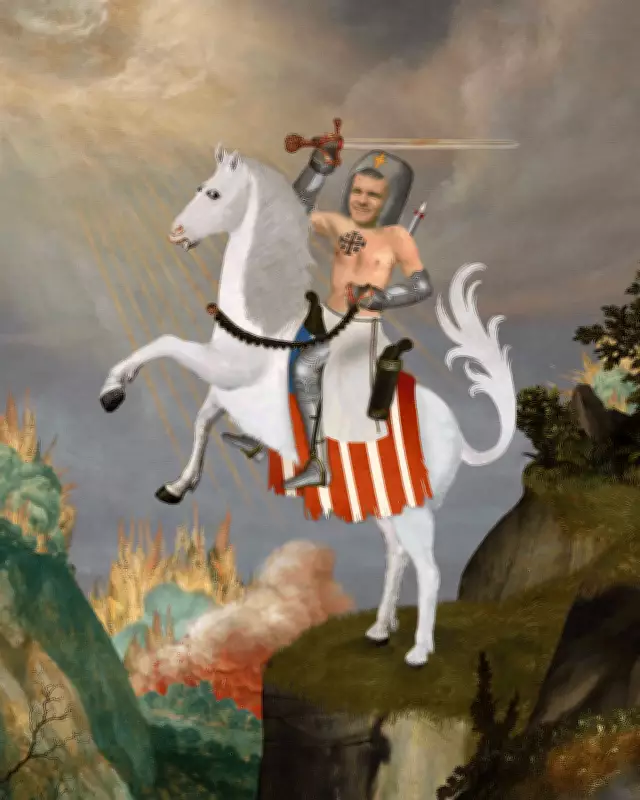
Pete Hegseth's Holy War: The Militant Christian Theology Behind US Actions in Iran
The United States Defense Secretary, Pete Hegseth, is overseeing a strategic engagement in the Middle East that many are questioning as a war or a crusade, driven by his deeply held Christian beliefs. Nine months before a Tomahawk missile struck the Shajareh Tayyebeh elementary school in Minab, Iran, killing over 175 people including children, Hegseth's personal pastor delivered a sermon at the Pentagon. Brooks Potteiger, his spiritual adviser, preached to military leaders about divine sovereignty, citing Matthew 10 and asserting that Jesus has final say over all events, including missile strikes.
Religious Justification for Military Actions
Despite evidence suggesting US responsibility for the school bombing on 28 February, neither Donald Trump nor Hegseth has accepted accountability or expressed remorse. Instead, Hegseth frames the Iran conflict, which reached a temporary ceasefire after six weeks, as divinely sanctioned. He repeatedly invokes "God's almighty providence" and claims God supports the US military, while boasting of superior firepower and dismissing rules of engagement. At a Pentagon worship service on 25 March, he prayed for "overwhelming violence of action against those who deserve no mercy," a statement that drew criticism from Pope Leo.
Hegseth, a 45-year-old army veteran and former Fox News host, belongs to a Calvinist evangelical wing that rejects papal authority and believes in predestination. Julie Ingersoll, a religious studies professor, explains that this group holds that God directs everything, even tragic events like school bombings. This theology raises questions about the motivations behind the war, as traditional geopolitical justifications seem insufficient given the predictable consequences, such as attacks on US bases and economic fallout from the Strait of Hormuz closure.

The Influence of Reformed Evangelicalism
Hegseth's religious journey began in 2018 when he joined an evangelical church in New Jersey, leading to his involvement with the Pilgrim Hill Reformed Fellowship, led by Pastor Potteiger. This church is part of the Communion of Reformed Evangelical Churches (CREC), which emphasizes hierarchy and elder authority over congregants. Ingersoll notes that CREC members do not embrace democracy or social equality, believing legitimate authority comes directly from God, not the consent of the governed.
Hegseth's worldview is shaped by Douglas Wilson, a pastor in Moscow, Idaho, who advocates for a theocracy based on "theonomy" or Christian governance. Wilson's extreme views include biblical patriarchy, opposition to women's suffrage, and support for harsh punishments for dissenters. His influence has grown, with CREC expanding to 150 churches worldwide, and Hegseth's adoption of these ideas is evident in his public statements and policies.
Militant Masculinity and National Policy
Historian Kristin Kobes Du Mez links Hegseth's ideology to a broader trend of militant masculinity in white evangelicalism, as detailed in her book Jesus and John Wayne. This movement, emerging from a sense of embattlement against social changes, glorifies violence and dominance in the name of righteousness. Hegseth embodies this ideology, combining religious certainty with a taste for military aggression, which Du Mez finds alarming given his position of power.
Hegseth's actions reflect a desire to establish Christendom, starting domestically. He often promotes the idea of the US as a Christian nation, citing apocryphal stories about George Washington, despite historical inaccuracies. Brian Kaylor, a Baptist editor, points out that the US Constitution explicitly separates church and state, making Hegseth's narrative contrary to foundational principles.
Christian Nationalism's Rise and Foreign Policy Implications
Christian nationalism enjoys significant support, with about one-third of Americans sympathetic to the idea of a Christian nation. The Trump administration has empowered figures like Hegseth, who represent a Reformed Calvinist wing, alongside other Christian nationalists such as Paula White-Cain and Steve Bannon. These groups share domestic goals like dismantling public education but differ on foreign policy, particularly regarding the Middle East.

Hegseth's post-millennialist beliefs drive his enthusiasm for re-establishing Christendom in Iran, while other evangelicals focus on end-times prophecies. Despite these differences, both camps support the war as a means to promote religious influence in state affairs. Hegseth's statement at the National Prayer Breakfast, linking military sacrifice to eternal life, echoes Crusader theology and has been criticized as heretical and dangerous.
Long-Term Consequences and Historical Parallels
As the Iran war heads toward a resolution that may leave the US in a weakened position, Christian nationalists are prepared for long-term battles, similar to their efforts against abortion rights and public education. Ingersoll warns that this movement is on the ascendancy, with little hope for a reckoning with the religious thinking that fueled the conflict. Unlike Abraham Lincoln, who acknowledged the ambiguity of divine support during the Civil War, Hegseth shows no sign of questioning his beliefs.
The war's outcome could become another "lost cause" for right-wing narratives, with blame shifted to Israel, NATO, or internal factors. Hegseth's purge of military leaders and focus on "woke" targets suggest a continued adherence to his ideological framework. As the US approaches the 250th anniversary of its founding, the contrast between Lincoln's call for peace and Hegseth's crusading rhetoric highlights the ongoing struggle over the nation's identity and values.