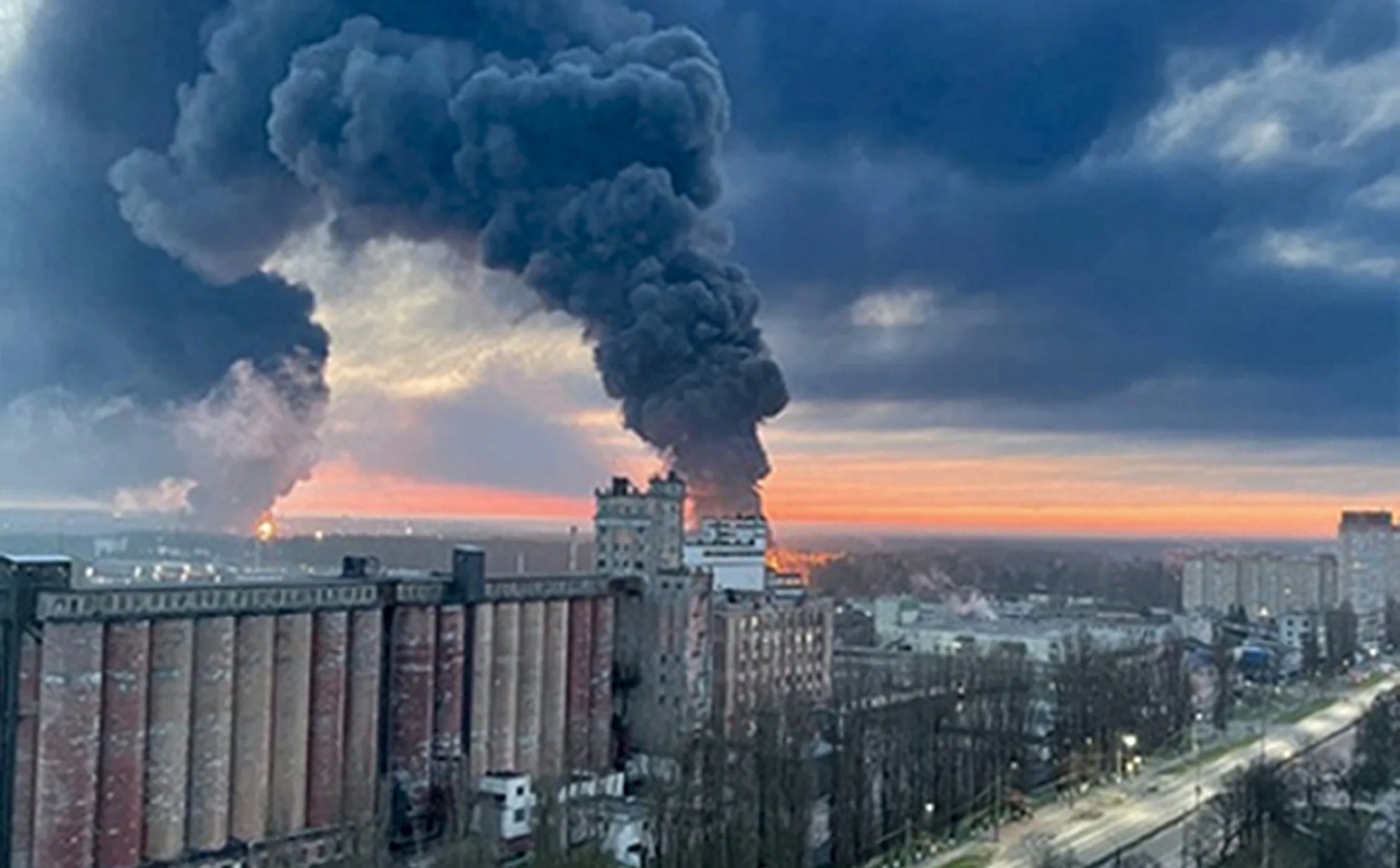
A series of fires and explosions at strategic sites inside Russia has reignited claims of sabotage, with experts suggesting internal dissent may be behind some incidents. The latest blast occurred at a fuel depot in Bryansk, a key logistics hub for Moscow's invasion of Ukraine, about 100 miles north-east of the border. Security camera footage appeared to show a missile track before the explosion, which a social media site linked to Russian security services attributed to Ukrainian drones.
Ukraine has not commented on the Bryansk incident, which follows a similar attack on a fuel depot in Belgorod earlier this month. UK Armed Forces Minister James Heappey said strikes on Russian supply lines were 'entirely legitimate' and that it was 'not necessarily a problem' if British-supplied weapons were used. He added that the blame lies with the country firing the weapon, not the manufacturer.
The apparent behind-enemy-lines operation is part of a growing pattern of damage to important facilities inside Russia, from railway signalling boxes to a missile research laboratory. Many of these sites are far beyond the range of Ukrainian weaponry, leading analysts to consider the possibility of an unfolding sabotage campaign. Last Thursday, a fire at the Central Research Institute of the Russian Air and Space Forces in Tver killed at least 17 people; the institute develops Iskander missiles used against Ukraine.
On the same day, the Dmitrievsky Chemical Plant in Kineshma was severely damaged by a blaze. Large fires have also been reported at an industrial complex housing rocket manufacturers in Korolyov and at an air force base in Ussuriysk. While Russia's dilapidated infrastructure and corruption often cause fires, some experts suspect internal discontent. Pavel Luzin, a commentator on Russian politics, said only the Belgorod attack could be credibly linked to Ukraine; other incidents may be the work of Russian citizens concerned about the war.
Confirming the cause of these incidents is complicated by the possibility of 'false flag' attacks staged by the Kremlin to justify reprisals. However, independent Russian media have reported fire bombings at five military recruitment centres since the invasion began, with one group of young men arrested for arson saying it was a protest against the war. Ukraine has publicly acknowledged some sabotage operations, but the full extent of internal resistance remains unclear.