Explosives Discovered Near TurkStream Pipeline in Serbia Amid Hungarian Election Tensions
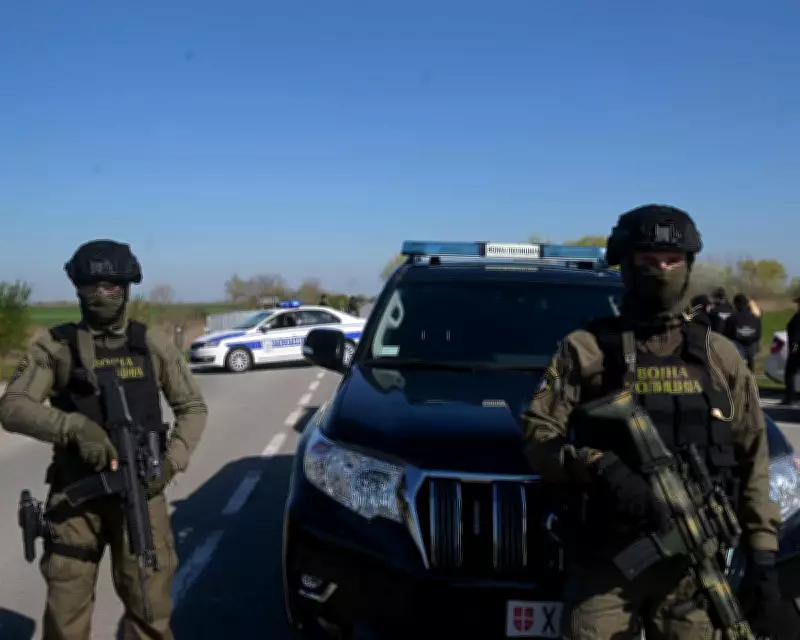
Serbian authorities have reported the discovery of "explosives of devastating power" near the TurkStream natural gas pipeline, which transports Russian gas to Hungary and other parts of central and eastern Europe. The incident has ignited political controversy in Hungary, where leading opposition candidate Péter Magyar has alleged a potential "false flag" operation aimed at swaying the country's pivotal parliamentary election scheduled for next Sunday.
Serbian Investigation and Hungarian Response
On Sunday, Serbian President Aleksandar Vučić announced that the Serbian army and police found two backpacks containing large packages of explosives with detonators in the northern municipality of Kanjiža, located just a few hundred metres from the gas pipeline. Vučić described this as a "threat to the critical gas infrastructure," noting that the explosives could have endangered lives and caused significant damage. He informed Hungarian Prime Minister Viktor Orbán of the initial findings, though he did not disclose the origins of the explosives, citing undisclosed "certain traces."
In response, Orbán convened an emergency meeting of Hungary's defence council and stated on social media that an investigation is underway. He characterised the incident as a prepared "act of sabotage" and linked it to broader tensions, remarking that "Ukraine has been for years trying to cut off Europe from Russian energy," though he stopped short of directly blaming Kyiv.

Political Scrutiny and False Flag Allegations
The timing of the discovery, with Orbán trailing in polls ahead of the election, has prompted intense political scrutiny. Péter Magyar, who leads the Tisza party and is challenging Orbán's 16-year rule, claimed on social media that he had been warned by multiple sources about a potential incident in Serbia around Easter, possibly involving the gas pipeline and allegedly carried out with Serbian and Russian assistance. Magyar accused Orbán of attempting to instil fear through false-flag operations, asserting that "Hungarians have every reason to fear that the outgoing prime minister, following the advice of Russian agents, is attempting to instil fear in his own people."
These claims were echoed by analysts and critics. Mujtaba Rahman, managing director for Europe at Eurasia Group, suggested on social media that the incident "looks like a seemingly convenient threat of terrorist action" designed to whip up fear of military action against Hungary, potentially blaming Ukraine. Independent MP Ákos Hadházy dismissed the news as "completely transparent and pathetic," while investigative journalist Szabolcs Panyi urged caution, noting that sources had previously warned of a Russia-backed false flag attack targeting the pipeline.
Broader Context and International Reactions
The incident occurs against a backdrop of heightened campaign rhetoric. In February, Orbán claimed without evidence that Ukraine was plotting to disrupt Hungary's energy system, leading to troop deployments to safeguard infrastructure. He has also accused Ukraine of delaying repairs to the Druzhba oil pipeline and blocked EU approval of a €90bn loan to Ukraine over the feud.
Hungarian Foreign Minister Péter Szijjártó pointed to Ukraine's actions but did not directly blame them for the latest incident, citing past energy blockades. Meanwhile, Ukraine's foreign ministry rejected any link to the event, stating on social media that it was likely "a Russian false-flag operation as part of Moscow's heavy interference in Hungarian elections."
Internationally, the situation has drawn attention as the White House prepares for a visit by JD and Usha Vance to Hungary, seen as an effort by the US vice-president to bolster Orbán in the polls. The US administration has historically supported Orbán, with former President Donald Trump endorsing him as a "fantastic guy" and "strong, powerful leader." Recent reports, including from The Washington Post and The Guardian, suggest Russian efforts to influence the election, such as proposed assassination attempts and disinformation campaigns targeting Orbán's opponents.

Election Stakes and Future Implications
The election pits Orbán and his Fidesz party, who emphasise the threat from the war in Ukraine, against Magyar and the Tisza party, who focus on economic stagnation, social services, and corruption. With Orbán facing an unprecedented challenge, the Serbian claims could significantly impact the final days of the campaign, raising questions about security, foreign interference, and the integrity of the electoral process.
As investigations continue, the incident underscores the complex interplay between energy security, political manoeuvring, and international relations in the region, with potential ramifications for Hungary's future direction and its ties with Europe and beyond.