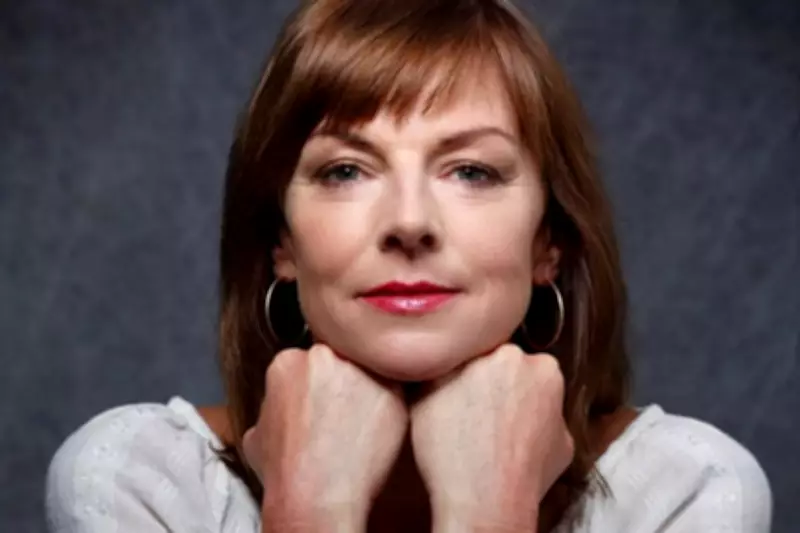
Doon Mackichan: A Forceful Voice Against Sexism in Television
"I'm very bad in interviews," confesses Doon Mackichan, approximately halfway through our conversation. She is referring specifically to television interviews, one hopes. Mackichan has featured in numerous iconic British comedies over the past three decades, including I'm Alan Partridge, Two Doors Down, and Toast of London, alongside films like The Borrowers. Yet, she is rarely seen on chat shows. "I find them excruciating," she states firmly. "There's always pressure to be funny. But perhaps I want to discuss militant politics!"
It swiftly becomes evident that Mackichan is anything but poor at interviews. She is open, expansive, humorous, and unapologetically feminist. Our setting, a comfortable meeting room in the upper levels of the National Theatre, certainly helps. Her politics are not excessively militant, though friends and family once nicknamed her "Millie Tant" after the Viz comic caricature. Now aged 63, Mackichan dismisses the notion that people grow more conservative with age as a "myth—especially now."
"People justify private schools or second homes," she observes. "We're all hypocrites. I still fly; I'm not hardcore. But if anything, I'm moving further left." This perspective aligns perfectly with her current project: a revival of Maxim Gorky's 1905 anti-rich satire, Summerfolk, at the National Theatre.

Summerfolk: A Timely Political Satire
Mackichan describes the play as "like a more political Chekhov," while others have likened it to "The White Lotus set in pre-revolutionary Russia." The cast includes Alex Lawther, Paul Ready, and Sophie Rundle. Mackichan portrays a poet drifting through a life of opulent lethargy. "But the revolution is imminent," she explains. "These characters are about to be obliterated. Gorky skewers their hypocrisy and entitlement without cruelty. I find it profoundly feminist."
The role has required her to relearn the piano, an instrument she played as a child. She displays her well-worn sheet music, noting the play's relevance in contemporary Britain, where wealth inequality approaches a political breaking point. A recent Oxfam report revealed that the UK's wealthiest 56 individuals hold more wealth than 27 million others combined.
"Summerfolk finds its moment every decade, and this is undoubtedly the right moment," Mackichan asserts. "You might see entitled people drifting onstage and question the point. But it's intensely political." She repeatedly mentions "looming doom"—the idea of the rich living in blithe tranquillity while political and environmental turmoil approaches. "One character declares, 'We're lunch, my friends. We're over.' Unless we change, we're over too. There's much to fight for, even if it's overwhelming. This play urges us not to disengage from the looming doom."
Career Reflections and Controversial Comedy
Despite discussing grave topics, Mackichan radiates an ineffable liveliness. Dressed casually in a tracksuit, her face frequently breaks into a bright, impish grin. Her distinctive first name—actually Sarah—became the title of her 1996 radio series, Doon Your Way, a "silly comedy with lots of characters." Inexplicably, the show prompted a record number of complaints to BBC Radio 4.
"I was genuinely shocked," she recalls. "It was entirely unexpected, primarily from Christians angered by a young Christian character I portrayed. I was irreverent, discussing female bishops and homosexuality. It was near the knuckle, provoking furious responses." One individual even threatened, "If there was such a thing as a Christian fatwa, I would launch it against Doon." Mackichan widens her eyes. "Religion can become dangerously intense."
Turning Down Hollywood and Personal Struggles
Born in London and raised in Scotland, Mackichan began performing in theatre and comedy routines, described in her 2023 memoir My Lady Parts as a mix of "physical humour, sexual politics, misogynistic raps, beatboxing, and fighting Ken and Barbie dolls." Collaborations with Chris Morris on The Day Today and Brass Eye boosted her profile, as did various roles in Alan Partridge iterations.

In 1999, she co-created Smack the Pony with Fiona Allen and Sally Phillips, winning two Emmy awards. "We won nothing here; we were seen as too challenging," she notes. "But America adored us." Offered a US agent alongside Hugh Laurie, Mackichan declined. "I had two young children, and my husband was in musical theatre. It felt like too much. Family came first."
She reflects somberly, "I regret it now... I could have been the lead in The Night Manager." Yet, she acknowledges the futility of dwelling on paths not taken. She had three children with Anthony Barclay, divorcing in 2005 after their son's leukaemia diagnosis at age nine, which strained the marriage irreparably. Thankfully, their son recovered fully.
Standing Firm Against Industry Pressures
Mackichan's refusal to move to America underscores her resolute willingness to say "no," whether to agents or directors. She recalls an ITV drama where she was asked to remove a towel in a sauna scene. "We now have intimacy coaches to protect actors," she says. "If I hadn't fought that battle, you would have seen me naked on an ITV drama, and it would still circulate online."
She views this as symptomatic of broader TV industry issues. "There's excessive gratuitous use of female flesh on TV, and extreme sexual violence. I refuse to watch any of it—zero tolerance—because it affects culture profoundly." Recent TV work includes Two Doors Down and Good Omens, while her last theatre role was in David Mamet's Bitter Wheat in 2019.
I'm a Celebrity... Get Me Out of Here! has approached her multiple times, but she consistently refuses. "Not for a single second," she insists. "I'd live in a nicer house, but I loathe that sort of television. It has eroded art from TV, replacing it with police dramas and reality shows. Where are the one-off plays that move and change people?"
Despite her firm stance, she admits with a smile, "But I watch Gogglebox." Even for Doon Mackichan, some indulgences are irresistible. Summerfolk runs at the National Theatre until 29 April.