US Democrats Urge Europe to Resist Trump's 'Wrecking Ball' Diplomacy at Munich Summit
Prominent US Democrats are set to use the Munich Security Conference this weekend to urge European leaders to stand firm against Donald Trump's foreign policy, as transatlantic tensions escalate over the unpredictable president's approach. The delegation includes some of Trump's most vocal critics, such as California Governor Gavin Newsom, New York Congresswoman Alexandria Ocasio-Cortez, Arizona Senator Ruben Gallego, and Michigan Governor Gretchen Whitmer.
Newsom's Blunt Warning to European Allies
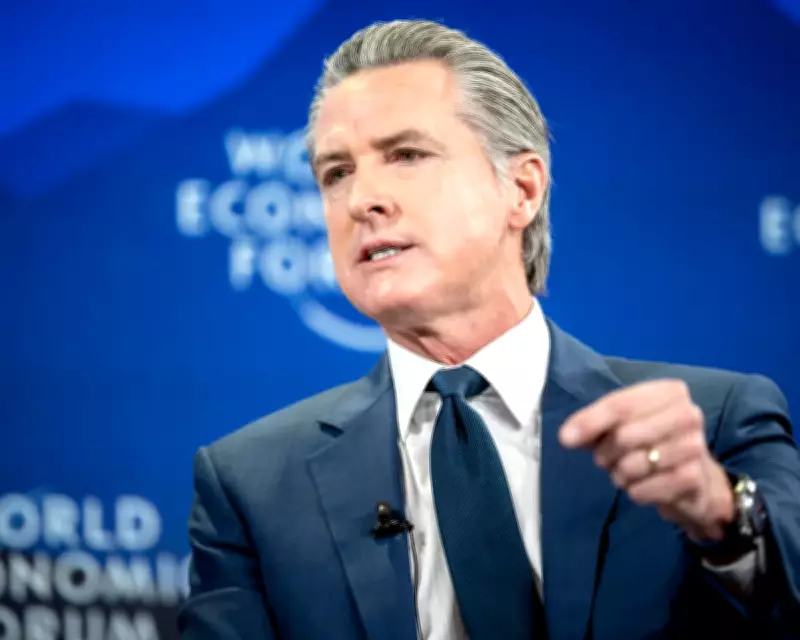
Gavin Newsom has already issued a stark warning to Europeans, stating that "grovelling to Trump's needs" makes them "look pathetic on the world stage." Speaking at the World Economic Forum in Davos last month, Newsom remarked he "should have brought a bunch of knee pads" to illustrate his point. His comments highlight growing Democratic frustration with European attempts to accommodate Trump.
Ruben Gallego echoed this sentiment, arguing that Trump's actions are "destroying our world reputation or potentially our economic might around the world because he is being petty. None of this is rational. Everyone needs to stop pretending this is rational." These forthright statements signal a departure from traditional diplomatic restraint at the Munich summit.

European Divisions Over Trump's Foreign Policy
European leaders are deeply divided on how to handle Trump's "wrecking ball politics," as described by Munich organisers. French President Emmanuel Macron advocates for a more defiant diplomacy, recently labelling the Trump administration as "openly anti-European" and seeking the EU's "dismemberment." Macron emphasised that bowing down or seeking settlements has not worked, pointing to tensions over Trump's threats regarding Greenland.
In contrast, NATO Secretary General Mark Rutte insists that maintaining Trump's goodwill is indispensable for European security, stating that Europe cannot defend itself without US support. This split reflects broader uncertainty about the future of transatlantic relations.
The US Delegation and Diplomatic Tensions
The US delegation to Munich will be led by Secretary of State Marco Rubio, with European leaders hoping for a more emollient message than last year's speech by Vice-President JD Vance. Vance's address sparked debates over whether the US and Europe still share common values, a question that has only intensified since Trump's repeated insults towards the EU, resource imperialism, and excuses for Vladimir Putin.
Rubio's choice to visit Hungary and Slovakia—two EU states opposing bloc support for Ukraine—further complicates matters. Traditionally, US delegations avoid airing domestic political differences at Munich, but this year, Democrats are likely to side with Europe in rejecting what they see as Trump's coercive diplomacy.
Broader Implications for Global Order
The Munich conference, featuring speakers like German Chancellor Friedrich Merz, UK Prime Minister Keir Starmer, and European Commission President Ursula von der Leyen, will focus on this geopolitical interregnum. Many in the West believe the old rules-based order has been replaced by a deals-based system where great powers assert their might. As Canadian Prime Minister Mark Carney noted at Davos, "We know the old order is not coming back... Nostalgia is not a strategy."
European efforts to distance themselves from America are already underway. Carney, Starmer, and Macron have sought to reset relations with China, recognising Beijing's potential to benefit from Trump's dismantling of multilateralism. Additionally, Italy and Poland have refused to join Trump's Board of Peace, signalling a willingness to pursue independent paths.
Ukraine and European Security Dilemmas
Europe's future remains tightly bound to Ukraine's fate. Trump has demanded a peace deal on Putin's terms within months, with Vance declaring it "not our war," forcing Europe to confront stark choices. While defence spending is increasing, effective rearmament will take time, and credible security guarantees for Ukraine still require US commitments.

As Macron argues, waiting for Democrats to return to power will not save Kyiv. The Munich summit thus becomes a critical forum for navigating these challenges, with Democrats urging Europe to resist Trump's diplomacy while grappling with their own internal divisions and the shifting global landscape.