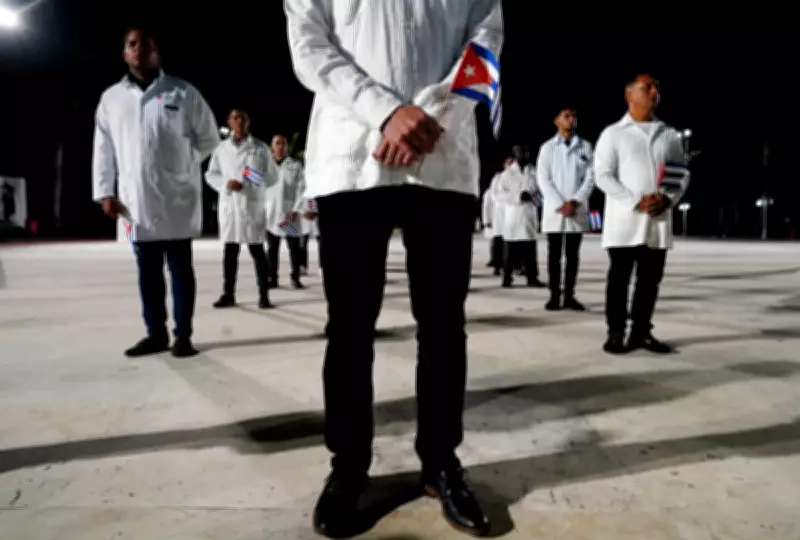
Cuban doctors participated in a farewell ceremony in Havana on 10 February 2023 before departing for Turkey to assist in earthquake relief efforts, highlighting the island's ongoing international medical missions. This event underscores a program that has been a cornerstone of Cuba's foreign policy and economy for decades.
US Accused of Pressuring Latin America to Sever Ties
Cuba's foreign minister, Bruno Rodríguez, has accused the United States of "extorting" Latin American countries by pressuring them to cancel long-standing agreements with Havana for the supply of doctors. Rodríguez claims the US is attempting to "strangle" Cuba's economy, which relies heavily on earnings from these medical missions. Several nations, including Guatemala, Honduras, Jamaica, and Guyana, have recently terminated their partnerships with Cuba, partly due to this pressure and Cuba's economic struggles exacerbated by a US energy blockade.
Economic and Political Stakes
The Cuban medical program, initiated in the 1960s, is a major source of pride and income, projected to generate $7 billion in earnings last year for the cash-strapped island. According to official figures, about 24,000 Cuban healthcare professionals were deployed in 56 countries in 2025, with most sent to remote areas. Half of these were stationed in Venezuela, Cuba's top ally until President Nicolás Maduro was abducted by US forces in January, further straining regional dynamics.

Human Rights Concerns and Forced Labor Allegations
Washington argues that the program amounts to forced labor, a stance reinforced by a recent report from the Inter-American Commission on Human Rights (IACHR). The report, published on Tuesday, denounces serious human rights violations, accusing Cuba of withholding doctors' wages, confiscating passports, and threatening medics with up to eight years in prison if they defect. IACHR president Edgar Stuardo Ralón stated in an interview with AFP that some practices could be classified as "forced labor" and "human trafficking." Official Cuban statistics cited in the report indicate doctors receive only between 2.5% and 25% of what countries pay Cuba for their services.
Cuba's Defense and Solidarity Claims
In response, Cuba has defended the program as a measure of "solidarity" with other nations, designed to provide health services to "hard-to-reach places." Rodríguez emphasized this on social media, stating, "The US government is persecuting, pressuring, and extorting other governments to end the presence of Cuban Medical Brigades in various countries, under false pretenses." This defense aligns with Cuba's historical role in global health diplomacy, despite ongoing controversies.
Broader Implications and Regional Impact
The US stance is part of a broader campaign of maximum pressure on the Cuban regime, initiated under former President Donald Trump, who has made threats about "taking" the island. Countries seeking to maintain strong ties with Washington have started yielding to pressure, disrupting medical partnerships that have existed for years. This situation highlights the complex interplay between geopolitics, human rights, and economic interests in Latin America and the Caribbean, with potential long-term effects on healthcare access in underserved regions.