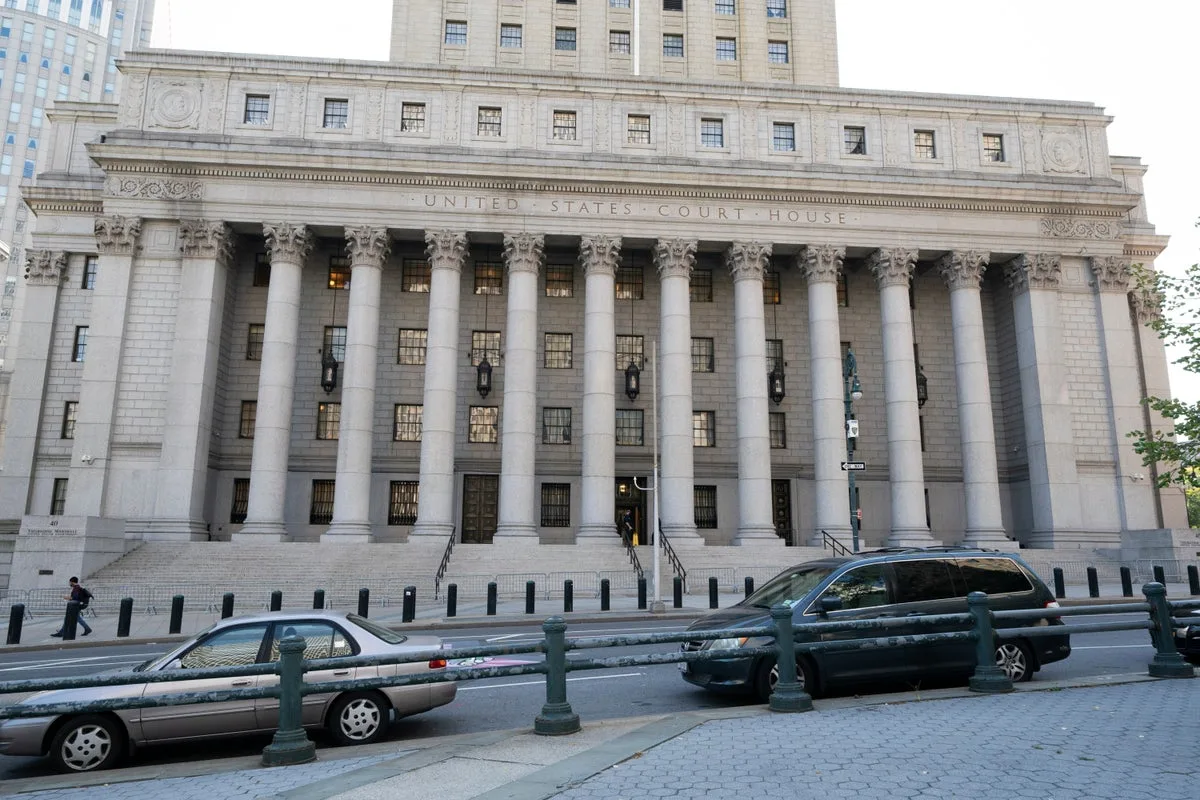
Appeals Court Reinstates $656 Million Judgment Against Palestinian Authorities
A federal appeals court has reinstated a substantial $656 million judgment against the Palestine Liberation Organization (PLO) and the Palestinian Authority. This decision comes in favor of American citizens who were killed or wounded in a series of terror attacks in the Middle East.
Legal Background and Supreme Court Influence
The ruling from the 2nd U.S. Circuit Court of Appeals marks a significant reversal, occurring a full decade after it initially dismissed a verdict against these Palestinian entities. Previously, the court had argued that U.S. courts lacked jurisdiction to hear lawsuits against foreign groups concerning overseas attacks not directly targeting the United States.
However, the appeals court has now reinstated the judgment, citing a pivotal Supreme Court ruling from last June. That Supreme Court decision upheld a 2019 law enacted by Congress, which explicitly allows victims' lawsuits to proceed against the PLO and Palestinian Authority in American courts.
Court Decision and Legal Statements
In a decision dated March 30, the judges stated, "We conclude that the original judgment for the plaintiffs should be reinstated. That conclusion is consistent with the plain import of the Supreme Court’s decision." This reinstatement avoids the need for a new trial, providing a direct path forward for the plaintiffs.
Attorney Kent Yalowitz, representing the victims' families, expressed relief in an email, saying, "Our client families are very relieved that the court has reinstated the judgment without requiring a new trial. They have been waiting for a very long time for justice to be done." Another attorney for the plaintiffs, Nitsana Darshan-Leitner, noted her satisfaction after 22 years of protracted litigation.
Basis of the Lawsuit and Ongoing Disputes
The victims filed their lawsuit under the Anti-Terrorism Act, a law signed in 1992 designed to open U.S. courts to victims of international terror attacks. They assert that Palestinian agents were either directly involved in the attacks or incited them, leading to the injuries and fatalities.
Conversely, Palestinian authorities have consistently argued that such cases should not be permitted in American courts, maintaining their position against the jurisdiction of U.S. legal systems. As of Sunday, emails seeking comment were sent to attorneys for the defendants, with responses pending.
This case underscores ongoing legal and diplomatic tensions, highlighting the complex interplay between international law, terrorism legislation, and the pursuit of justice for victims across borders.






