Prime Minister Carney Condemns Air Canada CEO's English-Only Condolence Message
Canadian Prime Minister Mark Carney has publicly criticized Air Canada CEO Michael Rousseau for what he described as a "lack of compassion and judgement" in his response to a tragic aviation accident. The controversy stems from a condolence video released by Rousseau following Sunday's deadly crash at New York's LaGuardia Airport, which was delivered entirely in English with only minimal French subtitles.
Official Languages Committee Summons CEO
Rousseau is now facing parliamentary scrutiny after being summoned to testify before Canada's official languages committee. The four-minute video, shared online in the aftermath of the crash, contained just two French words: "bonjour" and "merci." This has sparked significant backlash, particularly given that one of the two pilots killed in the accident, Antoine Forest, was a French-speaking Quebecer.
The tragic incident occurred when an Air Canada Jazz flight, piloted by Forest and Mackenzie Gunther, collided with a fire truck on the runway during landing procedures on Sunday evening. Both pilots lost their lives in the crash.

Bilingual Responsibility Questioned
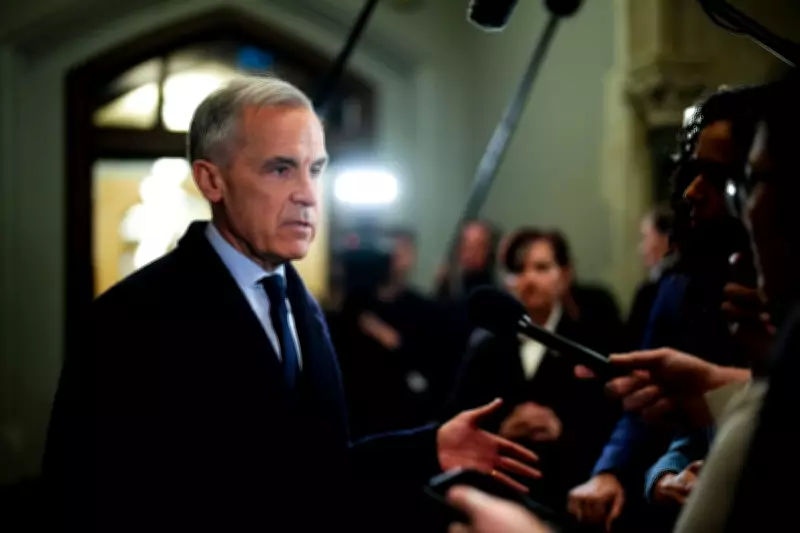
Prime Minister Carney emphasized Canada's bilingual nature during his Wednesday statement, noting that Air Canada has a special responsibility to communicate in both official languages regardless of circumstances. "We proudly live in a bilingual country," Carney stated. "There are two official languages here and Air Canada has a special responsibility whatever the situation to communicate in both official languages."
Carney expressed extreme disappointment with Rousseau's message, adding that the government would be closely monitoring his upcoming testimony before the official languages committee as well as responses from Air Canada's board of directors.
Historical and Cultural Context
The controversy touches on deep-seated cultural sensitivities in Quebec, where approximately 80% of residents speak French as their primary language. Quebec's linguistic identity has been a contentious issue since British forces completed their takeover of New France in the 1760s. Air Canada's headquarters are located in Montreal, Quebec, further amplifying expectations for bilingual communication from the airline's leadership.
This is not the first time Rousseau has faced criticism for his language use. The CEO has previously been admonished for not speaking French adequately, despite leading a company based in Canada's predominantly French-speaking province.
Government and Public Response
The Office of the Commissioner of Official Languages has received hundreds of formal complaints about Rousseau's video, indicating widespread public dissatisfaction with his approach. Government ministers have joined the Prime Minister in expressing concern about the message's tone and content.
Marc Miller, Minister of Canadian Identity and Culture, commented: "I don't want to make political hay over what remains a tragedy with people still in hospital, but this isn't the first time that he's been told to speak French and he should know better."
Industry Minister Mélanie Joly highlighted that many victims and their families are francophones, describing Rousseau's video as lacking empathy. "It is a question of moral leadership," Joly asserted, emphasizing the importance of cultural sensitivity during times of tragedy.
Investigation and Airline Response
While the language controversy unfolds, Canadian officials continue working closely with American counterparts to investigate the circumstances surrounding the fatal crash. The collaboration aims to determine exactly how the collision occurred and identify any contributing factors.
Air Canada has yet to issue an official response to the growing criticism of its CEO's condolence message. A company spokesperson did not immediately respond to requests for comment regarding the Prime Minister's statements or the parliamentary summons.
The incident has reignited discussions about corporate responsibility in multicultural societies and the importance of appropriate communication during crises, particularly for companies operating in regions with strong linguistic identities.