Prime Minister Anthony Albanese Launches Diplomatic Mission to Secure Critical Fuel Imports
Prime Minister Anthony Albanese will embark on a crucial four-day trip to key trading partners Brunei and Malaysia, starting Tuesday, in a strategic effort to shore up supplies of fuel and other essential commodities. This diplomatic initiative aims to safeguard the flow of petrol, diesel, and other critical imports, as ongoing instability spurred by conflict in the Middle East continues to threaten global energy security.
Strengthening Regional Partnerships for Energy Security
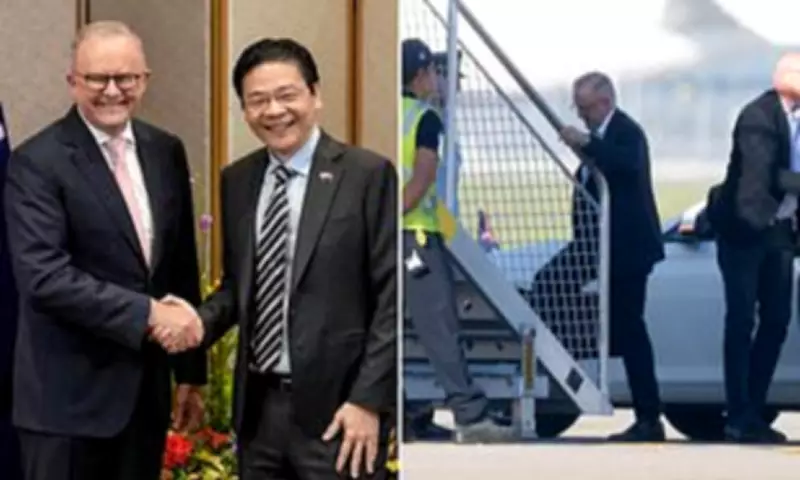
Both Brunei and Malaysia play vital roles in Australia's fuel-supply chains, making this trip a priority for the government. The visit builds on a recent diplomatic engagement with another essential exporter, Singapore, highlighting a concerted push to reinforce regional relationships. Albanese emphasized that bolstering ties with these partners is fundamental to maintaining energy security during these uncertain times.
'We are taking every step to reinforce relationships and engage with key partners to keep our fuel supply flowing,' Albanese stated, underscoring the urgency of the mission.

Key Meetings and Discussions Planned
During his visit, the Prime Minister will meet with the Sultan of Brunei to discuss critical issues including energy security, food security, and the movement of essential goods. Brunei is a significant supplier, providing approximately nine per cent of Australia's diesel imports. Talks will also focus on deepening an existing partnership established in 2023, aiming to enhance cooperation and stability in trade.
In Malaysia, Albanese will meet with his counterpart, Prime Minister Anwar Ibrahim, to address fuel supply concerns. Malaysia holds a pivotal position as Australia's third-largest source of refined fuel and supplies ten per cent of Australian fertiliser imports, making these discussions crucial for ongoing economic stability.
Government Initiatives and Expert Criticism
Accompanying the diplomatic efforts, Foreign Minister Penny Wong will also meet her counterparts from Malaysia and Brunei during the four-day visit. Concurrently, the government has begun rolling out a $20 million advertising campaign urging the public to conserve fuel by altering driving habits or reducing car usage.
However, this campaign has faced criticism from sustainability experts. Curtin University's Peter Newman, a noted sustainability expert, argued that similar campaigns have been evaluated in the past and shown to have virtually no impact on public behavior. He also described a West Australian government plan to develop a state-based diesel stockpile, independent of national fuel reserves, as 'desperately stupid'.
'It's going to be very expensive and difficult to even access that extra diesel and petrol on the global market,' Professor Newman told AAP, highlighting the challenges of such measures.
Calls for Accelerated Transition to Electrified Transport
In contrast to stockpiling efforts, Professor Newman advocated for accelerating the transition to electrified transport, calling it a 'no brainer' for Australia. He suggested that the country could position itself as a world leader in sustainable transport innovation rather than focusing on storing traditional fuels.
'We can be a world leader in that, not a world leader in how much petrol and diesel we can store up,' Prof Newman emphasized, pointing towards a more forward-thinking approach to energy security.
This diplomatic and policy push comes at a critical juncture, as Australia navigates complex global dynamics to ensure the reliability of essential imports and foster long-term energy resilience.