Albanese Breaks Diplomatic Protocol with Rare Criticism of Trump's Iran Threats
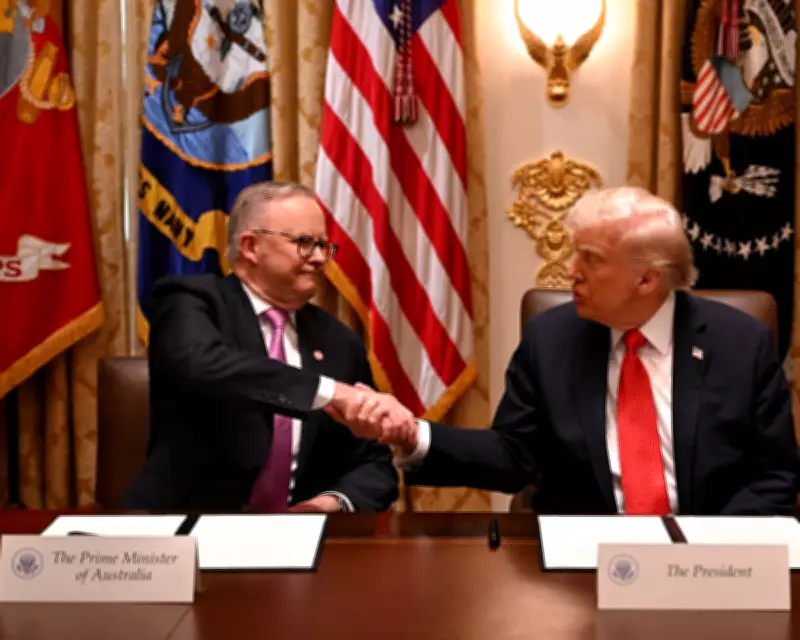
Australian Prime Minister Anthony Albanese has dramatically shifted his diplomatic approach towards United States President Donald Trump, breaking his long-standing strategy of non-engagement to publicly criticise the American leader's threats against Iran.
A Deliberate Strategy of Diplomatic Silence
Since Trump's return to the White House in early 2025, Albanese has maintained a carefully calculated approach to dealing with the unpredictable US president. The Australian leader's strategy has been characterised by a deliberate refusal to engage with Trump's frequent social media outbursts and inflammatory rhetoric.
This diplomatic silence was maintained even when Trump made controversial suggestions, including his proposal to transform war-ravaged Gaza into what he called the "Riviera of the Middle East." The prime minister's office consistently argued that responding to every provocative statement would only serve to distract the government and potentially jeopardise critical bilateral agreements.

The Breaking Point: Threats Against Civilian Infrastructure
The turning point came when Trump threatened widespread bombing of civilian infrastructure in Iran, including bridges and power plants, if the regime did not surrender. This escalation in rhetoric proved too significant for Albanese to ignore through his usual policy of diplomatic silence.
In a carefully worded statement delivered during a prerecorded television interview with Sky News, the Australian prime minister described Trump's threats as "extraordinary" and inappropriate. "I don't think it's appropriate to use language such as that from the president of the United States," Albanese stated, adding that such comments would understandably cause international concern.
Political Calculations Behind the Diplomatic Shift
Political analysts suggest Albanese's rare criticism reflects several strategic calculations. The prime minister appears to be responding to growing Australian public resentment towards both Trump and the escalating conflict in Iran, which has directly contributed to spiralling fuel prices affecting Australian motorists.
This diplomatic shift follows Albanese's recent questioning of the war's objectives, despite Australia's initial endorsement of the military action. However, experts caution against interpreting these developments as signs of a broader decoupling from the United States or an alignment with more openly critical European leaders like French President Emmanuel Macron.
The Domestic Political Context
Within Australia's political landscape, Albanese's measured criticism contrasts with more colourful language from opposition figures. Nationals leader Matt Canavan described Trump's threats as "well beyond the realms of acceptability," while others have argued that the prime minister should more frequently "call a spade a spade" in international diplomacy.
The prime minister's disciplined approach has previously been credited with maintaining important bilateral arrangements, including the AUKUS security pact and critical minerals agreements, while securing Julian Assange's freedom and protecting Australian trade interests from US tariffs.
As the international community watches for Trump's next rhetorical escalation, all eyes now turn to how Albanese will navigate future diplomatic challenges with the unpredictable American president while balancing domestic political pressures and Australia's strategic interests.