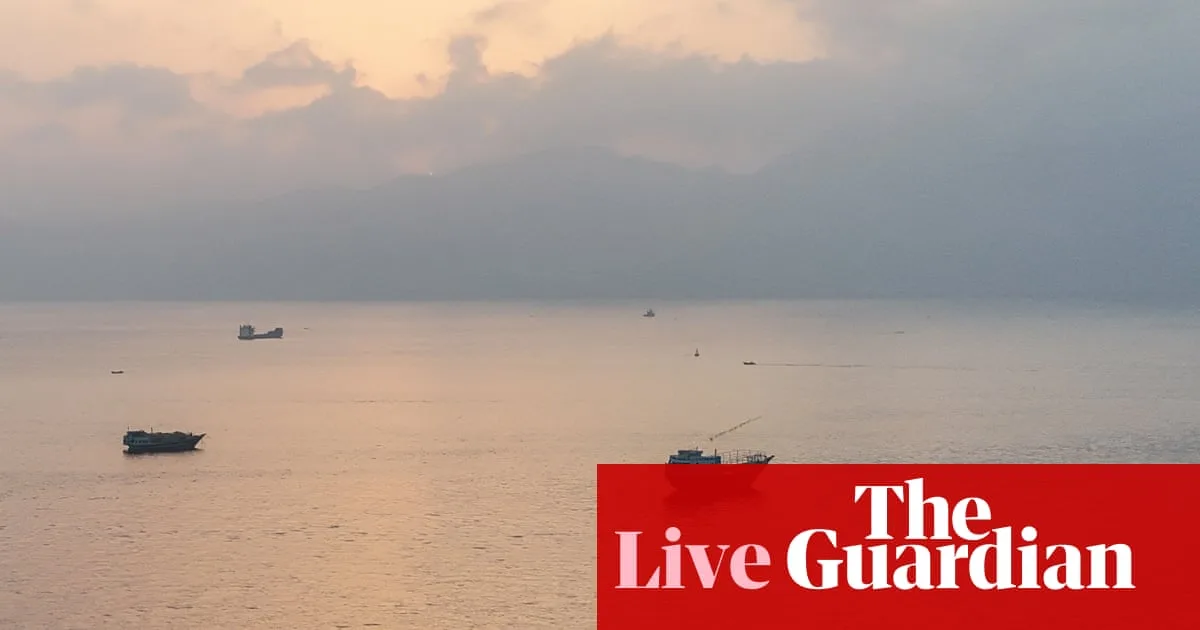
Airstrikes Kill Over 25 in Iran as Trump's Strait of Hormuz Deadline Nears
Airstrikes Kill Over 25 in Iran as Trump's Deadline Looms

Airstrikes Kill Over 25 in Iran as Trump's Strait of Hormuz Deadline Nears

Israeli and United States forces launched a series of coordinated attacks on Monday, resulting in the deaths of more than 25 individuals across Iran. In response, Tehran unleashed missile barrages targeting Israel and its Gulf Arab neighbours, heightening regional instability as US President Donald Trump's ultimatum for Iran to reopen the Strait of Hormuz draws closer.

Escalating Military Actions and Retaliatory Strikes

Explosions reverberated through the night in Tehran, with the sound of low-flying jets persisting for hours as the capital endured sustained bombardment. Thick black smoke billowed near Azadi Square following an airstrike that struck the grounds of Sharif University of Technology. Israeli authorities confirmed that two people were discovered dead in the rubble of a residential building in Haifa, with search operations ongoing for two additional individuals amidst new Iranian missile attacks on northern Israel early Monday.

Kuwait and the United Arab Emirates activated their air defence systems to intercept incoming Iranian missiles and drones, as Tehran maintained pressure on Gulf states. Iran's recurrent assaults on regional energy infrastructure and its control over the Strait of Hormuz, a critical passage for one-fifth of global oil shipments during peacetime, have driven energy prices to unprecedented highs.

Wide Pickt banner — collaborative shopping lists app for Telegram, phone mockup with grocery list

Trump's Deadline and Diplomatic Efforts

Facing domestic pressure from concerned consumers, President Trump issued a deadline set to expire on Monday night, Washington time. He warned that if no agreement was reached to reopen the strait, the US would target Iran's power plants and other key infrastructure, threatening to set the country "back to the stone ages." In a social media post, Trump declared, "Tuesday will be Power Plant Day, and Bridge Day, all wrapped up in one, in Iran," adding that failure to comply would result in Iran "living in Hell."

Despite these threats, Tehran has shown no indication of relinquishing its stranglehold on shipping through the strait, which was fully operational prior to the initial US and Israeli attacks on Iran on February 28. Iranian parliamentary speaker Mohammad Bagher Qalibaf condemned Trump's "reckless" threats, asserting on social media, "You won’t gain anything through war crimes. The only real solution is respecting the rights of the Iranian people and ending this dangerous game."

Diplomatic channels remain active, with Oman's Foreign Ministry reporting meetings between Iranian and Omani officials to discuss proposals for ensuring "smooth transit" through the strait. Egypt's Foreign Minister Badr Abdelatty engaged in talks with US envoy Steve Witkoff, Iranian Foreign Minister Abbas Araghchi, and counterparts from Turkey and Pakistan, while Russia confirmed discussions between Araghchi and Russian Foreign Minister Sergey Lavrov.

Impact on Global Markets and Casualty Details

The conflict has severely disrupted global oil markets, with Brent crude oil surging to $109 in early Monday spot trading, marking a 50% increase since the war's inception. Iran has permitted limited vessel passage through the strait, excluding ships from the US, Israel, or allied nations, with some paying for transit. Overall traffic has plummeted by over 90% compared to the same period last year.

Monday's airstrikes inflicted significant damage, including at Tehran's Sharif University of Technology, where Iranian media reported structural harm and impacts on a nearby natural gas distribution site. The university, historically sanctioned for its military collaborations, particularly with Iran's ballistic missile program under the Revolutionary Guard, was vacant due to nationwide school closures enforced by the war.

Pickt after-article banner — collaborative shopping lists app with family illustration

Casualty reports from Iranian sources indicate at least 13 fatalities from a strike near Eslamshar, southwest of Tehran, five deaths in a residential area of Qom, six in other cities, and three more in a Tehran home. Since the war began, Iran has recorded over 1,900 deaths, though official tolls have not been updated recently. In Lebanon, where Israel has conducted ground invasions, more than 1,400 people have been killed and over one million displaced, with 11 Israeli soldiers lost in operations against Iranian-backed Hezbollah militants. Additional casualties include over two dozen in Gulf Arab states and the occupied West Bank, 19 in Israel, and 13 US service members.