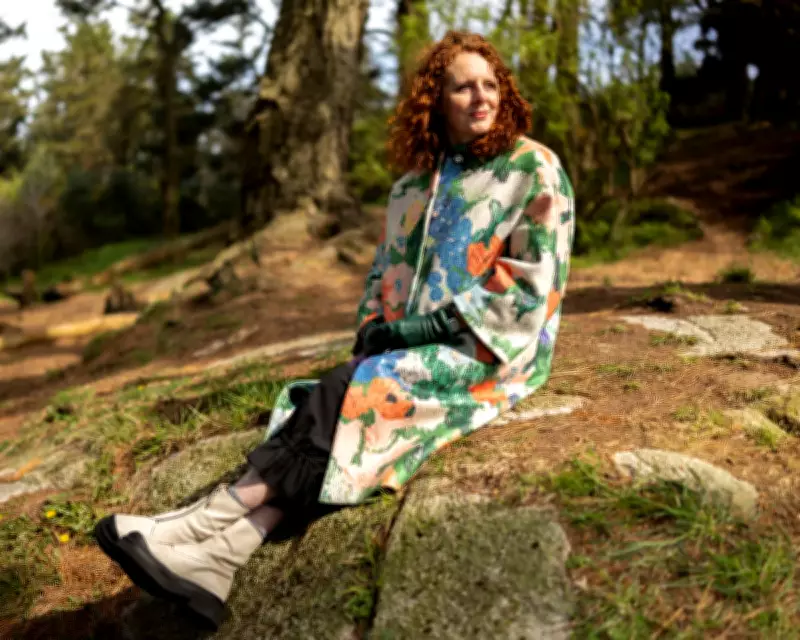
Maggie O'Farrell's 10th novel, Land, is a lengthy and ambitious story set in the aftermath of the Irish famine. The book opens in 1865 on a rainswept Irish peninsula and takes readers to Dublin, Rome, Quebec, and Kerala as it unfolds across two generations, with gestures toward two more. The opening line, 'His father was ever a man of few words,' came to O'Farrell on a train journey from Belfast to Dublin, and became the gateway to a story based partly on her great-great-grandfather, who worked for the Ordnance Survey in Ireland after the Great Hunger.
The Plot and Setting
In bitter weather, Tomás and his 10-year-old son Liam are mapping a peninsula—perhaps Dunmore Head in County Kerry—using surveying poles and measuring chains. Tomás works for the English, who need his surveying ability, draughtsmanship, and language skills to translate Irish place names and determine land ownership. He untangles complex local legends and obscure toponyms to create a usable map, ensuring that famine scars—empty houses and graveyards—are recorded, though English 'redcoats' sign his work. A famine survivor himself, Tomás tolerates this because surveying was his escape from the workhouse.
On the promontory, Tomás discovers a forgotten place: a scrap of tangled woodland around an ancient well. Drinking its water transforms him from terse to voluble, from harsh to loving. He raves with visions and can no longer work for the English. Liam must stop him from destroying his work and get him home to his wife Phina and daughters Enda and Rose. Phina is expecting a fourth child, Eugene, whose story closes the book. The magic well's legend, involving a talking fish, a wise dog, a gold ring, and the power to grant wishes, evokes Celtic mythology.

Narrative Style and Challenges
Land opens with an epigraph defining 'seanchaí' as 'custodian of tradition, historian' and 'reciter of ancient lore; traditional story-teller.' This role O'Farrell adopts explains the narrative: fable-like elements amid realist passages, direct address to the reader, coincidence as dramatic turning points, uneven time passage, well-worn phrases like 'Liam sits bolt upright,' and a shifting point of view among humans, dogs, an unborn child, a house, the land, and an omniscient perspective. These elements suggest Land should be read as traditional storytelling rather than a conventional novel.
However, this choice makes Land light on dialogue, with speech more reported than rendered. This density reduces opportunities to reveal character through conversation, leaving many characters feeling incomplete. The episodic 'and then...' structure lacks causality, which fiction needs for meaning and shape.
Adaptation and Final Thoughts
O'Farrell co-wrote the screenplay adaptation of her novel Hamnet, and rights to Land have been acquired by the same production company. Some scenes describe characters' movements from an external perspective, like script beats: 'He fits his hat to his head... then leaves.' As a novel, Land feels uncomfortable in its own skin—neither fable nor history nor family saga, the seanchaí voice not consistently inhabited. But with its narrator absent and characters brought to life by actors, it will likely make an epic, richly textured film.