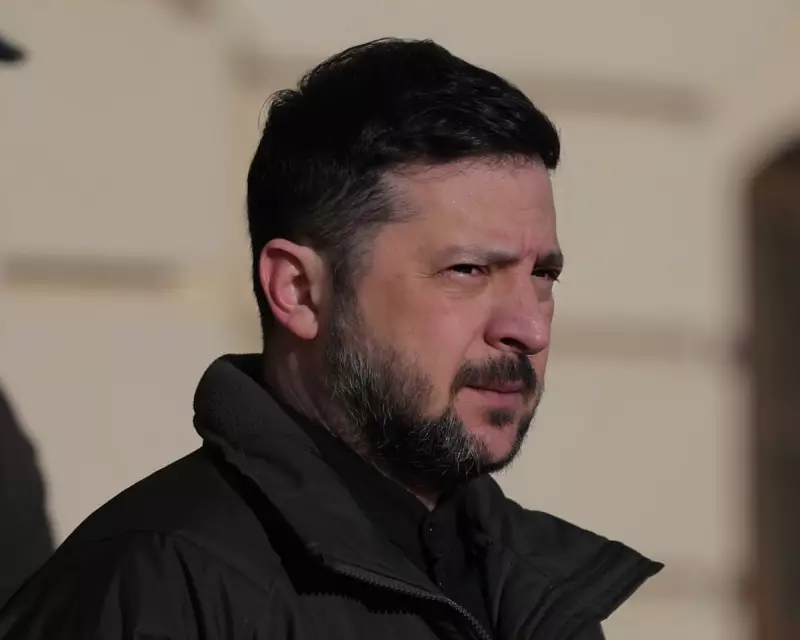
Ukrainian President Volodymyr Zelenskyy has issued a stark warning that Russia is actively preparing new strikes targeting his nation's nuclear power infrastructure. The alert comes amid heightened fears for the safety of Europe's largest atomic energy plant, already under Russian occupation.
Imminent Threat to Critical Energy Infrastructure
In his nightly video address on Saturday, President Zelenskyy stated that Russian forces are readying themselves to launch attacks on the Ukrainian energy system, with a specific focus on nuclear facilities. He urged the world to pay close attention, framing the potential assault not just as a threat to Ukraine, but as a danger with global implications.
"All of us in the world must be aware that any radiation incident at a Ukrainian nuclear facility could have severe consequences for other nations," Zelenskyy declared. His warning underscores the persistent risk of a catastrophic event at the Zaporizhzhia nuclear power station, which has been controlled by Russian troops since the early stages of the invasion in March 2022.

International Atomic Energy Agency Seeks Access
The situation at Zaporizhzhia remains perilously volatile. The head of the UN's nuclear watchdog, the International Atomic Energy Agency (IAEA), Rafael Grossi, has been attempting to visit the facility. His goal is to assess the serious safety and security situation firsthand.
However, Russia has so far denied Grossi access to the turbine halls and cooling ponds of the plant. These areas are critical for maintaining safe operations and preventing a meltdown. The IAEA has repeatedly expressed grave concerns about the precarious conditions at the site, which has suffered from repeated shelling, disconnected power lines, and the unsettling presence of military personnel and equipment within its confines.
Grossi emphasised the urgent need for a protection zone to be established around the plant to prevent a nuclear disaster. "We are playing with fire," he warned in a recent statement, highlighting the very real possibility of a severe accident.
Broader Military Context and Ukrainian Resilience
Zelenskyy's nuclear warning coincides with intense fighting on multiple fronts. Ukrainian forces continue to defend the eastern city of Bakhmut in the Donetsk region, which has seen some of the war's most brutal and protracted combat. Despite heavy losses, Russian mercenary group Wagner and regular army units have been unable to secure a decisive victory.
In a significant development, the Ukrainian military's general staff reported that Russia has deployed over 1,800 personnel from its private military company, Wagner, to the occupied city of Berdiansk on the Sea of Azov coast. This move is interpreted as an effort to bolster defensive lines and prepare for potential future Ukrainian counter-offensives in the south.
Meanwhile, Ukrainian air defences demonstrated their capability by successfully intercepting 13 of the 15 Iranian-made Shahed drones launched by Russia overnight. These so-called "kamikaze" drones have been used extensively to target civilian energy infrastructure across Ukraine throughout the winter, causing widespread blackouts and hardship.
The international community continues to respond. The United States announced a new $2.5 billion military aid package for Kyiv, which includes additional Bradley fighting vehicles and critical air defence ammunition. Furthermore, a coalition of over 50 nations meeting in Germany pledged to supply Ukraine with hundreds of armoured vehicles and vital air defence systems in the coming months.
As diplomatic and military support consolidates, the stark warning from Kyiv serves as a chilling reminder that the conflict's dangers extend far beyond the battlefield. A deliberate or accidental strike on a nuclear facility could unleash consequences that would reshape the security landscape of the entire continent.