Naval Expert Reveals Complex Military Challenges in Strait of Hormuz Standoff
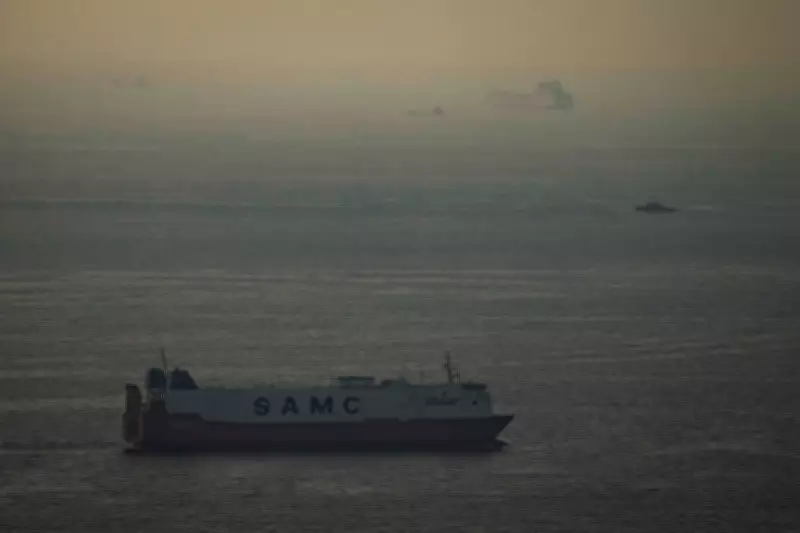
Since the United States and Israel initiated military operations against Iran in late February, Tehran has retaliated by targeting commercial vessels in the strategically vital Strait of Hormuz, effectively closing this crucial maritime passage to most shipping traffic. This blockade has triggered a worldwide fuel crisis, despite some vessels managing to navigate through the contested waters. US President Donald Trump has issued a firm ultimatum demanding Iran fully reopen the waterway to oil and gas shipments, while simultaneously urging NATO allies to contribute to this international effort.
Military Expert Analysis of Strait Security Challenges
We consulted with naval specialist Jennifer Parker, who served for two decades with the Royal Australian Navy, to understand what military resources would be necessary to restore commercial shipping through the strait and why American forces have thus far refrained from such direct intervention. Parker currently serves as an Adjunct Professor at the Defence and Security Institute, affiliated with both The University of Western Australia and UNSW Sydney.
Geographical Dominance Complicates Defense

The regional geography significantly contributes to the difficulty of preventing attacks on merchant vessels. Iran maintains clear dominance over the northern Persian Gulf, the Strait of Hormuz, and the Gulf of Oman. This proximity enables Iranian forces to utilize cost-effective weaponry, including various drone systems, to target commercial ships with relative ease.
Establishing conditions for safe merchant shipping—or at least substantially reducing risks—would require a comprehensive two-phase military campaign according to Parker's analysis.
Two-Phase Campaign Requirements
Phase One: Neutralizing Attack Capabilities
The initial phase involves eliminating Iran's capacity to target shipping vessels. This could be accomplished through two primary approaches: diplomatic pressure or military force compelling Iran to cease attacks, or systematically destroying Iran's coastal attack infrastructure including radar installations, command centers, and weapons storage facilities along the coastline.
While American forces possess advanced air power, intelligence gathering, surveillance systems, and reconnaissance capabilities to identify and eliminate most fixed targets, locating and neutralizing Iran's extensive drone arsenal presents greater challenges. These unmanned systems can be concealed virtually anywhere, making precise intelligence operations crucial for successful countermeasures.
Phase Two: Reassurance and Protection Operations
Following successful risk reduction through aerial bombardment, the second campaign element involves implementing comprehensive reassurance measures. This would require continuous monitoring using airborne early warning systems and maritime patrol aircraft covering not only the Strait itself but also the Gulf of Oman, Persian Gulf, and Iran's extensive coastline.
Combat air patrols with fighter aircraft would need to maintain presence above the strategic waters, with helicopter units prepared for rapid deployment against emerging threats. Additionally, American warships would need to be stationed throughout the region to provide selective escort services for commercial vessels.
The situation becomes substantially more complex if mine presence is confirmed or even suspected within the strait. Such circumstances would necessitate extensive mine clearance operations using divers and remotely operated vehicles, potentially requiring weeks or months to complete safely.
Four Key Reasons for US Military Restraint
Parker identifies four primary factors explaining why the United States has not attempted to militarily secure the Strait of Hormuz without first achieving phase one objectives—and why this hasn't been prioritized in current operations.

- Asset Diversion Concerns: Securing the strait would require redirecting critical military assets, particularly aircraft, currently deployed to accomplish President Trump's stated war objectives against Iran.
- Land Security Requirements: Comprehensive shipping safety necessitates securing not just the waterways but also the adjacent coastal territories. This would likely involve ground forces or specialized raiding parties operating along Iran's coastline—operations presenting substantial complexity and risk for American military personnel.
- Naval Resource Intensity: Effective escort operations would demand significant naval resources, realistically requiring one or two warships per escorted convoy. Larger convoys would face increased vulnerability unless Iranian targeting capabilities have been dramatically degraded beforehand.
- Risk-Benefit Analysis: Military planners must carefully weigh potential risks to personnel and equipment against strategic benefits. With US warships typically carrying over 200 crew members, and given Iran's demonstrated capacity to attack using unmanned surface vessels, drones, and cruise missiles, commanders question whether exposing these personnel is justified before neutralizing coastal threats.
Mining Threats and Drone Challenges
The potential mining of the strait presents significant obstacles, though Parker notes Iran might not need to physically deploy mines—merely convincing international shipping of their presence could effectively deter commercial transit. While surface-floating mines are sometimes visible, submerged or moored varieties would require complex clearance operations using divers or remote vehicles.
However, Parker suggests extensive Iranian mining appears unlikely for two reasons: Iran's own economy depends on oil exports through the strait from Kharg Island, and acoustic mines designed to differentiate between vessel nationalities would be technologically challenging to implement reliably in such dense shipping environments.
Regarding drone warfare, Iran has deployed various unmanned aerial and surface vessels against merchant tankers. These systems present particular difficulties for American and Israeli countermeasures since they can be launched from virtually any location and don't require sophisticated manufacturing facilities. While some coastal launch sites and stockpiles can be targeted through bombing campaigns, complete elimination remains challenging.
US Strategic Priorities in Iranian Conflict
Despite discussions about potential regime change, the Trump administration has consistently emphasized four primary military objectives: destroying Iran's ballistic missile capabilities, eliminating nuclear development infrastructure, neutralizing naval forces (largely accomplished already), and dismantling proxy networks including Hezbollah in Lebanon.
The destruction of Iran's nuclear and ballistic missile programs demands substantial aircraft and weaponry resources, as ongoing US and Israeli bombing campaigns demonstrate. Diverting these critical assets to secure the Strait of Hormuz could potentially undermine achievement of these higher-priority military objectives, explaining the current strategic focus.