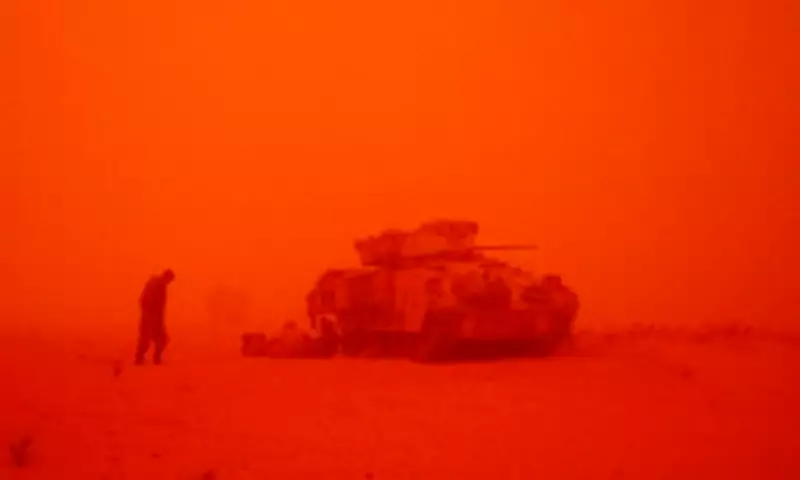
US Troop Buildup Near Iran Evokes Memories of Iraq Invasion Sandstorm Crisis
As the United States prepares to deploy thousands of soldiers to the Middle East amid escalating tensions with Iran, military strategists are drawing stark parallels to the 2003 invasion of Iraq. History's lessons loom large, particularly regarding the formidable challenge posed by the region's extreme weather conditions.
Massive Military Mobilization Underway
According to three anonymous sources close to the Pentagon who spoke to the Associated Press on Tuesday, the US military is preparing to deploy at least 10,000 soldiers from the 82nd Airborne Division to the Middle East. This substantial force will bolster thousands of Marines already aboard Navy ships en route to the region.
This deployment strategy bears striking resemblance to Operation Iraqi Freedom, which commenced on March 20, 2003, with over 150,000 coalition troops. While that campaign successfully deposed dictator Saddam Hussein within three weeks, achieving the capture of Baghdad by April 9, it encountered an unexpected adversary that nearly derailed the entire ground offensive.

The Sandstorm That Halted an Invasion
Almost exactly twenty-three years ago, on March 25, 2003, a powerful sandstorm completely immobilized US troops and military equipment advancing toward Baghdad. Dramatic photographs from that day reveal tanks and soldiers frozen in an eerie orange glow as visibility plummeted to just dozens of meters.
The storm's impact was devastatingly comprehensive:
- Sand and grit infiltrated weapons and equipment, rendering them useless until thoroughly cleaned
- Soldiers reported even their pocket switchblades jammed shut from the pervasive dust
- Rain combined with airborne sand created muddy, unstable terrain
- Multiple attempts to advance during lulls in the storm proved impossible
Ultimately, the US military adapted by leveraging air superiority to bomb immobilized Iraqi troops from above, converting a three-day impediment into a tactical advantage. However, the episode starkly revealed the limitations of ground forces in contemporary warfare against environmental challenges.
Iran's Dust Storm Season Presents Similar Perils
A 2023 study published in the peer-reviewed journal Sustainability indicates dust storms in Iran occur most frequently during May, June, and July, primarily along the country's eastern and western borders. The western coastal regions include areas along the Persian Gulf and the strategically vital Strait of Hormuz.
This timing and location could prove problematic for any ground operations aimed at reopening the Strait of Hormuz, through which approximately one-fifth of global oil supplies normally pass. Iran has effectively closed this shipping artery since the conflict began on February 28.
Current Conflict Dynamics and Ground Invasion Considerations
Nearly one month into hostilities, the US and Israel have conducted relentless bombing campaigns against Iran. US Central Command reported on Tuesday that airstrikes have destroyed over 9,000 military targets since the war's inception.
Yet this conflict represents an inversion of the 2003 Iraq campaign. While American and Israeli airpower remains largely unchallenged, certain strategic objectives may require ground forces:
- Reopening the Strait of Hormuz to global shipping
- Securing Iran's enriched uranium stockpiles
- Capturing key oil facilities
Secretary of State Marco Rubio insisted on Friday that operations are "ahead of schedule" and that objectives can be achieved "without ground troops." However, officials simultaneously revealed Washington continues to contemplate a possible invasion, with approximately 10,000 additional troops scheduled to deploy within ten days, supported by fighter jet squadrons and armored vehicles.
Political and Human Costs Weigh Heavily
The human toll already includes at least thirteen US military fatalities and over three hundred wounded personnel, with ten sustaining serious injuries. A recent Iranian missile strike on Prince Sultan Air Base in Saudi Arabia wounded around a dozen American soldiers and damaged multiple aircraft, including KC-135 refueling planes.

Public support for the conflict appears tenuous. A Reuters/Ipsos poll released Tuesday showed only thirty-five percent of Americans support strikes against Iran, representing a two percent decline from the previous week.
President Donald Trump addressed the conflict's timeline at a Miami event, stating, "It's sort of finished, but it's not finished. It's got to be finished." He also expressed surprise that financial markets hadn't reacted more dramatically, noting the S&P 500 has declined for five consecutive weeks to its lowest point since last August while gasoline prices approach four dollars per gallon.
International allies have shown reluctance to provide military support, prompting Trump to criticize NATO partners and reconsider US spending on the alliance. Polish Prime Minister Donald Tusk warned on Friday that stabilization appears unlikely in coming days, with further escalation possible.
As military planners prepare for potential ground operations in Iran, the lessons of 2003's sandstorm crisis serve as a potent reminder that even the most advanced armies remain vulnerable to nature's unpredictable forces.