
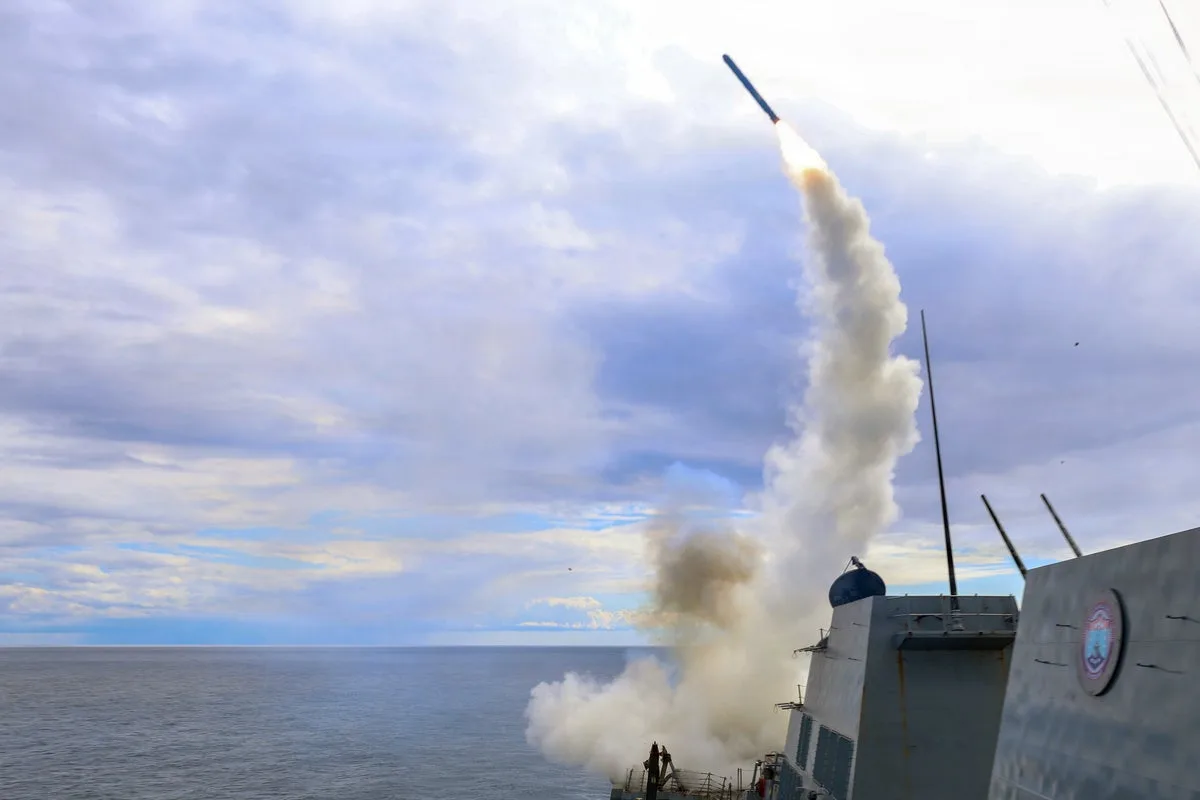
Pentagon officials are reportedly concerned about the dwindling supply of Tomahawk cruise missiles after the US military fired approximately 850 of them into Iran during the ongoing conflict, now in its fourth week. According to The Washington Post, the rate of usage has prompted internal discussions about increasing stockpiles.
US officials told the newspaper that the number of Tomahawks remaining in the Middle East was 'alarmingly low', with one official describing the supply as approaching 'Winchester' — military slang for nearly out of ammunition. Many of the missiles, which cost over $2 million each, were used in the early days of the war that began on 28 February.
A Tomahawk missile is believed to have been responsible for a strike on an elementary school in the southern Iranian city of Minab during the first weekend of the conflict, killing 175 people, including children, according to preliminary investigation findings. Inventory numbers for the missiles are classified, but analysts estimate that 850 represents roughly a quarter of the US military's stockpile.
Pentagon spokesperson Sean Parnell stated that the military 'has everything it needs to execute any mission' and accused the media of trying to 'portray the world's strongest military as weak'. Defence Secretary Pete Hegseth previously insisted there was 'no shortage of munitions', while White House press secretary Karoline Leavitt said there were 'more than enough munitions, ammo and weapons stockpiles to achieve the goals of Operation Epic Fury'.
The Center for Strategic and International Studies estimates the Navy had around 3,000 Tomahawks at the start of the war. Senior adviser Mark Cancian warned that using over 800 missiles would 'leave a large gap for a conflict in the Western Pacific' and would take 'several years to replenish'. President Donald Trump announced on 6 March that defence manufacturers, including Raytheon, had agreed to 'quadruple production of exquisite class weaponry as rapidly as possible'.




