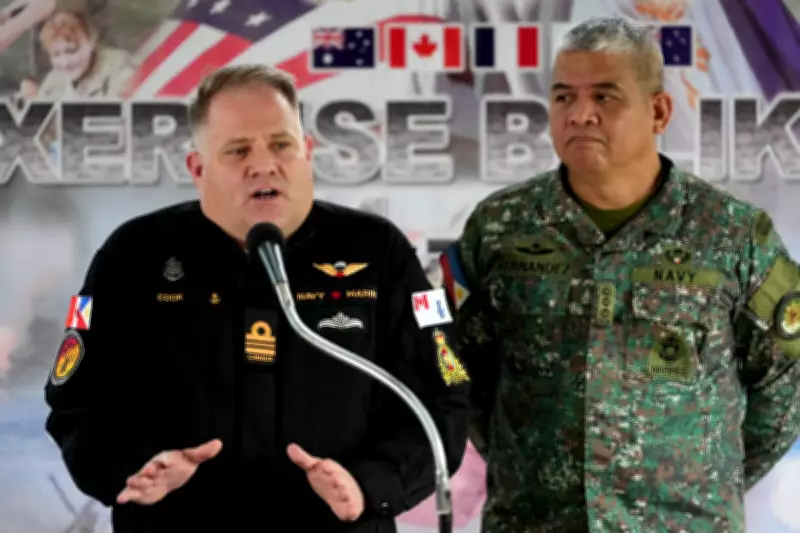
US and Philippine Forces Launch Major Combat Drills Amid Regional Tensions
More than 17,000 American and Filipino military personnel are set to participate in one of their largest annual combat exercises in the Philippines, a significant demonstration of the United States' unwavering security commitment to Asia despite ongoing conflicts in the Middle East. A U.S. military official confirmed the deployment on Tuesday, highlighting the strategic importance of these maneuvers.
Expanded Allied Participation in Balikatan Exercises
The Balikatan exercises, scheduled from April 20 to May 8, will see an expanded scope this year, incorporating forces from Japan, France, and Canada. These nations have signed visiting forces agreements with Manila, reinforcing the multilateral nature of the drills. Philippine military officials noted that Japanese forces will conduct a missile-firing exercise in northwestern Philippine waters facing the disputed South China Sea, with Japan's defense chief invited to witness the live-fire drill.
Colonel Robert Bunn, a spokesperson for U.S. forces, emphasized the core message of the exercises during a news briefing. "Our message is our dedication and commitment to our alliance and regional security," he stated, addressing questions about the U.S. military's focus amid Middle Eastern conflicts. While Bunn did not immediately specify the exact number of U.S. troops involved, last year's Balikatan exercises included approximately 9,000 U.S. personnel.

Defensive Focus and Regional Implications
The exercises will feature defensive operations, including counter-drone tactics, as part of mock combat scenarios. Bunn highlighted this aspect, noting its relevance to modern security challenges. However, the drills have drawn opposition from China, which consistently objects to U.S.-led military activities in the region, particularly in or near the South China Sea—a waterway Beijing claims almost entirely.
The South China Sea is a critical global trade route, with competing territorial claims from the Philippines, Vietnam, Malaysia, Brunei, and Taiwan. In recent years, confrontations between Chinese and Filipino forces have intensified, raising regional tensions. The Philippine military asserts that the Balikatan exercises are not targeted at any specific country but acknowledges their role in bolstering the nation's ability to defend its interests in the disputed waters.
Historical Context and Strategic Assurance
Last year, U.S. Defense Secretary Pete Hegseth visited Manila, assuring Philippine officials of the Trump administration's commitment to enhancing deterrence against global threats, including Chinese aggression in the South China Sea. "Friends need to stand shoulder to shoulder to deter conflict, to ensure that there is free navigation whether you call it the South China Sea or the West Philippine Sea," Hegseth told Philippine President Ferdinand Marcos Jr., reinforcing the alliance's strategic partnership.
The Balikatan exercises, meaning "shoulder-to-shoulder" in Tagalog, symbolize the deep-rooted treaty alliance between the U.S. and the Philippines. As regional security dynamics evolve, these drills serve as a tangible expression of collaborative defense efforts, aiming to promote stability and free navigation in contested maritime areas.