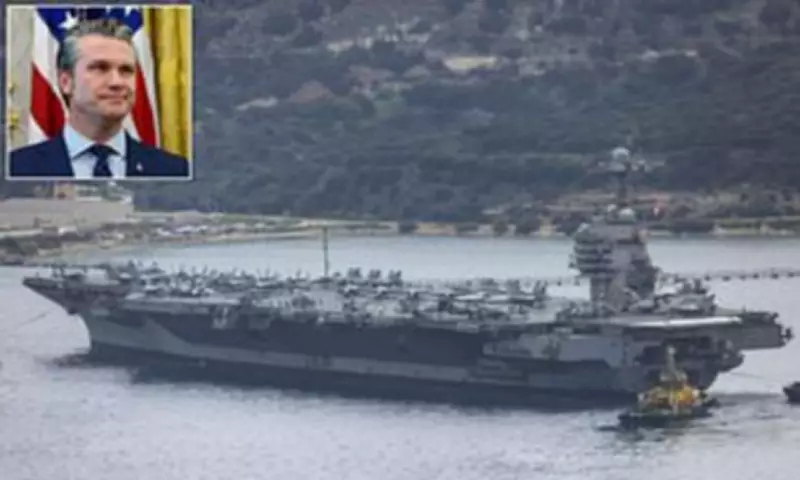
US Navy's $13 Billion Aircraft Carrier Withdrawn from Iran Conflict After Onboard Failures
The USS Gerald R Ford, the largest and most expensive aircraft carrier ever constructed by the United States, has been sidelined from operations in the Iran conflict following a series of critical onboard failures. These issues range from malfunctioning eco-friendly toilets that fail to flush properly to a significant fire that tore through parts of the vessel, causing extensive damage to living quarters.
Persistent Sanitation System Problems Plague the Warship
According to reports, the $13 billion warship could be forced out of action for up to a year due to these persistent problems. The vessel has been plagued by issues for years, with sanitation system failures dating back to at least 2020. Frequent clogs and necessary repairs have already cost the Navy at least $4 million, highlighting the severity of the ongoing maintenance challenges.
Naval expert Steve Wills explained the core issue with the carrier's toilets, stating, 'Those eco-friendly toilets are not pressurized in the same way. They don't flush through effectively,' which has led to continuous operational disruptions. A 2020 Government Accountability Office report further detailed that the system required 'onerous' day-to-day maintenance, with each specialized acid flush procedure costing approximately $400,000 to execute.

Senators Express Deep Concern Over Crew Welfare and Ship Readiness
Virginia Senator Tim Kaine raised serious concerns earlier this month about the ship's 'persistent sewage system failures and inoperable laundry facilities' following its extended deployment in the Middle East. The carrier had been actively supporting US efforts against Iran before being pulled from service due to these compounding issues.
In a letter to Navy Secretary John Phelan, Senator Kaine warned that the situation was taking a substantial toll on the crew, writing, 'I am deeply concerned about the compounding mental and physical toll this long deployment and uncertainty is taking on our Sailors.' He added that sailors and their families were being pushed 'to a breaking point' by unpredictable schedules and a ship that, despite its enormous price tag, was failing to meet basic living standards for its crew of more than 4,000 personnel.
Fire Damage Exacerbates Living Conditions for Hundreds of Sailors
The problems escalated significantly when a fire broke out on March 12 in a laundry area of the vessel. The incident filled multiple sections with smoke, damaged berthing spaces, and left some living quarters completely unusable. Rhode Island Senator Jack Reed revealed the severe fallout from this event, stating that hundreds of sailors were forced to sleep on the floor for days as a result.
'I'm told that there are 400 sailors that spent many days sleeping on the floor,' Senator Reed reported. 'The ship has been at sea now for almost a year, so that is creating incredible stress on the entire crew.' This situation has raised serious questions about the vessel's operational readiness and the welfare of its personnel during extended deployments.
Navy's Response and Current Status of the Aircraft Carrier
According to available information, the Navy attempted to address the sanitation issues by installing a new toilet and sewage system similar to those used on commercial aircraft, but scaled up for the massive crew complement. However, these measures appear to have been insufficient to resolve the persistent problems that have plagued the vessel for years.
The USS Gerald R Ford recently arrived at the Port of Split in Croatia, according to Navy reports, though Defense Secretary Pete Hegseth has not publicly commented on the specific issues aboard the carrier. The Daily Mail has contacted the Navy for further comment regarding the timeline for repairs and the carrier's future operational status.
This situation represents a significant operational setback for the US Navy, particularly given the vessel's strategic importance and enormous construction cost. The combination of sanitation system failures and fire damage has not only affected the ship's combat readiness but has also created substantial challenges for crew morale and living conditions during critical deployments.