
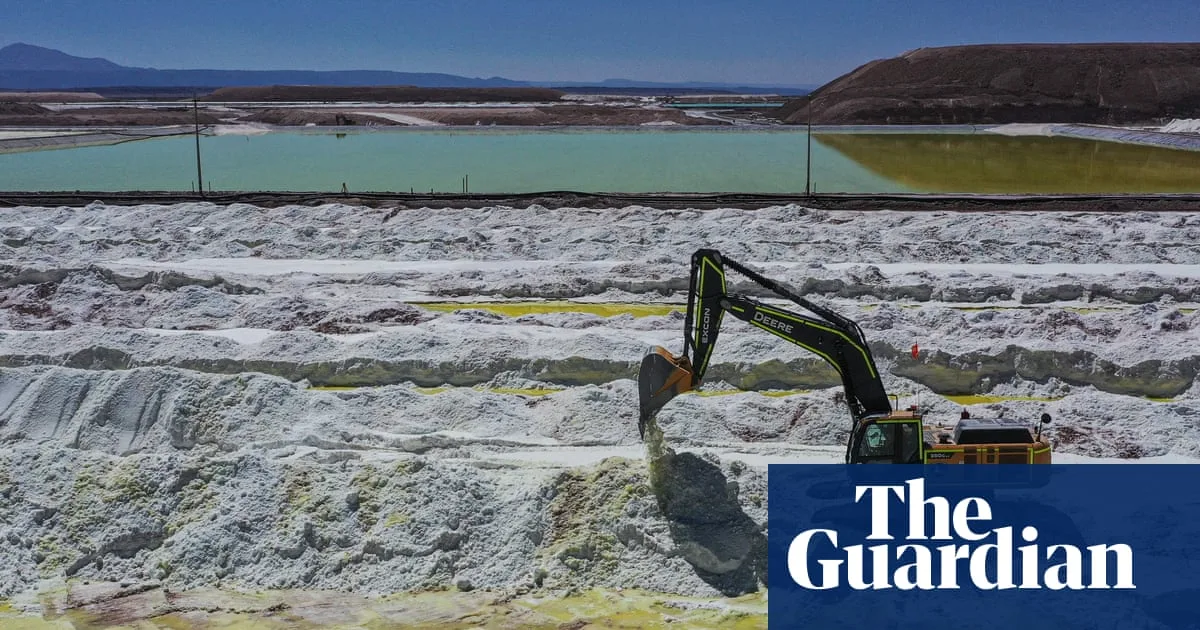
A new report from the Transition Security Project has warned that the US military's stockpiling of critical minerals for weapons systems is undermining global climate action. The study, a joint US-UK venture, reveals that the Pentagon is diverting materials essential for renewable energy technologies towards precision-guided weaponry and AI-driven warfare.
Under the National Defense Stockpile programme, the Pentagon has earmarked billions of dollars to secure at least 38 minerals and metals, including lithium, cobalt, graphite and rare earth elements. The report calculates that almost 7,500 metric tonnes of cobalt being stockpiled could instead produce 80.2 GWh of battery capacity – more than double existing US energy storage – or enough for approximately 100,000 electric buses.
Khem Rogaly, co-director of the Transition Security Project, said: 'The Pentagon's trillion-dollar budget supports a global infrastructure designed for US military domination, not national security. Using precious resources to feed the expanding military industrial complex, rather than addressing the existential threat of the climate crisis, demonstrates the global insecurity produced by the Pentagon.'
The US Department of Defense is the largest institutional emitter of planet-heating emissions in the world, responsible for about 80% of the US government's emissions. Under the Trump administration, climate considerations have been sidelined, with Defence Secretary Pete Hegseth stating: 'The @DeptofDefense does not do climate change crap. We do training and warfighting.'
The report also finds that since 2023, the Pentagon has funded or signalled interest in at least 20 mining initiatives in the US and Canada worth almost $1bn, including taking direct equity stakes in critical mineral companies – an unprecedented step in modern US industrial policy. Lorah Steichen, the report's author, said: 'Every ton of cobalt or graphite stockpiled for the military could be used instead for electric buses, large-scale energy storage or other renewable technologies needed for the energy transition.'




