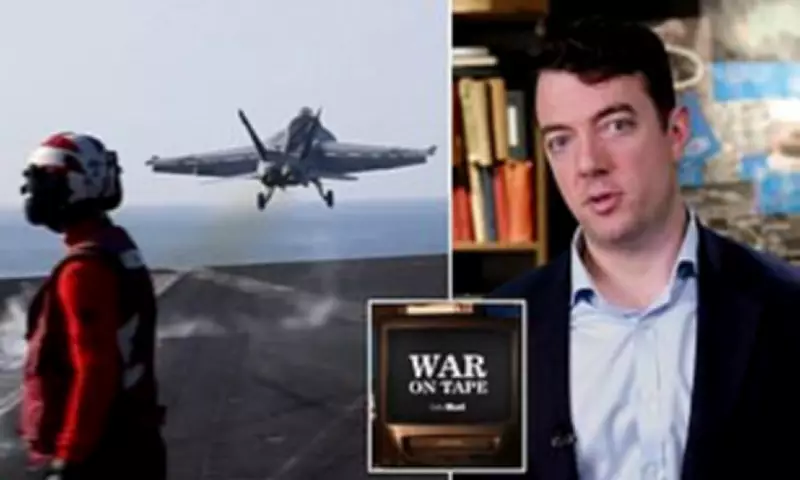
In a detailed analysis on the Daily Mail's War on Tape podcast, foreign correspondent Chris Pleasance has dissected the military options available to the United States for seizing the Strait of Hormuz by force, highlighting why each potential strategy would come at a devastating and prohibitive price. This comes in the wake of escalating tensions following Operation Epic Fury, a joint US-Israeli bombing campaign targeting Iran, which prompted the regime to retaliate by blocking the strategic waterway.
The Economic Impact of the Blockade
Since Iran initiated the blockade using a mix of rudimentary defences—including deep sea mines, primitive drones, and speedboats—the global economy has been brought to its knees. The Strait of Hormuz is a critical chokepoint, accounting for approximately 20 per cent of the world's oil and gas flows. At the peak of the crisis, Brent crude prices soared to $126 a barrel, marking a faster price rise than witnessed during any other conflict in recent history.
A Temporary Ceasefire Announcement
On Tuesday, former President Donald Trump announced a two-week ceasefire with Iran, a move that followed his earlier threats to destroy Iranian civilisation if the regime continued to keep the Strait closed. Pleasance suggests that this ceasefire may have come as a relief to both sides, given the formidable challenges and risks associated with any military action to reopen the waterway.

Three Layers of Iranian Defences
Pleasance outlines that to reopen the Strait, the US would need to deploy warships loaded with troops, who would then confront three distinct layers of Iranian defences, each exploiting the unique geographical features of the terrain.
First Layer: Naval Mines
These explosive devices, positioned on or under the water's surface, are designed to detonate when a ship passes by. They capitalise on the narrowness of the Strait, which measures just 35 miles across at its narrowest point, making it exceptionally easy to mine. Just a handful of explosives would make it extremely dangerous to sail through, Pleasance notes.
Second Layer: Anti-Ship Missiles and Aerial Drones
These weapons leverage the high mountains on the Iranian shore, which provide excellent visibility over the waters below. The mountainous terrain offers numerous opportunities for hidden launch sites, allowing weapons to be deployed rapidly into the air.
Third Layer: Sea Drones and Attack Speedboats
Small craft armed with missiles, machine guns, or explosives pose a significant threat. While a US warship could easily overpower them in a direct confrontation, when deployed as a swarm from close range, they can inflict substantial damage.
Potential US Invasion Strategies
Pleasance emphasises that any invasion force would first need to neutralise all three defensive threats before troops could land. If achievable without enormous casualties, US forces would then face four unenviable options.
- Option One: Seize the small islands on the inside of the Strait using Osprey aircraft, hovercraft, and landing boats to transport troops and armour.
- Option Two: Attack the larger islands closer to the Iranian shore, which are heavily defended and likely to result in far greater casualties.
- Option Three: Invade the Iranian mainland with marines and special forces to eliminate drone and missile launch sites, a high-risk strategy involving difficult mountain warfare against well-emplaced defences.
- Option Four: Invade Kharg Island, which refines 90 per cent of Iran's crude oil. While this would not reopen the Strait, it could provide America with a major bargaining chip, despite substantial defences including ship-killing missiles.
Ongoing Challenges and Risks
Even if the US were successful in capturing territory, utilising it to control the Strait presents its own set of problems. The islands remain within range of Iranian drones, missiles, and long-range artillery from the mainland, making them fixed and vulnerable targets. US troops would face constant threats, likely leading to more casualties and increasing pressure on what is already an unpopular war.

Pleasance concludes that sending troops seems more likely to escalate the conflict with Iran than to resolve it, leaving the US with few good options and no easy victories. His full analysis is available on the Daily Mail's World YouTube channel, offering deeper insights into this complex geopolitical standoff.