US Marines and Paratroopers Poised for Critical Assault on Iran's Kharg Island
As tensions with Iran reach a boiling point, the United States is mobilising its forces for what could be a decisive military operation. US Marines and paratroopers are now preparing for a potential invasion of Kharg Island, the linchpin of Iran's economy, in a move that experts warn could lead to significant casualties and reshape the conflict.
Trump Extends Deadline Amid Mounting Pressure
President Donald Trump has paused his original deadline to strike Iran's energy plants, extending it to April 6. This eleventh-hour decision comes as the US weighs the risks of an all-out assault. If Iran refuses to reopen the Strait of Hormuz by then, and US troops succeed in their mission, this could mark a turning point in the war—akin to a D-Day-style assault from air and sea. However, unlike the meticulously planned D-Day, an attack on Kharg would be largely improvised, raising concerns among military analysts.
With Defence Secretary Pete Hegseth advocating for aggressive action, many fear the US has underestimated the potential for high casualties. In a midterms election year, the war's unpopularity with voters adds another layer of complexity. Will Trump hold back to avoid alienating his MAGA base, or does he believe a swift victory could boost his poll numbers? Alternatively, this could be an elaborate ploy to force Iran's mullahs into negotiations.

Kharg Island: Iran's Economic Lifeline
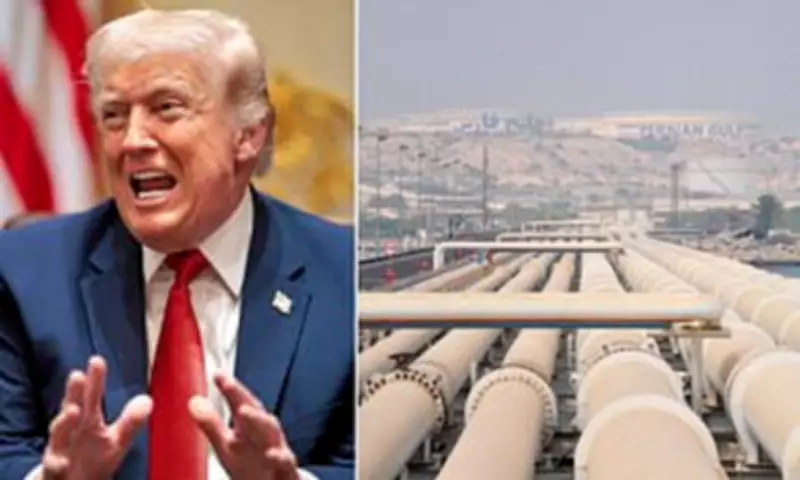
Known as Forbidden Island, Kharg Island is a speck of land 16 miles off Iran's coast, serving as the Islamic Republic's primary hub for oil exports. By seizing control of its terminal, storage tanks, and pipeline, the US could cripple Tehran's economy, which relies on Kharg for 90% of its oil output—up to 1.5 million barrels daily. At roughly eight square miles, it's comparable in size to Iwo Jima, where fierce World War II fighting resulted in thousands of US casualties.
The island features a deepwater tanker port, an airport, and military installations like the Matla ul Fajr radar station. Despite recent US airstrikes, its oil infrastructure remains intact, guarded by the Islamic Revolutionary Guards Corps (IRGC) and approximately 20,000 oil workers who may be used as human shields.
US Task Force and Deployment Strategy
The assault on Kharg could unfold from two directions: by sea from the United Arab Emirates (UAE), avoiding the Strait of Hormuz bottleneck, or by air from the USS Abraham Lincoln and UAE bases. Key assets include:
- The USS Tripoli, an amphibious assault ship carrying 2,200 Marines and 20 F-35B stealth fighters.
- MV-22 Ospreys and MH-605 Seahawk helicopters for troop transport.
- Additional ships like the USS New Orleans and USS Boxer, with thousands more Marines en route.
- 3,000 paratroopers from the 82nd Airborne Division, deployed to the Gulf under Trump's orders.
American military leaders are gathering in the UAE, a staunch Iranian adversary, as Iran targets locations like Dubai's Fairmont The Palm and Jumeirah Burj Al Arab.
Iran's Formidable Defences
Despite weeks of bombardment, Iran remains heavily armed and determined. According to Israeli thinktank Alma Research and Education Center, it possesses up to 1,000 ballistic missiles. Additionally, small-scale factories across the country are producing thousands of drones capable of carrying explosives.
Iran's mountainous Gulf coastline offers a defensive advantage, reminiscent of battles like Gallipoli and Anzio. Fanatical defenders, armed with rocket launchers, are likely well-entrenched on Kharg. Before the conflict, Iran's military included 580,000 regular troops, 190,000 IRGC members, and millions of reserves, equipped with tanks, M4A1 carbines, and Kalashnikov rifles.
Risks and Challenges of the Assault
An invasion faces numerous obstacles. Iran could set fire to oil storage tanks, creating thick smoke to hinder air assaults. A prolonged bombing campaign might soften defences but sacrifice surprise. Iranian cruise missiles, shoulder-launched weapons, and drones pose serious threats to helicopters and paratroopers, with some experts warning the initial assault could become a suicide mission.

Close-quarter fighting would diminish the US's technological edge, and casualties could be high due to difficulties in evacuating wounded soldiers from the island. Even if US troops capture Kharg, holding it would require constant defence against missile and drone attacks from the mainland, similar to Russia's struggles with Snake Island in Ukraine.
Alternatives and Broader Implications
The focus on Kharg might be a bluff, with the US potentially targeting other Gulf islands like Qeshm or Larak to block shipping channels. Special Forces raids on Iranian command centres are also possible. Alternatively, the US could aim for Chabahar port as a bridgehead, though advancing to Tehran would be a daunting task.
The ramifications are profound. A successful assault could cut off Iran's cash flow, but at the cost of heavy losses and global economic disruption, given China and India's reliance on Iranian oil. With China and Russia sharing intelligence with Iran, the propaganda value of striking a US vessel would be immense.
As the situation unfolds, the world watches to see if this will be a decisive victory or a protracted quagmire.