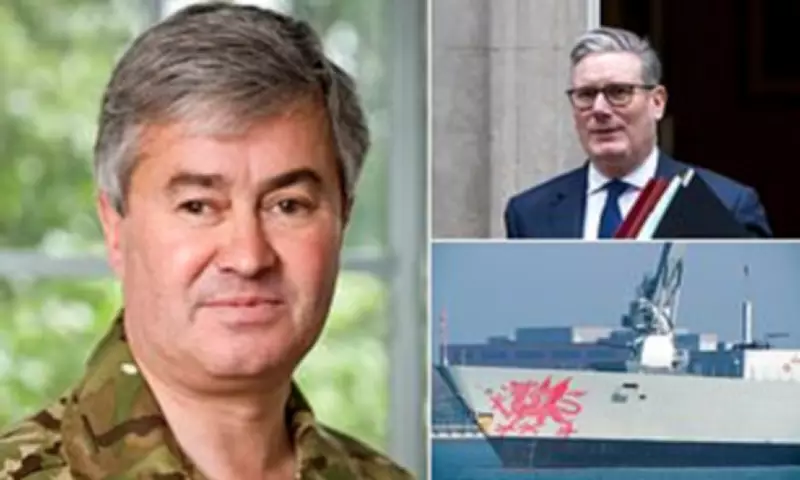
Britain's international reputation has suffered significant damage in the eyes of key allies, including the United States and Gulf States, due to its hesitant approach towards confronting Iranian aggression and defending its regional interests, according to a stark warning issued today. General Sir Richard Barrons, a highly respected former commander with extensive experience in Iraq and Afghanistan, has raised serious concerns about the strategic implications of the UK's perceived reluctance.
Strained Transatlantic Ties and Regional Doubts
General Barrons emphasised that the relationship between the United Kingdom and the United States is now under considerable strain because Britain failed to respond appropriately when called upon by its closest ally. "We have not turned up when they asked in the way that they asked," he stated bluntly, suggesting this could have long-term diplomatic consequences. He further highlighted that Prime Minister Sir Keir Starmer's delayed reactions to specific Iranian attacks, particularly those targeting RAF Akrotiri in Cyprus and other British assets in the Gulf region, have led Middle Eastern partners to question the UK's current military capabilities and resolve.
Slow Naval Deployment and Diplomatic Fallout
The criticism comes amid ongoing political controversy surrounding Sir Keir Starmer's handling of the escalating conflict initiated by former US President Donald Trump's decision to engage militarily with Iran. While the UK government has permitted the United States to utilise British bases for defensive operations, it has notably refrained from joining direct assaults on Tehran. This cautious stance is compounded by the painfully slow deployment of Royal Navy resources. The Type 45 air defence destroyer HMS Dragon, currently being loaded with missiles in Portsmouth, will not commence its journey to the Eastern Mediterranean until next week, with the voyage itself potentially taking an additional week to complete.

This protracted timeline has forced Cyprus to seek naval assistance from other European powers, namely France and Germany. Dr Kyriacos Kouros, the Cypriot High Commissioner to the UK, expressed public disappointment, stating, "Let's say the people are disappointed, the people are scared, the people could expect more." He acknowledged the planned deployment of HMS Dragon as a positive step but pointedly noted that Cyprus had successfully secured military assets from other nations more swiftly.
Strategic Defence Review and a 'Not Great Look'
General Barrons, who led a strategic defence review for the Labour Party last year, elaborated on his concerns during an interview on BBC Radio 4's Today programme. When questioned about the Prime Minister's pace in addressing the unfolding crisis, he responded, "It has diminished the relationship between the US administration and the UK." He framed the government's decision as a critical judgement call, implying that preserving the vital alliance with Washington might have warranted a different, more decisive approach.
"In the eyes of the region, however, the Gulf States, there is a sense that the UK has been slow to respond and also doesn't have much to respond with," General Barrons continued. "And they will begin to wonder if the UK actually has the muscle to apply in situations like this in the way that in former times we clearly did." He summarised the situation succinctly, adding, "It is not a great look."
Recent Attacks and Defensive Measures
The warnings follow a direct attack on Monday night, where a hangar at the RAF Akrotiri base in Cyprus was struck by an Iranian-made Shahed drone launched from Beirut, Lebanon. Cypriot officials confirmed the incident, noting that two additional drones were detected and successfully intercepted by British fighter jets operating from the same base. In response to these threats, the UK Ministry of Defence has dispatched Wildcat helicopters equipped with anti-drone capabilities to Cyprus, expected to arrive within the week.

Defence Secretary John Healey visited Cyprus today, meeting with his Cypriot counterpart, Vasilis Palmas, in a move likely aimed at reassuring the island nation. However, Dr Kouros remained cautiously optimistic in his public comments, telling the BBC, "We want to see the results. Let's hope what we hear is true and that we are on the right track." The situation underscores a growing perception that Britain's strategic influence and rapid-response capacity in global hotspots may be waning, prompting urgent questions about its future role on the world stage.