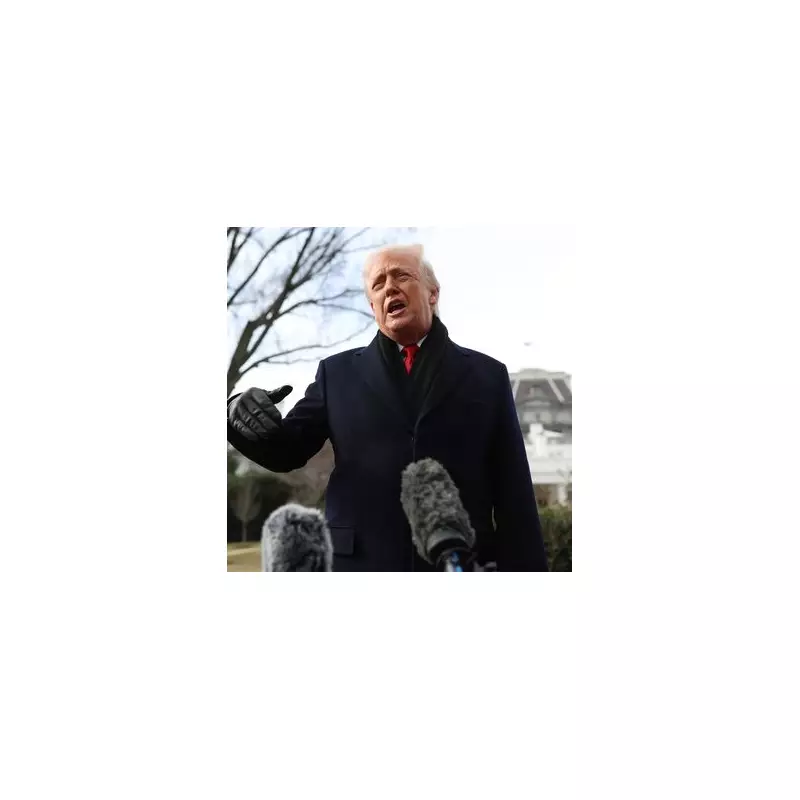
A leading defence authority has moved to clarify the United Kingdom's sovereign control over its nuclear arsenal, countering sensational claims that former US President Donald Trump holds a 'veto' over the weapons system. This comes amidst a significant diplomatic rift triggered by the recent Greenland crisis.
Trump's Provocation and the Greenland Flashpoint
The controversy ignited after Donald Trump penned an alarming letter on the morning of 19 January 2026, stating he 'no longer feels an obligation to think purely of peace'. This followed his announcement of tariffs against the UK and other NATO allies. The punitive measures were a direct response to a decision by these nations to station a small contingent of troops in the Danish territory of Greenland.
This diplomatic spat has brought long-standing anxieties about the UK's nuclear independence back to the fore. Critics have pointed to the £23 billion Trident deterrent's reliance on American technology and components, suggesting it leaves the ultimate authority in Washington's hands.

"We Control Them": The Expert Rebuttal on UK Nuclear Independence
Professor Anthony Glees, a Professor of Politics at the University of Buckingham with five decades of expertise, provided a detailed rebuttal to these claims. He acknowledged the UK's deep technical dependency on the United States, noting the Trident missiles require servicing by the US and that a maintenance contract with the American firm Lockheed Martin was extended indefinitely in 2024.
However, Professor Glees was unequivocal about the chain of command. "We control them and we can fire them if we ever needed to - there is no US veto on his doing so," he stated. He urged the nation to avoid diminishing its own capabilities, arguing, "We need to stop talking down our strength and whining that we cannot live without holding Nanny's hand. Because we can."
Broken Alliances and Future Deterrents
The professor also delivered a stark warning about Trump's actions, stating they actively undermine the NATO alliance and would ultimately weaken American power in Europe. "If we withdraw our support from America, America is the less. It's not just us that suffer, the Americans suffer," he explained, highlighting the mutual benefits of the long-standing defence partnership.
Looking to the future, Professor Glees identified a potential strategic pivot. With the UK's Vanguard-class submarines nearing the end of their service life and France also planning to replace its nuclear submarines, he pointed to opportunities for developing a separate deterrent in conjunction with Paris.
Addressing parallel fears about the UK's fleet of F-35 fighter jets, which also incorporate US technology, the expert provided reassurance. He clarified that while theoretical concerns about a 'kill switch' exist, the Royal Air Force retains a substantial fleet of alternative aircraft that could be deployed if such an extreme scenario ever unfolded.
In a scathing assessment of Trump's recent diplomatic correspondence, Professor Glees described a letter from the former president to Norwegian Prime Minister Jonas Gahr Støre as "prima facie evidence of senile dementia", incorrectly conflating the independent Nobel committee with the Norwegian government.