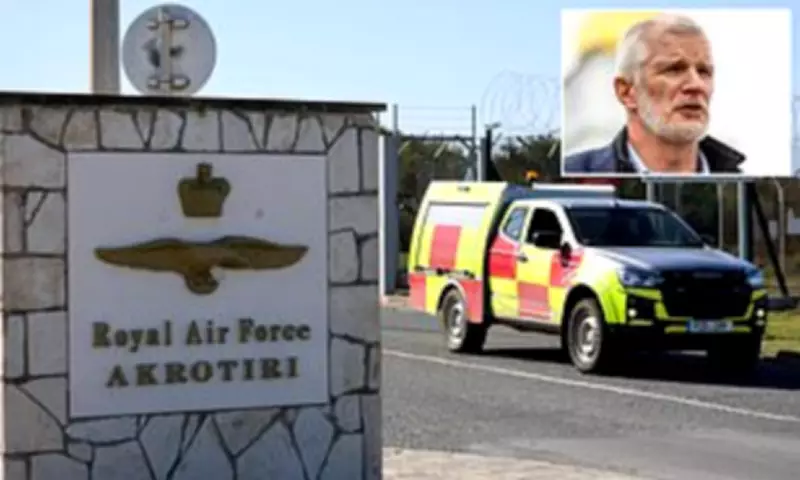
Britain's military bases in Cyprus are absolutely not open for negotiation, a senior Labour minister has firmly declared, despite the Mediterranean nation demanding "frank" discussions about the future of what it labels "colonial" outposts. Al Carns, the Armed Forces Minister, stated unequivocally that the legal status of the UK's sovereign base areas at Akrotiri and Dhekelia remains "rock solid" and entirely non-negotiable.
Cyprus President Questions Bases Following Iranian Drone Strike
The strong rebuttal comes after Cyprus President Nikos Christodoulides publicly questioned the long-term future of the British installations last month. This followed a concerning Iranian drone strike on RAF Akrotiri, which is said to have been launched by the Iranian proxy group Hezbollah from Lebanon. The attack has heightened tensions and sparked protests in Cyprus, with some citizens expressing fears that the bases could make the island a target, thereby threatening its overall security.
Historical Treaty and Current Strains
The UK's presence stems from the 1960 treaty that granted Cyprus independence, which specifically retained Akrotiri and Dhekelia as British sovereign territory. These strategically vital bases have been consistently used to conduct military operations across the Middle East. Recently, RAF jets have launched sorties from the island to help protect against further Iranian strikes. However, diplomatic relations have shown signs of strain, partly due to perceived delays in sending a British warship to help defend Cyprus during the ongoing Middle East crisis.

Speaking at a European Council meeting in Brussels during March, President Christodoulides called for an "open and frank discussion" regarding the bases' future. He described them as a "colonial consequence" on the island and emphasized the Cypriot government's responsibility for the more than 10,000 Cypriot citizens who live within the base areas.
Minister's Unequivocal Stance During Base Visit
During a recent visit to RAF Akrotiri, Minister Carns completely dismissed any notion that the Labour government would entertain talks about handing over control. "We have to be really clear on this, the legal status of the sovereign base areas is rock solid," he told The Telegraph. He argued that the current threat environment is, paradoxically, fostering closer cooperation. "What we're seeing because of the threat that has been posed, for the first time in a long time, is the Cypriots, the Brits and other allies coming together to work on an integrated plan to defend the capabilities here," Carns added. "I think we'll see a lot of positives. We can understand some of the frictions but the reality is the legal basis of these sovereign territories is non-negotiable."
Broader Regional Security Challenges Addressed
The minister also addressed wider regional security issues, including US President Donald Trump's demands for NATO allies to assist in clearing the critically important Strait of Hormuz. The strait has been effectively shut by Iran in retaliation for US and Israeli strikes, causing a sharp spike in global energy prices. Prior to the conflict, this vital waterway transported approximately one-fifth of the world's oil.
Carns, a former Royal Marine, highlighted the immense difficulty of such an operation. "To clear or secure the Strait of Hormuz in the midst of a conflict is exceptionally difficult with a range of subsurface autonomous threats, naval mines… and would require a large military effort," he stated. When questioned about whether the current two-week ceasefire between the US and Iran was sufficient time to organize a mission, he replied, "This needs to go longer and we welcome it going longer."
Defence of UK Military Capability
In a final robust defence of British military prowess, Carns also countered recent claims by President Trump that British aircraft carriers are merely "toys." The minister asserted with confidence, "Our aircraft carriers are some of the most capable in the world," reaffirming the UK's commitment to maintaining a strong and sovereign defence posture both in Cyprus and on the global stage.