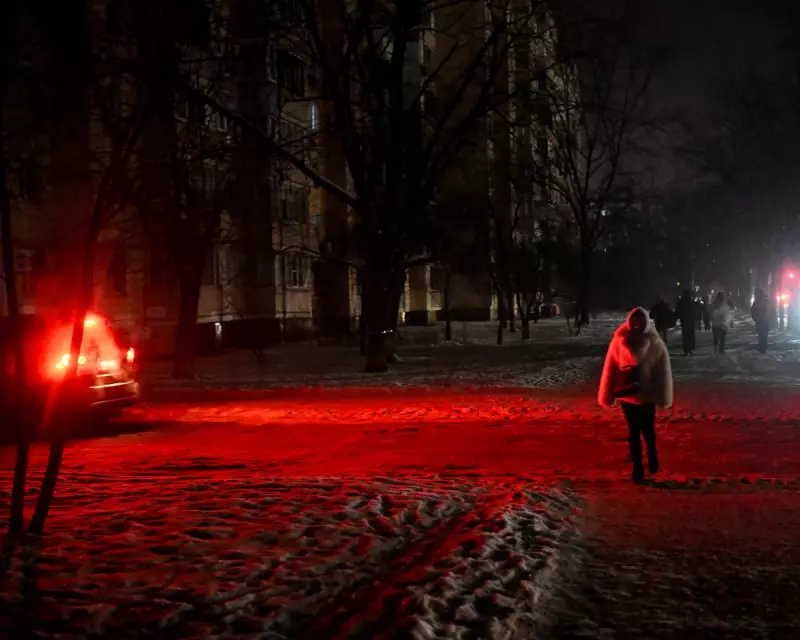
Millions of Ukrainians are facing darkness and freezing temperatures after a renewed Russian air campaign systematically targeted the country's energy infrastructure. The latest major strike destroyed a significant energy facility in Kharkiv, Ukraine's second-largest city, on Thursday, marking day 1,423 of the conflict.
Widespread Damage and Emergency Response
Kharkiv's mayor, Ihor Terekhov, confirmed the attack via Telegram, stating that emergency crews were working non-stop to manage the fallout, though the precise nature of the damaged facility was not disclosed. Regional governor Oleh Syniehubov added that officials were still assessing the full scale of the destruction.
The assault on Kharkiv is part of a broader winter offensive by Moscow aimed at crippling Ukraine's power grid. In the capital, Kyiv, the situation remains dire. Mayor Vitali Klitschko reported that approximately 300 apartment buildings are still without heating following a major attack on 9 January, which initially left half the city's high-rise residences in the cold. New strikes continued to hit the capital into Thursday evening.

President Volodymyr Zelenskyy, who has declared a state of emergency over the energy situation, chaired a crisis meeting to expedite regional responses to the infrastructure damage.
International Aid and Domestic Measures
In response to the escalating humanitarian crisis, the United Kingdom announced a new emergency support package worth £20 million (approximately $27 million) on Friday. This funding is specifically designed to help keep electricity and heating operational in critical settings such as homes, hospitals, and schools throughout the harsh winter months.
Domestically, the Ukrainian government under Prime Minister Yulia Svyrydenko has implemented several countermeasures. These include reducing overnight curfews to ease movement and allowing businesses and state institutions to import more power. In a significant move, school holidays in Kyiv have been extended until 1 February due to the unreliable energy supply.
On the diplomatic front, Foreign Minister Andrii Sybiha revealed that Ukraine's foreign and energy ministries have launched an international appeal for funds to address the energy crisis, modelled on similar meetings for military aid. Norway has already contributed an initial grant of $200 million.
Diplomatic Discussions and Internal Allegations
The crisis unfolded as International Monetary Fund managing director Kristalina Georgieva visited Kyiv for high-level talks—her first trip since 2023. Meanwhile, NATO Secretary General Mark Rutte spoke with President Zelenskyy, condemning the Russian attacks that are causing "terrible human suffering" and reaffirming the alliance's commitment to Ukraine's long-term support and defence.
In a separate development, Ukraine's anti-corruption authorities have reportedly charged prominent opposition figure and former prime minister Yulia Tymoshenko with organising a bribery scheme aimed at undermining President Zelenskyy. A spokesperson for the Specialised Anti-Corruption Prosecutor's Office confirmed the charges after raids on her Fatherland party offices. Tymoshenko has denied all accusations.
President Zelenskyy also addressed recent comments by Donald Trump, asserting in his nightly video address that "Ukraine has never been and will never be an obstacle to peace." The nation continues to grapple with the dual challenges of wartime aggression and the urgent need to sustain its civilian population through a brutal winter.