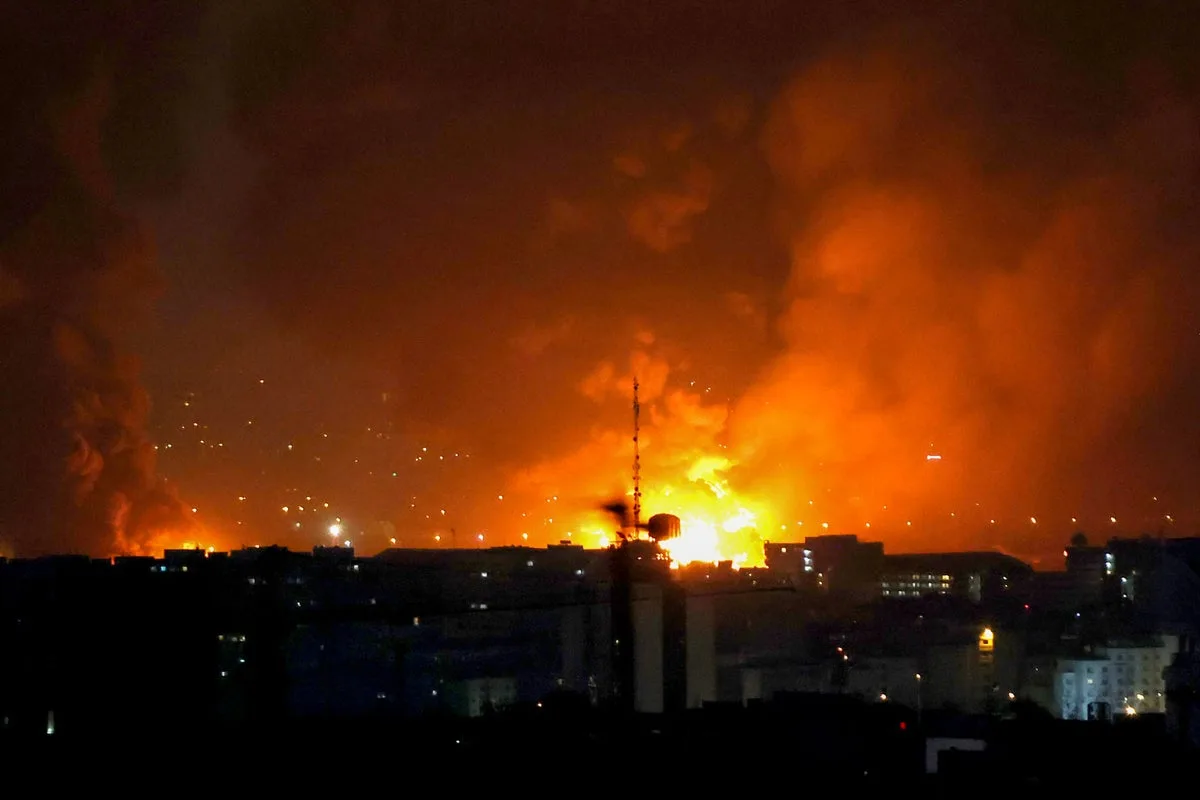
President Donald Trump publicly maintains that a ceasefire with Iran remains a possibility, but behind the scenes, a starkly different reality is unfolding. Within the depths of the Pentagon and the White House, military commanders are reportedly preparing for what anonymous defence department sources describe as 'the final blow'—a comprehensive air, sea, and land assault aimed at opening the Strait of Hormuz, safeguarding the global economy, and decisively crushing Tehran's resistance.
Shrouded Plans and Shifting Timetables
The exact scope and timetable of these military plans remain shrouded in mystery, with details continuously evolving. However, one certainty persists: when action is taken, it will be meticulously recorded. The explosion-filled footage will be edited into short video compilations, designed specifically to impress the Commander-in-Chief. For Trump, life inside the campaign headquarters has transformed into a non-stop video game, where war is treated as a deadly yet visually engaging spectacle.
The Daily Routine of Destruction
Officials from US Central Command are tasked not only with ensuring the smooth execution of America's increasingly complex operations in the Middle East but also, according to high-level sources, with feeding their screen-addicted President a daily stream of satisfying footage featuring 'stuff blowing up.' Since Operation Epic Fury commenced one month ago with the initial bombings of Iran, Trump's workday routine has included regular sessions in the newly renovated White House Situation Room.
Amid oak panels and large screens, Trump sits alongside close advisers such as Chief of Staff Susie Wiles, Secretary of State Marco Rubio, Secretary of War Pete Hegseth, and Chairman of the Joint Chiefs of Staff General Dan 'Raizin' Caine. During these meetings, the team is reportedly shown 'strike montages'—two to three-minute videos showcasing satellite or aircraft footage of Iranian targets being pulverised into smoke and dust. With approximately 10,000 targets struck in the past four weeks, these videos serve as a highlights package rather than a comprehensive review.
A Visual President and His War Cabinet
While there is said to be a 'written component' to these briefings, insiders emphasize that Trump is a visual creature who thrives on imagery. Before and after screenings, he engages in discussions about the progress of Operation Epic Fury, demanding feedback and advice on how best to proceed. Trump often takes calls from reporters during these sessions, occasionally putting his phone on loudspeaker to 'workshop' talking points with members of his war cabinet.
On Wednesday, the White House pushed back against suggestions that the President has been treating the Situation Room as a private cinema, attempting to deny the allegations. Yet, the claims persist, with sources indicating that even if the top-secret presentations are more 'sombre' than the administration's social media channels—which pump out 'hype-videos' blending bomb footage, memes, cartoons, and pop songs—the core practice remains. Notably, there is no musical accompaniment in the Situation Room itself.
Concerns Over 'Destruction Porn'
Many in Washington express deep concern that Trump and his team have become hooked on 'destruction porn,' potentially at the expense of strategic wisdom. Critics argue that the constant stream of 'bomb-bomb-bang-bang' footage may be warping Trump's perception of how the war is unfolding. Some question whether the President has been shown contrasting footage, such as evidence of Iranian missiles and drones hitting US bases across the Middle East.
White House Press Secretary Karoline Leavitt has rejected claims that the Commander-in-Chief is obsessed with war porn, stating, 'That's an absolutely false assertion coming from someone who has not been present in the room.' She added that Trump actively seeks and solicits opinions from everyone present, expecting full-throated honesty from his top advisers. However, she did not deny the existence of video briefings, lending credibility to the reports.
From Mar-a-Lago to Media Complaints
A makeshift war room also exists at Trump's Mar-a-Lago mansion in Palm Beach, Florida, where he watched the first night of strikes on Saturday, February 28. On weekdays, however, Trump conducts operations from Washington, frequently complaining about negative portrayals of his war on national television. He questions why the 'fake news' media does not show more of the 'magnificent carnage' he witnesses firsthand.
Trump is not the first President to accuse the media of failing to showcase military success in its full patriotic splendour. Lyndon Johnson berated the press for negative coverage of Vietnam, while George W. Bush criticized focus on car bombs in Iraq over reconstruction efforts. Yet, no previous administration has turned war into the art form promoted by Team Trump.
Surreal Propaganda and Confusion
The White House and Department of War media channels have been pumping out surreal propaganda, including videos that blend real black-and-white strike scenes with clips from Nintendo Wii sports games. One clip features rousing images of troops accompanied by Secretary Hegseth reading a warrior prayer; another begins with him declaring 'we negotiate with bombs' over an ominous soundtrack. While TV comedians have mocked Hegseth, the Pentagon's own output often rivals satire.
At times, Trump appears confused about what is real and what is not. Last week, he recounted phoning a senior military commander after watching a fake video of the USS Abraham Lincoln aircraft carrier in flames. The general reassured him that no bullets were fired, stating, 'They know better than to do that.' Trump also enjoys regaling audiences with war stories, such as the assassination of Iranian general Qasem Soleimani on January 2, 2020, which he describes vividly at fundraising events.
Growing Disquiet and Election Fears
Having campaigned as an anti-war candidate, Trump has attacked Yemen, Somalia, Nigeria, and Venezuela in his second term, now waging his largest military campaign yet—and seemingly relishing it. After the raid on Caracas in January, where US forces seized Nicolas Maduro, Trump compared watching the mission to 'literally like watching a TV show,' marveling at the soldiers' speed and violence. He has even taken to making 'bing bing' noises in press conferences while describing action.
Even among Republicans, there is deep disquiet. Yesterday, reports emerged that senior figures stormed out of a secret Iran briefing on Wednesday, claiming to have been 'misled' about the administration's true objectives. With mid-term election campaigns underway, fears are growing among Americans—including parts of his MAGA base—that the 47th President has lost touch with reality. Concerns persist that, sitting comfortably in the Situation Room with supporters, he might find the spectacle of US troops in action too exciting to resist.






