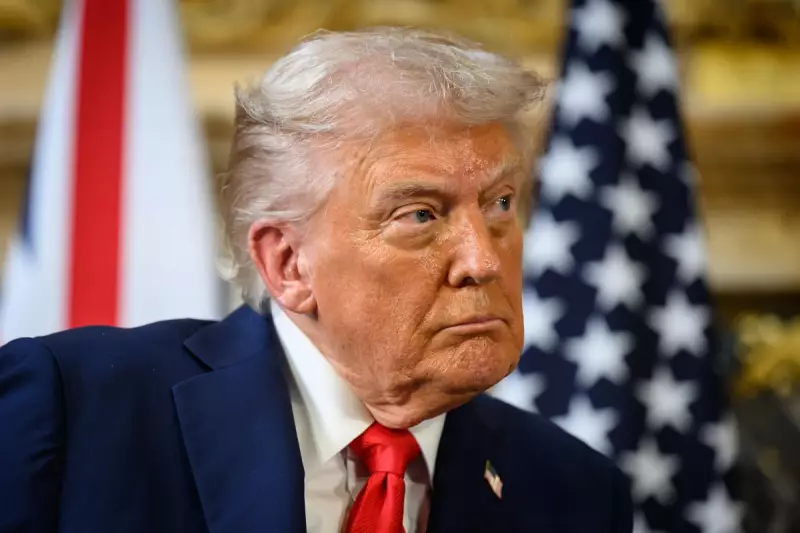
One year into his unprecedented second term, US President Donald Trump has pursued an aggressively interventionist foreign policy starkly at odds with his inaugural promise to put "America First". Despite pledging to avoid foreign entanglements, his administration has greenlit military strikes across multiple continents, seized assets, and overseen the shock capture of a foreign head of state.
A Doctrine of Disruption
Trump's actions, according to analysts, represent a profound shift from strategic alliance-building to transactional disruption. Aurélien Colson, academic director at the ESSEC Business School Institute for Geopolitics & Business, told The Independent that Trump's National Security Strategy explicitly aimed to "undermine the EU as a political and strategic actor." The so-called "Donroe Doctrine"—Trump's twist on the historic Monroe Doctrine—revives a logic of spheres of influence, prioritising personal diplomacy and opaque deals over established international rules.
"What he appears to seek is not a stable international order, but a world in which power is personalised, deals are opaque, and loyalty matters more than rules," Colson explained. The consequence, he argues, is not 'America First' but "America Isolated", with eroded credibility and emboldened strategic rivals.

The Global Battlefield: Eight Nations in the Crosshairs
Over the past twelve months, Trump has authorised direct military action in eight countries. The campaign began just 10 days after his January 2025 inauguration with strikes against ISIS in Somalia. To date, his administration has launched 135 strikes in Somalia alone, surpassing the combined totals of the Bush Jr, Obama, and Biden presidencies, according to the New America think tank.
Further actions followed rapidly:
- Iraq & Syria: Precision strikes targeting ISIS leadership, including the killing of the group's second-in-command in Al Anbar province, under operations like Hawkeye Strike.
- Yemen: A sustained bombing campaign against Houthi rebels involving over 1,100 strikes at a cost exceeding $1 billion, in retaliation for Red Sea ship attacks.
- Iran: In June 2025, the US launched bombing raids on nuclear facilities at Fordow, Natanz, and Esfahan after Iran was found violating non-proliferation commitments.
- Venezuela: The most dramatic intervention saw US special forces capture President Nicolás Maduro in Caracas on 3 January 2026. He was extradited to New York to face charges, and the US took control of global sales of Venezuelan crude oil.
- Nigeria: On Christmas Day 2025, strikes hit ISIS targets in Sokoto state, which Trump framed as protecting Christians.
Future Flashpoints: Greenland, NATO, and Latin America
The administration's gaze now appears to be turning elsewhere, causing alarm among allies and adversaries alike. Trump has repeatedly threatened to acquire Greenland, a semi-autonomous Danish territory, citing national security fears over Russian or Chinese influence. His refusal to rule out military action has strained NATO, prompting European troop deployments to the region.
In Latin America, key figures have warned that Cuba and Colombia could be next. US Secretary of State Marco Rubio suggested Cuba was "in a lot of trouble" following Maduro's capture, while Trump personally criticised Colombian President Gustavo Petro. Mexico has also faced threats over drug cartels and migration, with Trump warning he would "have to do something" if the government did not act.
Even Canada has not been spared, with Trump repeatedly musing about annexing the country as the "51st state" and threatening economic force to achieve his aims. A recent poll indicated nearly half of Canadians now view the US as an "enemy or potential threat."
As his second term progresses, Trump's blend of military action, economic coercion, and personalised diplomacy continues to redraw the map of global power, leaving a trail of heightened tensions and a fraying international order in its wake.