
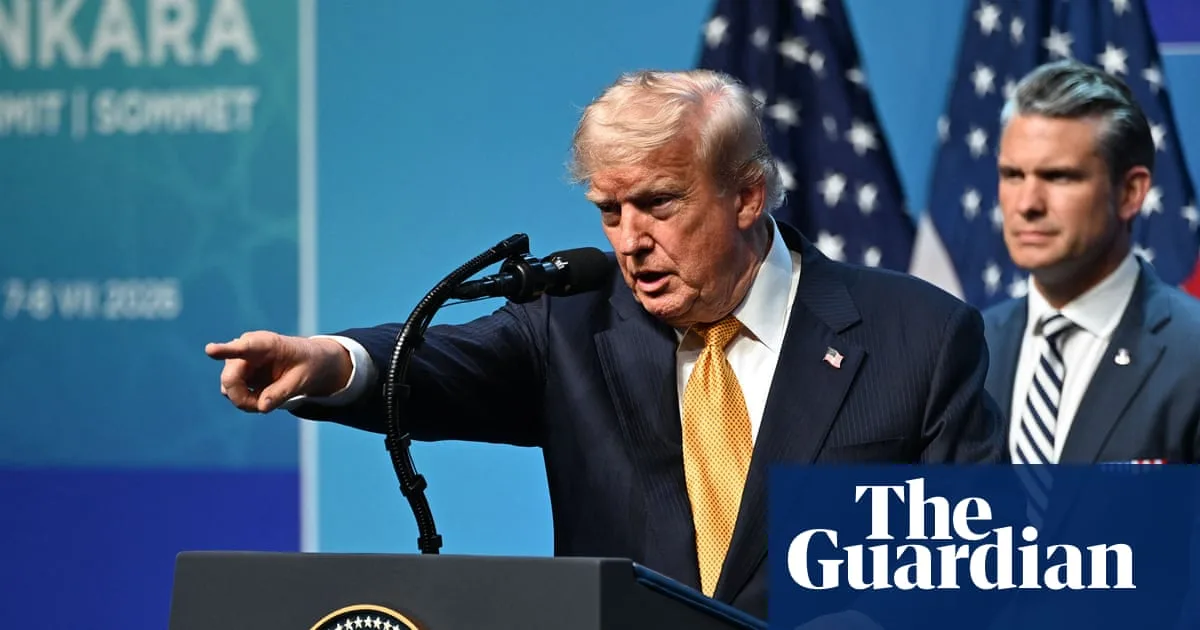
Europe has finally accepted that it can no longer rely on the United States for its defence, according to defence analysts and officials at this week’s Nato summit in Ankara. The gathering of the alliance’s 32 leaders was overshadowed by President Donald Trump’s unpredictable behaviour, including threats to annex Greenland and attacks on allies for low defence spending.
Diplomats scrambled to reaffirm Article 5, the collective defence clause, in a joint statement. However, questions remain over whether the US would honour the commitment in a crisis. Trump’s presidency has shattered the post-war assumption that America is the ultimate guarantor of European peace.
Nato secretary general Mark Rutte framed the summit around delivery, noting that Europe and Canada are “stepping up” after US demands. Defence spending has risen, with Poland and the Baltic states spending over 4% of GDP, while Spain has refused to sign up to 3.5%. The UK and 11 other Nato countries committed to a £37bn project over the next decade for new missile capabilities.
“Europe has gone through the five stages of grief and we’ve certainly arrived at acceptance,” said Dan Sabbagh, the Guardian’s defence editor. “We are at the point where Europe is starting to build.” However, the continent’s ability to defend itself without American help remains uncertain, as arms industries are still recovering from years of underinvestment.




