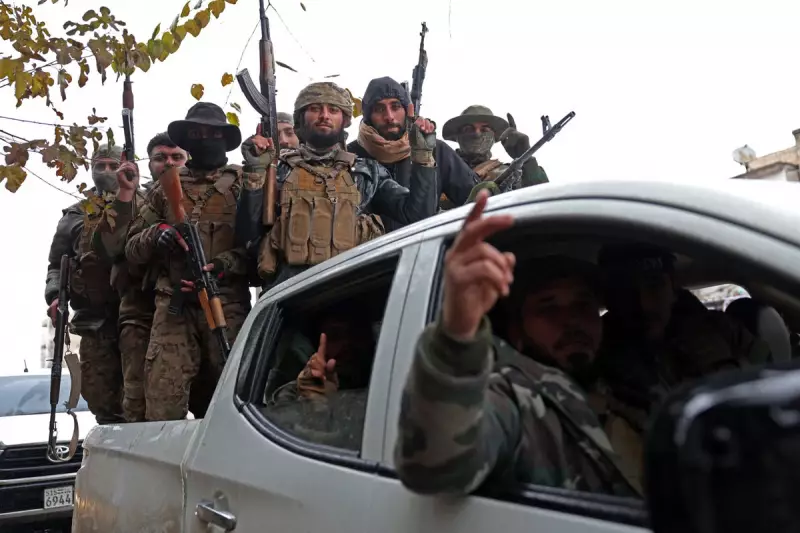
In a major realignment of power within Syria, the Kurdish-led Syrian Democratic Forces (SDF) are poised to merge into the country's national army. This significant development follows a series of military defeats for the SDF and marks a potential end to Kurdish ambitions for an autonomous region in northeast Syria.
From Key US Ally to Integration
The SDF, once a crucial US-backed alliance and the most effective ground force against the Islamic State group in Syria, has suffered substantial territorial losses in recent weeks. Syrian government forces, loyal to interim President Ahmad al-Sharaa, captured extensive areas in the country's northeast following deadly clashes. With SDF fighters now largely confined to Hassakeh province, this shift in control undermines the long-held Kurdish project for self-rule in an area known as Rojava.
The SDF was founded in 2015 with American support and was a religiously and ethnically diverse coalition. It included Arab, Kurdish, and Turkmen fighters, as well as the main Christian militia in the northeast, the Syriac Military Council. However, its dominant faction was always the Kurdish People's Protection Units (YPG). Before Syria's civil war began in 2011, Kurds made up roughly 10 per cent of the nation's 23 million population.

A Deal Forged and Tested
Relations between Damascus and the SDF remained cold after the ouster of former President Bashar al-Assad in December 2024. A surprise breakthrough occurred in March 2025 when SDF chief Mazloum Abdi travelled to Damascus and signed an initial agreement with President al-Sharaa. This deal outlined a merger of the SDF into the Syrian army by the end of 2025, though disagreements on the implementation persisted.
By October 2025, Abdi stated that the SDF had agreed in principle to merge as a cohesive group. However, a visit by Abdi to Damascus in early January 2026 to discuss the merger yielded no "tangible results," according to state media. Shortly after this stalemate, deadly clashes erupted in Aleppo, leading to an SDF evacuation from three neighbourhoods it had controlled for years.
This triggered a full-blown government offensive that captured towns east of Aleppo and expanded into the critical northern province of Raqqa and the oil-rich eastern province of Deir el-Zour. The offensive culminated on Sunday, 18 January 2026, with the government announcing a ceasefire, leaving the SDF in control of only Hassakeh province.
Terms of the Ceasefire and Merger
Under the new ceasefire agreement, the SDF's integration into the state apparatus will proceed, but not as the cohesive unit its leadership had hoped for. SDF fighters will merge into the national army and police forces as individuals, not as a single bloc. The Kurdish-led force must also hand over the names of commanders who will be offered high-ranking military and governmental posts.
In a conciliatory gesture, President al-Sharaa issued a decree making Kurdish an official language alongside Arabic and adopting the Kurdish new year as a national holiday. The agreement also addresses critical security concerns, stating that the Syrian government is now committed to the fight against IS as a member of the US-led coalition.
A major outstanding issue is the fate of prisons and camps holding Islamic State members and their families. The SDF currently controls facilities holding some 9,000 IS members without trial and the al-Hol and Roj camps, home to tens of thousands, mostly women and children linked to the extremist group. Under the 14-point ceasefire, the authorities running these sites will merge into the government, which will become "fully in charge" of their legal and security affairs, though no specific deadline was set.
The dissolution of the SDF, which once fielded an estimated 40,000 fighters and played the key role in defeating IS's territorial caliphate in March 2019, now seems imminent. This consolidation of power strengthens President al-Sharaa's authority as he moves to integrate one of the last major independent forces within Syria's borders.