Prime Minister Keir Starmer to Advocate for European Defence Autonomy at NATO Conference
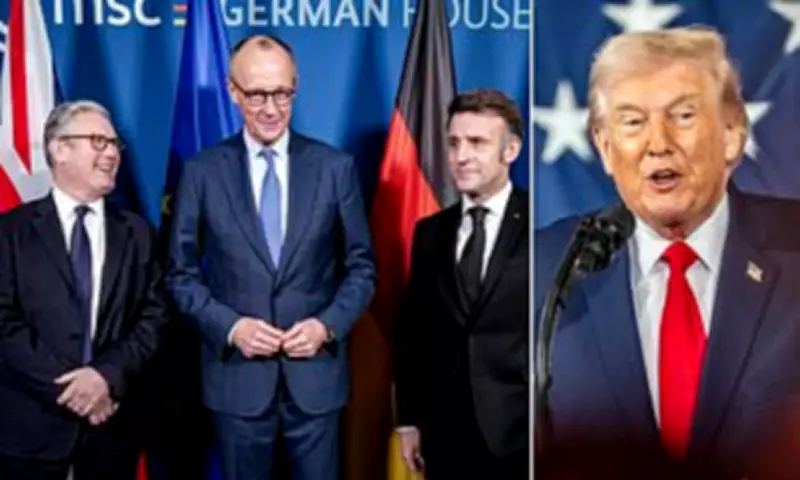
In a landmark security address today, Prime Minister Sir Keir Starmer is set to deliver a stark warning to NATO, urging the alliance to fundamentally transform into a more European-based defence force while significantly reducing its longstanding reliance on the United States. This speech, his first major security policy declaration since former President Donald Trump's controversial threat to annex Greenland, will outline a vision for reshaping transatlantic relationships.
Reintegrating with Europe for Security and Economic Stability
According to sources within Number 10, Starmer's address at the Munich Security Conference in Germany will emphasise the critical need for the United Kingdom to reintegrate with European partners for both security and economic reasons. The Prime Minister is expected to candidly acknowledge that the UK and other European nations have historically been overdependent on American military and strategic support, a vulnerability highlighted by recent geopolitical tensions.
Starmer will argue for a new framework of interdependence rather than dependence, advocating for Britain and its European allies to collaboratively reshape their relationship with the United States. This approach aims to foster mutual cooperation while bolstering European autonomy in defence matters.

A Vision for European Security and Industrial Collaboration
In his prepared remarks, Starmer is anticipated to state: 'We are not the Britain of the Brexit years any more, because we know that, in dangerous times, we would not take control by turning inward. We would surrender it. I won’t let that happen.' He will further assert that 'There is no British security without Europe, and no European security without Britain. That is the lesson of history – and it is today’s reality too.'
The Prime Minister will elaborate on his vision for enhanced European security and greater autonomy, clarifying that this does not signal a withdrawal of US involvement but rather responds to calls for more equitable burden-sharing within the alliance. Starmer will highlight that British companies already constitute over a quarter of the continent's defence industrial base, proposing to leverage UK leadership in defence, technology, and artificial intelligence in partnership with Europe to amplify collective strengths.
He envisions building a shared industrial base across Europe capable of turbo-charging defence production, thereby strengthening continental security infrastructure.
Geopolitical Context and Transatlantic Tensions
The speech comes against a backdrop of heightened transatlantic strains, notably triggered weeks ago when former President Trump refused to rule out military action against NATO ally Denmark to occupy Greenland. This threat served as a wake-up call for European nations, underscoring the precarious nature of overreliance on US security guarantees.
Starmer will reference the 'evolving' national security position of the United States, alluding to Trump's strategic focus on the Americas and the Pacific regions, which has raised concerns about America's commitment to European defence.
Further illustrating the rift in transatlantic relations, German Chancellor Friedrich Merz informed conference delegates yesterday of a significant 'rift' in Europe's relationship with the US. This disclosure coincided with revelations that Germany is engaged in secret talks with French President Emmanuel Macron regarding potential nuclear capability sharing, indicating a move towards greater European self-sufficiency.
Political Reactions and Strategic Implications
Shadow Foreign Secretary Priti Patel responded to the Prime Minister's anticipated remarks by cautioning against extremes, stating: 'Britain is uniquely placed to help bring the US and Europe together. We must not be overdependent on America, but neither should we offer Europe a blank cheque.' This highlights the delicate balance the UK government must navigate in fostering European collaboration while maintaining strategic ties with the United States.

The Munich Security Conference has previously been a venue for transatlantic discord, with US Vice-President JD Vance shocking delegates last year by criticising European values and attitudes towards free speech. Starmer's address aims to chart a new course, positioning the UK as a pivotal bridge in revitalising NATO's European pillar and ensuring collective security in an increasingly volatile global landscape.