Small EU Nations Forge Major Role in Drone Production for Ukraine
Even the smallest European Union member states are now making significant contributions to arms production, with drones being dispatched to Ukrainian frontlines and other global destinations. This development marks a notable shift in the continent's defence landscape, driven by geopolitical pressures and technological innovation.
Cyprus Emerges as Unexpected Drone Manufacturing Hub
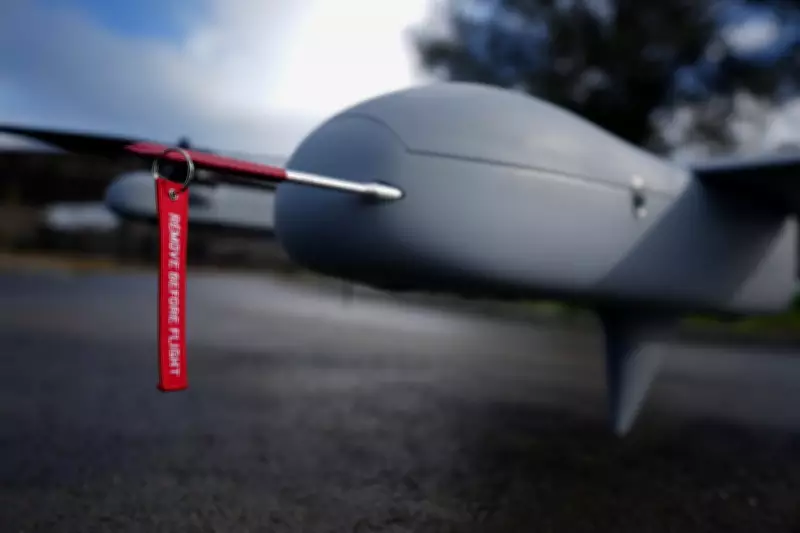
The distinctive buzz of propellers heard across Ukrainian battlefields may originate from an unlikely source: Cyprus, a Mediterranean island nation with a population barely exceeding one million. Manufacturer Swarmly has confirmed that over two hundred of its H-10 Poseidon drones are actively assisting Ukrainian artillery units in targeting enemy positions under various weather conditions.
These drones have accumulated more than one hundred thousand flight hours over the past three years, demonstrating their operational reliability. Within Swarmly's expansive five-thousand-square-meter factory, the constant whirring of grinders shaping composite plastics echoes through the facility, which has evolved into a primary source of uncrewed vehicles for international clients.

According to company officials, exports extend beyond Ukraine to nations including Indonesia, Benin, Nigeria, India, and Saudi Arabia. While most factory space is dedicated to aerial drone production, a secure storage area houses Swarmly's rapid marine drones equipped with high-definition cameras and .50-caliber machine guns.
European Defence Transformation Accelerates
Russia's full-scale invasion of Ukraine has catalysed even the most modest EU nations to cultivate domestic high-tech defence industries. This mirrors how necessity has positioned Kyiv as a global leader in cutting-edge unmanned aerial vehicle technology. Numerous EU countries have established partnerships with Ukraine to advance this technology, frequently using Ukrainian frontlines as testing grounds for new systems.
Beyond Cyprus, Baltic nations and Denmark have significantly accelerated their domestic drone and counter-drone capabilities. Greece has incorporated drone technology into a comprehensive twenty-five-billion-euro overhaul of its armed forces, reflecting broader regional trends.
Federico Borsari, an expert at the Washington-based Center for European Policy Analysis, observed: "The example of Swarmly, alongside other significant companies based in small EU countries, demonstrates the serious effort made by Europe's private sector to innovate and establish mass production capacity for defence items, including uncrewed systems."
Drones as Strategic Force Multipliers
Unmanned aerial vehicles are fundamentally reshaping modern warfare by providing less militarily capable nations with leverage against superior adversaries. While drones will not entirely replace traditional big-ticket weaponry like tanks, artillery, and warplanes, they offer remarkable flexibility and cost-effectiveness, serving as formidable force multipliers.
Consider Swarmly's satellite-guided Hydra marine drone, which carries explosive payloads. Each unit costs approximately eighty thousand euros, meaning deploying a group to neutralise a billion-euro warship represents a strategic bargain, according to company director Gary Rafalovsky.
Fabian Hinz, a research fellow for missile technologies and UAVs at the International Institute for Strategic Studies in Europe, noted that such naval weapons destroying larger warships is already evidenced by Houthi attacks from Yemen. He added that entry barriers for undercapitalised companies remain low because UAVs are often designed and assembled from inexpensive, readily available global market components.
"This means you don't require substantial initial industrial investment compared to other military capabilities. Decades of experience in specific material sciences aren't necessary," Hinz explained.
Regional Developments Across Europe
In Denmark, companies specialising in anti-drone devices report surging client demand, with some equipment destined for Ukraine to jam Russian battlefield technology. Ukraine announced a partnership with Danish firms in September to manufacture missile and drone components at a Danish factory.

Lithuania has seen scientists and business partners collaborate under the VILNIUS TECH initiative to develop UAVs, automated mine detection systems, and other military technologies. The state-run ammunition factory Giraite has increased production capacity by fifty percent since 2022.
Greece showcased its domestically produced drones and counter-drone technology during a full tactical exercise in November, coinciding with NATO urging Europe's defence sector to accelerate development. NATO Secretary-General Mark Rutte emphasised during a visit to Romania: "We need capabilities, equipment, real firepower and the most advanced technology. Bring your ideas, test your ingenuity and use NATO as your test bed."
Despite rapid drone development, Borsari cautioned that UAV advantages are often moderated by variables including harsh operational environments, operator training and skill levels, and logistical support depth required to maintain functionality.
Europe's Strategic Shift Towards Defence Self-Reliance
Russia's war in Ukraine, combined with the Trump administration's mixed messages straining NATO relations, has compelled European leaders to confront the necessity for greater defence self-reliance. Consequently, the EU has allocated billions of euros to encourage investment and strengthen collective deterrent capabilities.
This has particularly benefited nations like Cyprus, which assumed the six-month EU presidency on January first. Recently, the EU's executive arm approved financial assistance for eight members including Spain, Croatia, Portugal, Bulgaria, Belgium, Romania, and Cyprus.
Cyprus is poised to receive final approval for approximately 1.2 billion euros in low-cost, long-term loans under the EU's 150-billion-euro joint procurement programme, Security Action for Europe. Panayiotis Hadjipavlis, chief of the armaments and defence capabilities development directorate within Cyprus' Defence Ministry, revealed that the nation's nascent defence industry comprises around thirty companies and research centres producing dual-use technology.
"We have niche capabilities in very high-tech products, and this must be taken seriously into account," Hadjipavlis stated, adding that major defence industry players should take note of these developments.