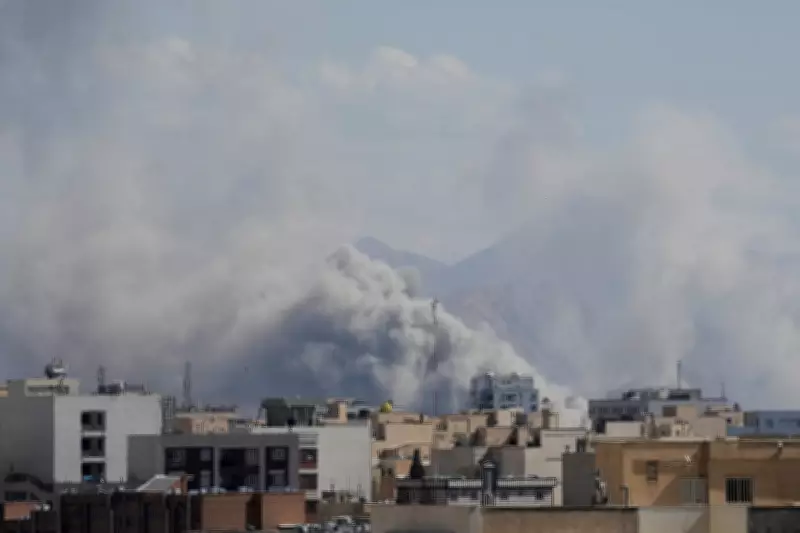
Six US Service Members Killed in Action During Iran Strikes
Six United States service members have been confirmed killed in action following a series of attacks by Iran over the weekend, according to official statements from the US military. The identities of the fallen troops have not yet been publicly released, as next of kin notifications are still being conducted by military authorities.
Details of the Casualties and Ongoing Combat
US Central Command provided specific details regarding the casualties through official communications on social media platform X. Three service members were killed on Sunday, with an additional five sustaining serious wounds from shrapnel during the initial wave of Iranian attacks. A fourth service member, who was critically injured in those same initial assaults, later succumbed to their wounds while receiving medical treatment.
On Monday, March 2nd, military officials announced that the remains of two additional service members had been recovered from a facility that was struck during Iran's opening attacks in the region. "As of 4 pm ET, March 2, six U.S. service members have been killed in action," Central Command stated. "Major combat operations continue and our response effort is ongoing."

The exact locations where these troops were killed have not been immediately disclosed by defense officials. All identities are being withheld for at least twenty-four hours following proper notification of family members, in accordance with standard military protocol.
Military Leadership Responds to Losses
During a Monday morning press conference, Defense Secretary Pete Hegseth and General Dan Caine, Chair of the Joint Chiefs of Staff, addressed the casualties and the ongoing military situation. General Caine offered solemn tribute to the fallen service members, stating, "Our deepest heartfelt condolences are with their families. We will never forget you."
Caine emphasized that the US military strikes against Iran do not constitute a brief, isolated operation. "This is major combat operations," he declared. "We expect to take additional losses." This sober assessment was echoed by President Donald Trump, who posted a video message on Truth Social on Sunday acknowledging the likelihood of further casualties. "Sadly, there will likely be more... before it ends, that's the way it is. Likely be more," the President stated.
Background of the Coordinated Strikes
The casualties occurred amidst a significant escalation of hostilities between the United States, its allies, and Iran. Over the weekend, the US and Israel launched coordinated attacks against Iran, an operation officially designated by American forces as "Operation Epic Fury." These strikes resulted in the death of Iran's Supreme Leader, Ayatollah Ali Khamenei, along with several other high-ranking Iranian officials.
Iran has responded with a substantial wave of missile and drone attacks across the Middle East. In retaliation, Iranian military forces have targeted both Israel and US bases throughout the region, leading to the deaths of the six American service members. Additional Iranian strikes have reportedly killed several individuals in Gulf nations, including the United Arab Emirates and Kuwait.
Three key American allies—Britain, France, and Germany—have declared their readiness to join forces with the United States to counter Iran's retaliatory missile and drone campaigns. This international dimension adds complexity to the ongoing conflict.
Political Fallout and Regional Implications
The death of the 86-year-old Ayatollah Khamenei, who had no formally designated successor, has created a significant power vacuum within Iran. The Islamic Republic must now select a new supreme leader for the first time since 1989, a process that Iranian officials have indicated will occur within the coming days. While there have been reports of scattered celebrations following Khamenei's death, comprehensive internet restrictions within Iran have limited information about the true domestic reaction.

President Trump has publicly urged Iranian citizens to seize this moment of transition to "take over" their government. Despite the intense military engagement, the United States has expressed a willingness to engage in dialogue with Iran's future leadership, even as American military installations in the region remain under threat from continued Iranian attacks.
As the conflict persists, Iran continued to fire missiles at Israel and various Arab states on Monday. Reports indicate that one strike hit the US Embassy compound in Kuwait. Concurrently, US and Israeli forces maintained their offensive operations against targets within Iran.
In a separate but related incident, the US military's Central Command reported that Kuwait "mistakenly shot down" three American F-15E Strike Eagles. Fortunately, all six aircrew members aboard these aircraft ejected safely, were located, and are currently in stable condition.
The weekend strikes were the culmination of weeks of surveillance by US and Israeli intelligence agencies, which had been closely monitoring the movements of senior Iranian leaders, including Ayatollah Khamenei, in preparation for the offensive. President Trump has suggested that the current conflict could extend for approximately four weeks, despite earlier comments indicating that military operations were progressing ahead of schedule.