Seventh US Service Member Dies in Iran Conflict as War Intensifies
The United States has confirmed the death of a seventh service member in the ongoing conflict with Iran, marking another tragic loss as hostilities continue to escalate. According to the US Central Command, the unidentified soldier succumbed to serious injuries sustained during an Iranian attack on American troops stationed in Saudi Arabia on March 1. The announcement was made on Sunday afternoon, with the agency stating that the fallen soldier's identity will be withheld for 24 hours to allow for notification of next of kin.
President Trump Attends Dignified Transfer Ceremony
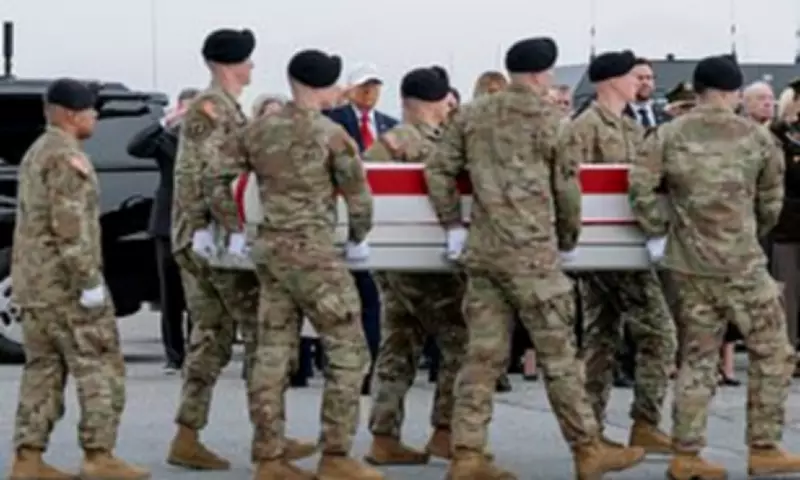
This devastating news follows President Donald Trump's attendance at a dignified transfer ceremony on Saturday, where he honored six US service members killed earlier in the conflict. The President traveled to Dover Air Force Base to witness the return of the remains of these soldiers, who died in Kuwait. The six Americans were identified as Army reservists from the 103rd Sustainment Command based in Des Moines, Iowa: Nicole Amor, 39; Cody Khork, 35; Declan Coady, 20; Robert Marzan, 54; Jeffrey O’Brien, 45; and Noah Tietjens, 42.
In a phone interview with the Daily Mail last week, President Trump expressed his willingness to attend the ceremony, a plan that was later confirmed by White House press secretary Karoline Leavitt during her Wednesday briefing. The event saw Trump, First Lady Melania Trump, and Vice President JD Vance present, along with other cabinet members. This marked the President's second visit to Dover for such a military ceremony during his second term, having previously attended one in December to honor two US Army soldiers and a civilian interpreter killed by an ISIS-affiliated gunman in Syria.

Historical Context of Presidential Ceremony Attendance
During his first term, President Trump attended only four dignified transfer ceremonies, a record that occasionally drew political criticism. His first such ceremony occurred on February 1, 2017, just weeks into his presidency, where he faced a notable incident. Bill Owens, the father of slain Navy SEAL William 'Ryan' Owens, refused to shake Trump's hand, expressing anger over a raid in Yemen that the President approved six days into his term. Owens questioned the necessity of the operation, telling the Miami Herald that prior to this, there had been no boots on the ground in Yemen for two years, with operations limited to missiles and drones.
Following this, Trump did not return to Dover for another dignified transfer ceremony until nearly two years later, on January 19, 2019. The issue of presidential conduct at these ceremonies has also affected other administrations. During the Afghanistan pullout in August 2021, President Joe Biden faced backlash when he was seen looking at his watch multiple times during a dignified transfer ceremony for 13 US service members killed in a terror attack outside Kabul International Airport, sparking outrage among veterans and GOP commentators.
Escalating Violence and Regional Impact
The conflict between the US, Israel, and Iran continued to intensify on Sunday, with Iran launching a series of ballistic missiles and drones at the United Arab Emirates and Israel in retaliation for overnight bombardments in Tehran. This attack resulted in at least six injuries in Israel, including one serious case. In response, President Trump has vowed to increase US military strikes against Iranian targets.
Further developments include the reported death of Abu al-Qassem Baba’iyan, head of Iran's Military Office and Chief of Staff of the Khatam al-Anbiya Central Headquarters, in the latest wave of attacks, as claimed by the IDF on social media platform X. Baba’iyan is the latest high-ranking Iranian official to be killed in Israeli strikes. Earlier in the conflict, Trump announced that Iran's Supreme Leader, Ayatollah Khamenei, had been killed in an airstrike, though this has not been independently verified.
As the war rages on, the loss of a seventh American service member underscores the human cost of this escalating conflict, with political leaders navigating both military strategy and the solemn duties of honoring the fallen.