
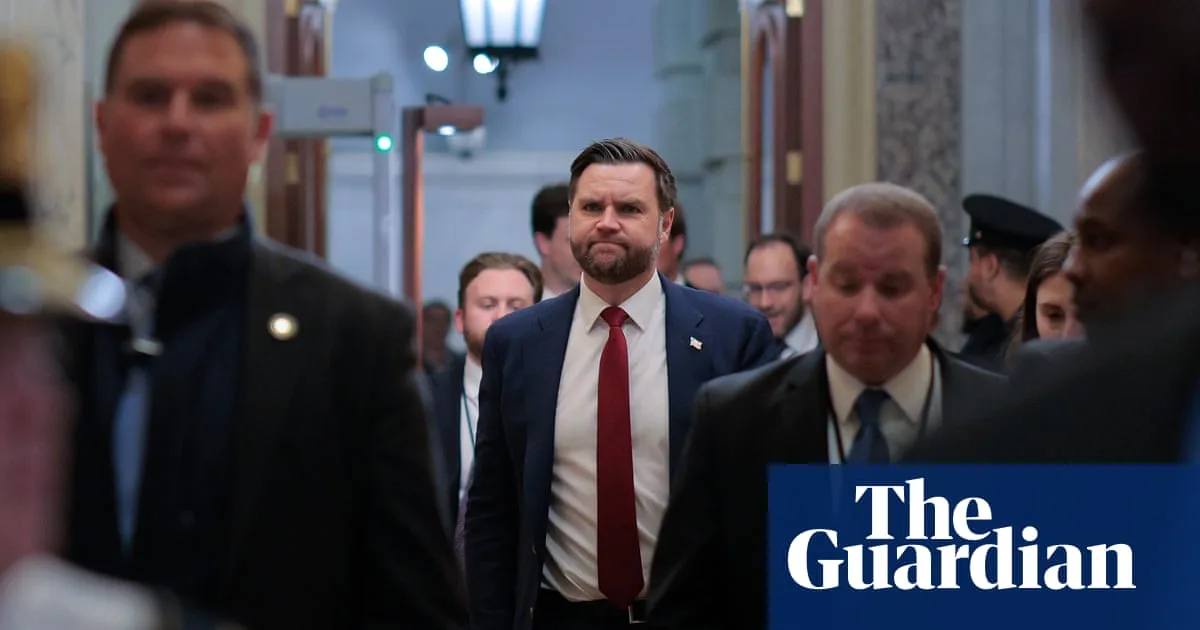
The US Senate has voted against a war powers resolution that would have required Donald Trump to notify Congress before taking further military action in Venezuela. The vote was split 50-50, with Vice President JD Vance casting the tie-breaking vote to defeat the measure.
Republican senators Josh Hawley of Missouri and Todd Young of Indiana, who had previously supported the resolution alongside Democrats, changed their votes after receiving assurances from the Trump administration. Young stated that Secretary of State Marco Rubio confirmed no US troops were in Venezuela, and that any major operations would require prior congressional authorisation.
Senate Democrats criticised the outcome, with Minority Leader Chuck Schumer warning that the vote emboldens Trump to pursue reckless actions. Senator Tim Kaine of Virginia vowed to introduce further resolutions to block unauthorised military operations, saying Republicans “can run but they can’t hide”.
The resolution was prompted by a US raid earlier this month that captured Venezuelan President Nicolás Maduro without advance congressional notice. Republican senators Rand Paul, Lisa Murkowski and Susan Collins joined Democrats in supporting the measure.
Senator Rand Paul described arguments that no war had occurred as an “absurdity”, while Democrat Adam Schiff stressed the need for Congress to reassert its authority over presidential military actions. The defeat comes after the Senate had initially advanced the resolution last week in a rare bipartisan rebuke of Trump.




