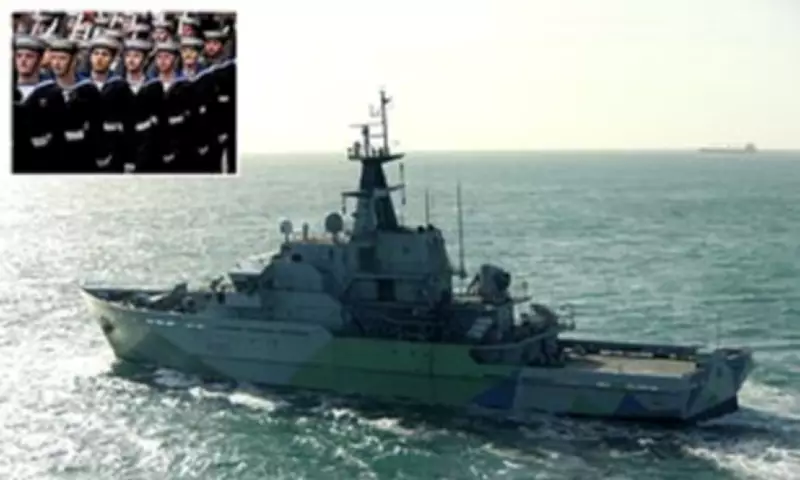
The fundamental question of what constitutes a nation often centres on the capacity for self-defence. For many countries, the existence of a robust army is the ultimate guarantor of their survival and territorial integrity. There is profound truth in the old adage that a language is merely a dialect with an army, while a dialect without one remains just that. A nation may boast a colourful flag and a stirring anthem, but if it cannot protect itself from aggression, it risks being dictated to by stronger neighbours or fading into oblivion.
Britain's Unique Naval Heritage
In Britain, an island nation surrounded by sea, this dynamic has historically been distinct. Here, it is the Royal Navy that has served as the nation's steadfast shield and protector. During the Napoleonic Wars, the Navy's command of the seas was so absolute that Napoleon Bonaparte, despite his formidable Grand Army, found himself powerless to launch an invasion across the Channel. Similarly, in 1940, the heirs of Admiral Nelson ensured that a Nazi invasion was rendered impossible, safeguarding the nation from occupation.
The Symbolism of Naval Power
This deep-seated reliance on maritime strength is immortalised in Britain's most fervent patriotic anthem, Rule, Britannia!, which proudly declares that Britons rule the waves and, consequently, shall never be enslaved. The nation's greatest naval triumph, the Battle of Trafalgar, was fought a thousand miles from Land's End, demonstrating how British security has long been projected far beyond its shores. While Britain possesses a pretty flag and a tuneful anthem, its status as a true nation is fundamentally questioned if it cannot defend itself when attacked.

Historical Warnings and Modern Neglect
This imperative is precisely why Britain maintains a Royal Navy, and why all its wisest leaders have prioritised its strength. King Charles II famously asserted, 'It is upon the Navy, under the providence of God, that the safety, honour and welfare of this realm do chiefly depend.' He learned this lesson painfully in 1667 when the Dutch fleet sailed up the Medway, captured Sheerness, sank several British vessels, and towed the flagship to Amsterdam. This humiliating episode likely marks the last time in modern history that the Navy was so severely neglected and unprepared for conflict.
A Catalogue of Contemporary Failures
Today, we are confronted with a dreary catalogue of failures that have brought the Navy to a perilous state. This includes:
- Persistent technical failures in vessels and equipment.
- Chronic bad planning and strategic missteps.
- Ill-directed spending of vast resources, squandering taxpayer funds.
Experts have been aware of these issues for years, and now this understanding is becoming much more widespread among the public. However, this growing awareness has not yet coalesced into a strong, unified public demand for the Navy's restoration and revitalisation.
The Urgent Need for Action
The decline of the Royal Navy poses a direct threat to Britain's sovereignty and security. Without a capable naval force, the nation risks losing its ability to project power, protect its interests, and maintain its independence. The historical lessons are clear: neglect invites vulnerability. It is imperative that both policymakers and the public recognise the critical importance of investing in and strengthening the Navy to ensure Britain remains a sovereign and secure nation in an increasingly uncertain world.