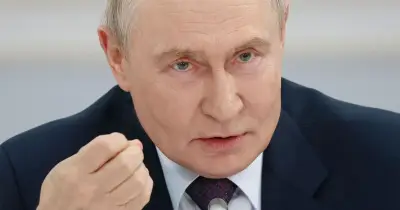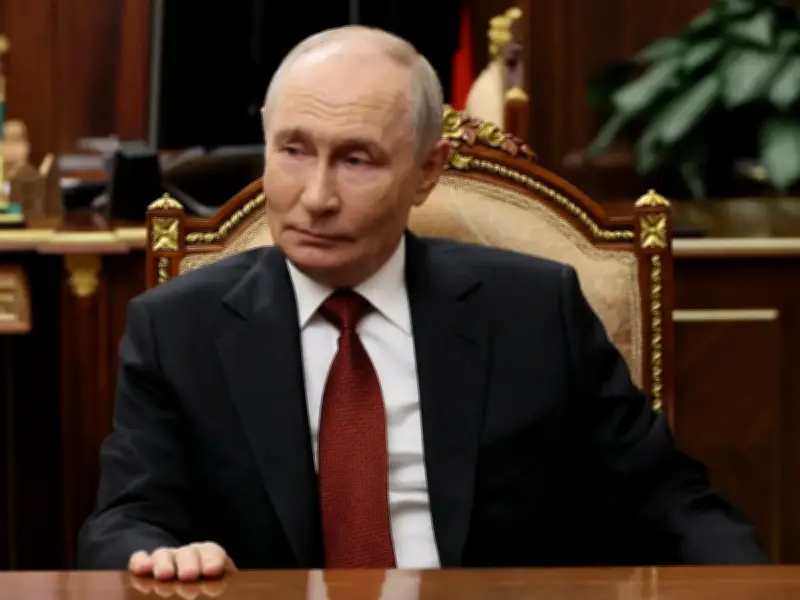
Western officials have downplayed the idea that Vladimir Putin is planning a conventional attack on a Nato country, despite Russia's doom-laden warnings. They believe the Russian president wants to avoid direct confrontation with the alliance.
Senior figures in Moscow have accused the UK and other allies of Ukraine of “playing with fire” in recent days, while Russia’s former foreign minister Andrei Fedorov warned that British drone factories could be attacked by “unknown sources”. Tensions escalated after Andy Burnham's trip to Ukraine, where he announced plans to hand over long-range missile blueprints to Kyiv.
CIA chief's secret trip to Moscow
A secretive visit to Moscow by CIA chief John Ratcliffe this week fuelled speculation that the Kremlin was preparing to attack a Nato country. The last known visit by a CIA boss to Russia came in the months before Putin's invasion of Ukraine.

However, reports now suggest that Mr Ratcliffe made the trip to share his bleak assessment of Russian prospects and to urge Putin to cut a deal, according to the New York Times. Western officials said the threats were part of the Russian playbook and expressed scepticism that Putin is preparing for a conventional attack on a Nato country.
Threats dismissed as rhetoric
“We do need to be careful to distinguish what is real from what is rhetoric designed to scare and deter us,” one official said. “Replaying Russian threats and heightening a sense of crisis is exactly what the Kremlin wants.”
Officials said Russia's battlefield progress was “extremely slow, casualties extremely high”, with Putin's forces losing momentum as Ukraine's increased lethality causes serious problems. The Kremlin is believed to have an appetite for hybrid attacks against Nato countries, such as cyberattacks and sabotage, which could lead to a dangerous miscalculation from Moscow. But the officials added: “Our assessment remains that Russia isn’t seeking direct confrontation with Nato.”
Escalation and domestic pressure
In June, Keir Starmer warned that the UK and allies believed Russia could launch an attack on the alliance “as soon as 2030”. Russia continues to escalate its conflict with Ukraine with further strikes on its energy infrastructure in an attempt to damage morale ahead of winter.
But Moscow also faces domestic pressure as a result of Kyiv’s own strikes against Russian fuel refineries and battlefield losses thought to outstrip recruitment by 6,000 troops a month. Meanwhile, former Prime Minister Gordon Brown said Donald Trump must be pressed to allow Ukraine to produce interceptor missiles ahead of Kyiv’s “worst winter” since the conflict began.
The former PM said the US should hand over designs for Patriot missiles - regarded as one of the best air defence systems - to allow Ukraine to defend itself from Russian bombardment. Mr Trump said last month that it is a “hard thing to give away, that kind of technology”.
Speaking at the Edinburgh International Book Festival on Friday, Mr Brown said: “Putin has realised he can bomb into populated areas and the infrastructure, put out the electricity, put out the power in Ukraine, by using his missiles and his bombs that cannot be intercepted because America is not providing the interceptors that are necessary.”
Mr Brown added: “I think we have got to press America to provide the kind of interceptors that they alone seem to have that could make a difference to the protection of Ukraine.” However, he stressed that the UK and Europe must be “very careful” not to find themselves at war with Russia.