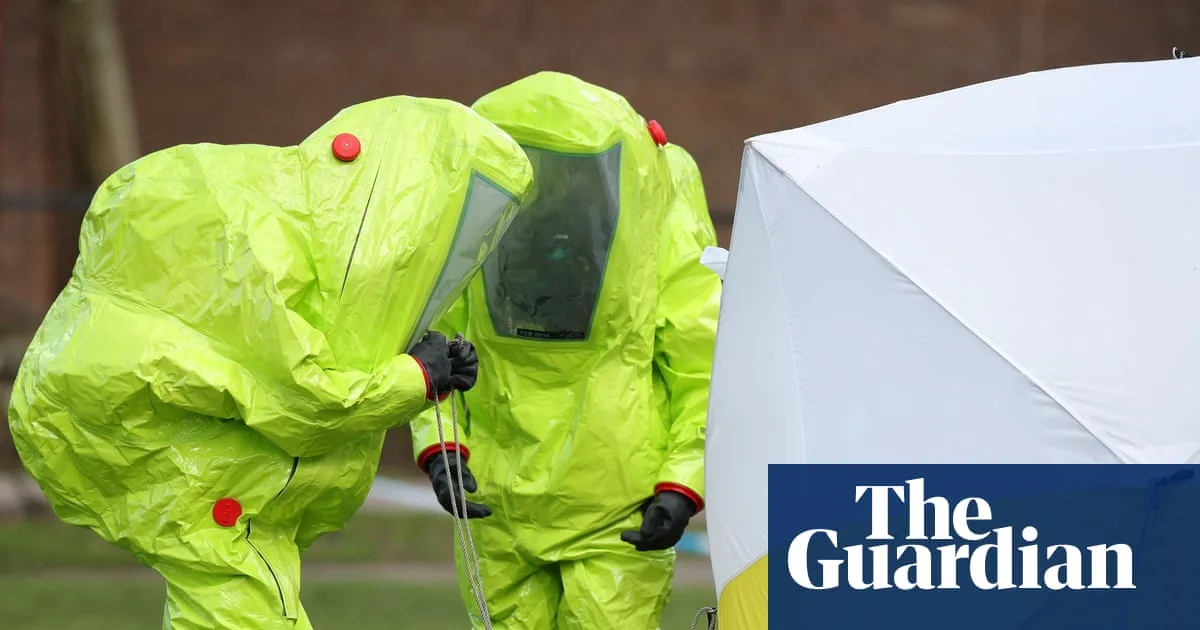
Novichok Inquiry Findings Released: Dawn Sturgess Poisoning Case Details
Public Inquiry Publishes Novichok Poisoning Findings

The long-awaited findings of a public inquiry into the death of Dawn Sturgess, who was killed by the Russian nerve agent Novichok in 2018, are set to be published. The 44-year-old died after being exposed to the chemical weapon, which had been discarded in a perfume bottle in Amesbury, Wiltshire.

The Chain of Events: From Salisbury to Amesbury

The tragedy followed the attempted murders of former Russian spy Sergei Skripal, his daughter Yulia, and police officer Nick Bailey in nearby Salisbury just months earlier, in March 2018. It is believed members of a Russian GRU military intelligence squad smeared Novichok on Mr Skripal's door handle. All three survived the initial attack.

Months later, in July 2018, Ms Sturgess's partner, Charlie Rowley, found what he thought was an unopened box of 'Premier Jour' Nina Ricci perfume. He gave it to her as a gift at his home in Amesbury. After Mr Rowley assembled the bottle, spilling some on his hands, Ms Sturgess sprayed the substance on her wrists.

Within 15 minutes, she told Mr Rowley she felt "very, very strange." He soon found her in the bath, convulsing and foaming at the mouth. She suffered a cardiac arrest leading to a hypoxic brain injury. Expert witness Dr Jasmeet Soar told the inquiry her condition was "unsurvivable" by the time paramedics arrived. Mr Rowley also fell ill but survived.

Critical Questions and Evidence Heard

The inquiry, chaired by retired Supreme Court judge Lord Hughes of Ombersley, held public hearings between October and December 2024. It examined whether UK authorities took appropriate steps to protect Sergei Skripal and if Ms Sturgess's death could have been prevented with clearer public warnings.

The inquiry heard that the Skripals fell ill after lunch at a Zizzi restaurant in Salisbury on 4 March 2018. Their symptoms confused paramedics, initially suggesting an opiate overdose. Days later, scientists at the government's Porton Down laboratory identified Novichok. Former Prime Minister Theresa May stated it was "highly likely" Russia was responsible.

Dame Sally Davies, England's former chief medical officer, testified she had nightmares about someone finding the discarded nerve agent. "I remember raising this during at least one meeting," she said, later advising the public not to pick up strange items.

A witness from Porton Down, known as MK26, said it was "not possible to exclude that there were two bottles" of the nerve agent. The Skripals did not give oral evidence due to safety fears, and Mr Rowley was excused for health reasons.

Aftermath and Unresolved Justice

In closing submissions, Michael Mansfield KC, for Ms Sturgess's family, argued the poisonings resulted from an "abject failure" by the UK government to protect the public. He stated the attack on the Skripals was "preventable" and that Russia had "alarming access" to the former spy's home.

Wiltshire Police apologised to Ms Sturgess's family after internal documents referred to her as a "known drug user," which affected her initial medical treatment. Paramedics first treated her for an overdose due to Mr Rowley's known drug links.

An international arrest warrant was issued for three suspected Russian GRU agents. However, Russia's constitution forbids the extradition of its citizens, making it unlikely they will ever face trial. Two suspects claimed in a Russian state media interview they were only visiting Salisbury Cathedral.

The then-home secretary, Priti Patel, ordered the conversion of the inquest into a public inquiry in 2021. Sergei Skripal later told police he held Russian President Vladimir Putin responsible, believing he would be killed if he ever returned to Russia.




