Poland Exits International Landmine Ban Treaty Amid Heightened Security Concerns
In a significant shift in defence policy, Poland has officially withdrawn from the 1997 Anti-Personnel Mine Ban Treaty, commonly known as the Ottawa Convention. The decision, confirmed on Friday 20 February 2026, comes as the nation cites escalating security threats from Russia and its allies along its eastern frontiers.
Strategic Border Defence Initiative
Deputy Defence Minister Paweł Zalewski announced that Poland intends to resume manufacturing and potentially deploy both anti-personnel and anti-tank landmines along its borders with Russia and Belarus. This move represents a dramatic reversal for a country that previously ratified the treaty in 2012 and completed destruction of its anti-personnel mine stockpile by 2016.
"These mines constitute one of the most crucial elements within the defensive architecture we are establishing on NATO's eastern flank," Zalewski stated. "Our position along the border with Russia to the north and Belarus to the east necessitates robust defensive measures."

Regional Security Reassessment
The decision follows a broader regional reassessment of security arrangements since Russia's full-scale invasion of Ukraine. Last year, Poland joined Finland, Estonia, Latvia, Lithuania, and Ukraine in announcing their intention to leave the Ottawa Convention. Russia remains among approximately three dozen nations, including the United States, that have never acceded to the international landmine prohibition.
Zalewski emphasized that Poland faces a neighbour with "very aggressive intentions toward its neighbouring countries" and argued that conventional defensive measures require reinforcement given the current geopolitical climate.
Domestic Production and Strategic Reserves
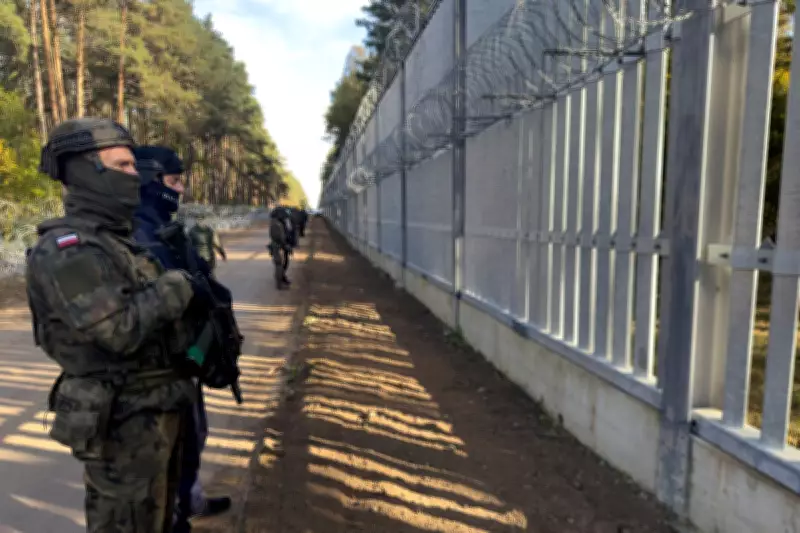
The Polish government plans to collaborate with domestic manufacturers to achieve self-sufficiency in landmine production. This initiative forms part of the comprehensive Eastern Shield programme, an enhanced fortification system Poland has been constructing along its eastern borders since 2024.
Prime Minister Donald Tusk, speaking after observing a demonstration of the Bluszcz unmanned mine-laying vehicle developed by Polish company Belma S.A. and military research institutes, revealed that Poland would soon possess the capability to mine its eastern borders within 48 hours if threatened.
"Given the extensive length of our eastern borders, substantial quantities of landmines will be necessary," Tusk acknowledged, highlighting the scale of the defensive preparations.
Conditional Deployment and Civilian Considerations
Polish officials have stressed that mine deployment would only occur "when there exists a realistic threat of Russian aggression." Zalewski assured that Poland respects its territory and does not wish to exclude areas from daily use by Polish citizens unnecessarily.
"We are not an aggressive nation," Zalewski asserted, "but we must employ all available means to deter Russian aggression effectively."
International Criticism and Humanitarian Concerns
Human rights organizations have condemned Poland's withdrawal from the Ottawa Convention, arguing that anti-personnel mines pose unacceptable dangers to civilian populations long after conflicts conclude. Historical evidence from Cambodia, Angola, and Bosnia and Herzegovina demonstrates the devastating long-term humanitarian consequences of these weapons.
Polish officials have responded that they are striking a careful balance by maintaining mines in reserve rather than deploying them preemptively. They distinguish between anti-personnel mines (prohibited by the Ottawa Convention) and anti-tank mines (which remain permitted under international law as they require heavier pressure to detonate).
This policy shift marks a pivotal moment in European security dynamics, reflecting how nations bordering Russia are recalibrating their defence postures in response to perceived threats, even when such measures conflict with previous international humanitarian commitments.