
Fifty years after one of the most daring hostage rescues in military history, newly declassified documents shed light on Operation Entebbe, where Israeli commandos saved 102 hostages held by terrorists in Uganda. Omer Bar-Lev, a 22-year-old commander at the time, recalls the mix of triumph and grief as he flew home beside the coffin of his fallen commander, Yonatan Netanyahu.
The Hijacking and the Plan
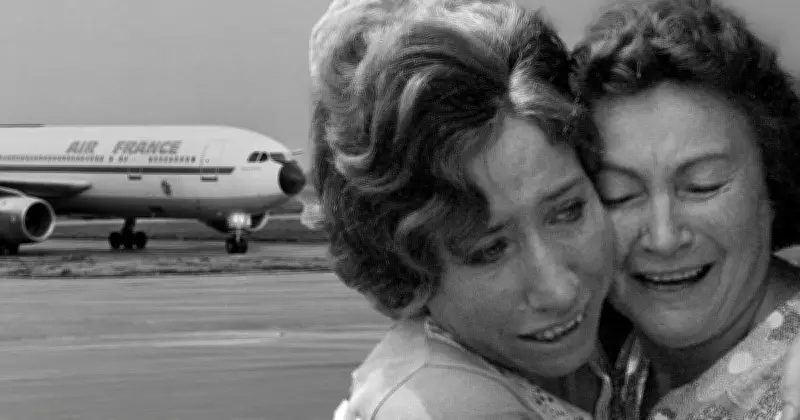
On June 27, 1976, an Air France Airbus A300 flying from Tel Aviv to Paris was hijacked by two members of the Popular Front for the Liberation of Palestine and two German recruits from the Revolutionary Cells. After a stopover in Athens, the hijackers diverted the plane to Libya, where British-born Israeli citizen Patricia Martell feigned a miscarriage by cutting herself to bleed profusely, convincing the hijackers to release her. She provided vital intelligence to British and Israeli services.
The plane then flew to Entebbe International Airport in Uganda, where the hijackers were joined by additional terrorists and received support from dictator Idi Amin. Over two days, 148 non-Israeli hostages were released and flown to Paris, leaving 102 Jewish and Israeli hostages at risk.
The Rescue Mission
With time running out, the Israeli government authorized a military rescue. Initially, the plan involved parachuting troops into Lake Victoria and traveling by rubber dinghies, but Omer Bar-Lev recalls, "They hadn’t considered the crocodiles though, so that was abandoned." Instead, 100 commandos flew 2,500 miles through hostile airspace in transport planes.
Bar-Lev, whose father Haim Bar-Lev was a government minister and former IDF chief, noted that his father's involvement in the decision to send troops gave him confidence. "My father didn’t have any doubt about the decision and I wasn’t scared," he said. "Having surprise on our side gave us confidence, and when you are only 22, you are confident."
The Raid and Its Aftermath
The operation began on July 3, 1976, and lasted just over an hour. "It was all over incredibly quickly, but every second felt like an hour," Bar-Lev said. Commandos eliminated all hijackers, while Bar-Lev's role was to block Ugandan reinforcements. The only Israeli casualty was Lieutenant Colonel Yonatan Netanyahu, brother of current Prime Minister Benjamin Netanyahu. "There were many heroes, and Yonatan Netanyahu was certainly one of them," Bar-Lev said.
One hostage, Dora Bloch, had been taken to a hospital before the raid and was later killed by Ugandan troops. The mission inspired several films, including Victory at Entebbe (1976) and 7 Days in Entebbe (2018).
Political Lessons and Current Views
Declassified documents released in 2026 reveal that the Israeli government initially pursued negotiations before authorizing the rescue. Bar-Lev, now 72 and a former Minister of Public Security, criticized the current Israeli government for failing to take responsibility, particularly after the October 7, 2023 attack. "The Israeli Prime Minister at the time of Entebbe was prepared for resignation if the raid had failed, an example of taking responsibility," he said.
Bar-Lev expressed hope for peace, urging engagement with enemies. "The PLO are not angels, but they are better than Hamas. In the end, we must make peace with our enemies." He noted the rise in anti-Semitism and the isolation of Israel, but remains optimistic: "I still hope against hope to see peace in my lifetime."




