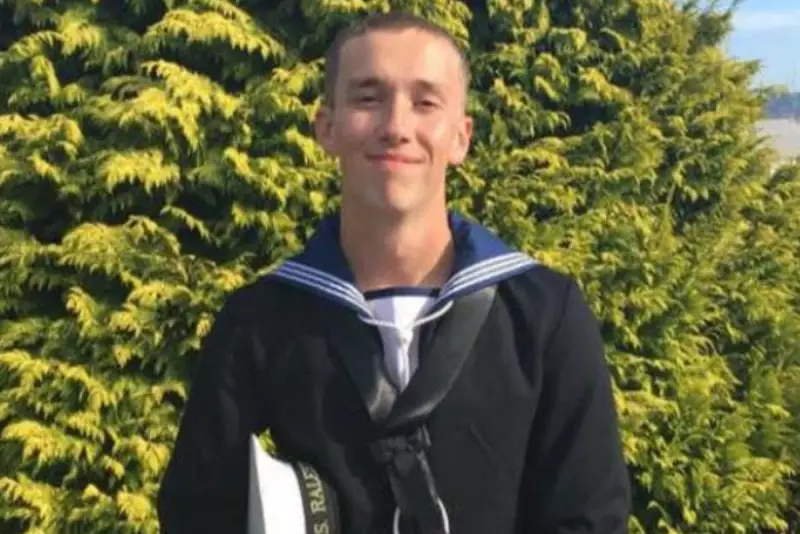
A former Royal Navy engineer is taking the Ministry of Defence to court, seeking approximately half a million pounds in damages after his hearing was allegedly ruined during a dramatic incident aboard the UK's flagship aircraft carrier.
The Deafening Incident on the Flight Deck
Harry Jefferson, then 27, was carrying out his duties as an air engineer technician on board HMS Queen Elizabeth in June 2021. He was refuelling a Merlin helicopter when an American-made F-35 Lightning II stealth fighter executed a vertical landing just metres away from him.
Despite wearing standard ear defenders and foam plugs, Jefferson was exposed to extreme levels of noise and intense heat from the jet's exhaust. The F-35, capable of speeds up to Mach 1.6 (1,220mph), landed with its engine oriented downward. Jefferson attempted to turn his head away, but the damage was instantaneous.

A colleague working alongside him that day, Reece Colwell, then 25, was also exposed to the same hazardous conditions. Both men were reportedly in a designated safe area for the landing but were instructed to return to refuelling the Merlin just before the F-35 touched down.
Lasting Injuries and Career Consequences
The immediate aftermath was severe. Both servicemen reported pain in their ears, ringing, and an immediate change in their hearing. The following day, they formally reported hearing difficulties and were later diagnosed with "explosive ear trauma."
A defence air safety occurrence report confirmed their exposure to a "high level of noise and heat," leading to a medical downgrading. The injuries have resulted in permanent tinnitus and difficulties hearing speech in noisy environments.
For Harry Jefferson, the consequences were career-ending. In April 2022, he was declared permanently "medically limited deployable," which made it impossible for him to continue his role. Feeling his promotion prospects were ruined and frustrated by the review process, he terminated his service. Reece Colwell has been able to continue his naval career, which is expected to significantly reduce the value of his claim.
Legal Battle and MOD Admission
The heart of the legal claim, being heard at the Central London County Court, is an accusation of negligence. The claimants argue they should have been ordered to stay inside or in a genuinely safe location during the high-risk landing operation.
During a pre-trial hearing before Judge Jane Evans-Gordon, the men's barrister, Stuart McCracken, stated that Jefferson's claim for loss of a "congenial employment" could exceed £500,000 due to his young age at the time his career was cut short.
Significantly, the Ministry of Defence has admitted a breach of duty, accepting that the two engineers should not have been working so close to the landing jet. However, the MoD is contesting the level of compensation being sought. The legal costs alone are substantial, with the claimants' bills around £326,000 and the MoD's around £117,000.
The case is scheduled for a full trial at a later date, unless a settlement is reached out of court first.