
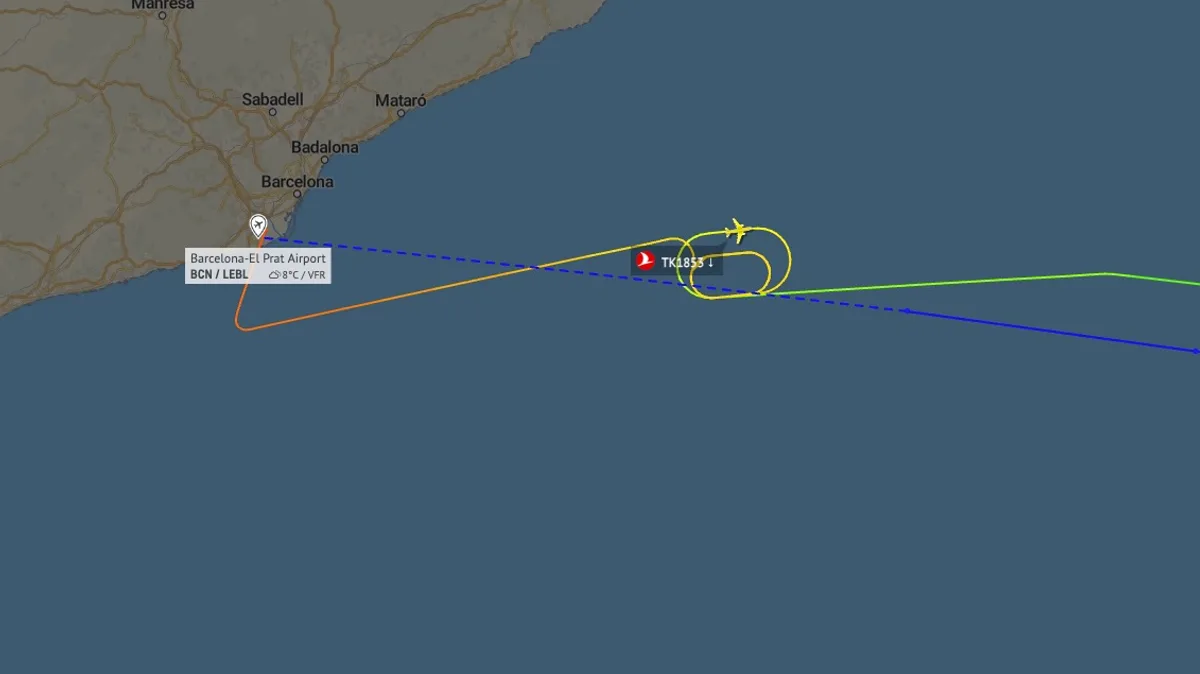
NATO fighter jets were scrambled to intercept a Turkish Airlines flight after a passenger set up a WiFi hotspot with the name 'I have a bomb, everyone will die'. The incident occurred on flight TK1853, which had taken off from Istanbul bound for Barcelona.
Spanish news outlet El Nacional reported that French fighter jets were initially deployed under a Quick Reaction Alert (QRA) before the flight was handed over to Spanish jets as it entered Spanish airspace. The aircraft was diverted to Barcelona-El Prat Airport, where it was directed to an isolated area to minimise risk.
The crew declared a squawk 7700 emergency code, and the plane landed safely with 148 passengers and crew on board. Emergency services met the aircraft, and all passengers were disembarked and taken to a contingency room. Sniffer dogs searched the plane but found no explosives.
Turkish Airlines Communication Director Yahya Üstün confirmed the alert was triggered by the WiFi hotspot name. He stated, 'The necessary procedures have been immediately initiated in accordance with flight safety protocols.' The incident caused a delay of around 30 minutes before operations returned to normal.
This event follows a similar emergency earlier this month when an Air India flight to Birmingham declared a 'Minimum Fuel' emergency due to heavy snowfall from Storm Goretti, diverting near Leamington Spa.




