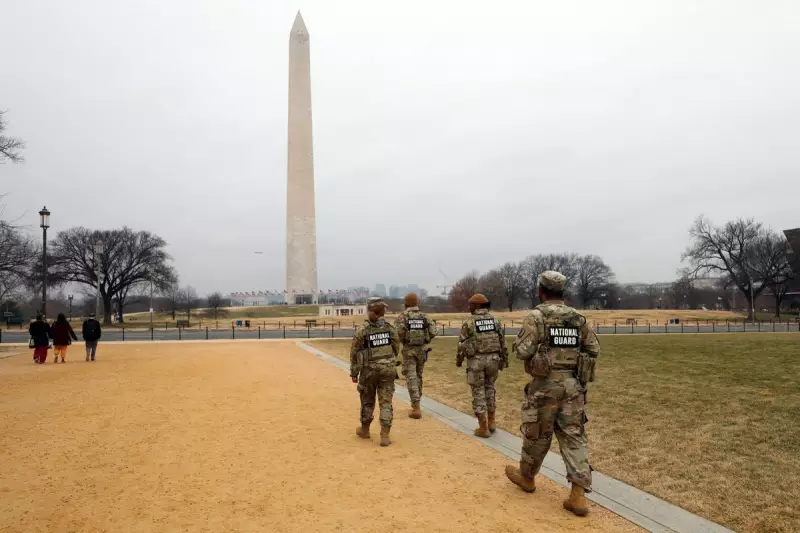
The deployment of National Guard troops on the streets of Washington D.C. has been formally extended and is now set to continue until the end of 2026, according to official documents.
Mission Extended Through 2026
A memo signed by US Army Secretary Dan Driscoll on Wednesday, 14 January 2026, authorised the prolonged deployment. The document, reviewed by The Associated Press, stated that the conditions of the mission warranted an extension beyond the end of February. The purpose is to continue supporting what the memo describes as President Donald Trump's "ongoing efforts to restore law and order" in the nation's capital.
Troops have been tasked with a combination of street patrols and municipal duties, such as picking up litter. President Trump has frequently claimed that this presence has led to a complete disappearance of crime in Washington D.C.

Scaling Back in Other Cities
In contrast to the situation in Washington, President Trump announced earlier this month that he was, for the time being, dropping his push to deploy the National Guard in several other major American cities. The proposed deployments to Chicago, Los Angeles, and Portland, Oregon had faced significant legal challenges, leading to the reversal.
Furthermore, on Friday, 16 January, the President appeared to step back slightly from a threat made the previous day. He had suggested invoking the historic Insurrection Act to deploy troops to quell protests in Minnesota, a move that would have significantly escalated federal authority.
The Human Cost of the Deployment
The ongoing mission has not been without tragedy. On the day before Thanksgiving, two National Guard soldiers from West Virginia who were part of the D.C. deployment were shot. One of them, 20-year-old Specialist Sarah Beckstrom, later died from her injuries, casting a sombre shadow over the operation.
The current force in the capital consists of approximately 2,400 National Guard personnel. Of these, around 700 are from the District of Columbia itself. The remainder have been supplied by 11 states with Republican governors, including Indiana, South Carolina, Alabama, and Oklahoma, highlighting the politically charged nature of the domestic military deployment.
The extension ensures that a substantial military presence will remain a visible feature of daily life in Washington D.C. for the foreseeable future, continuing a controversial chapter in U.S. domestic policy.