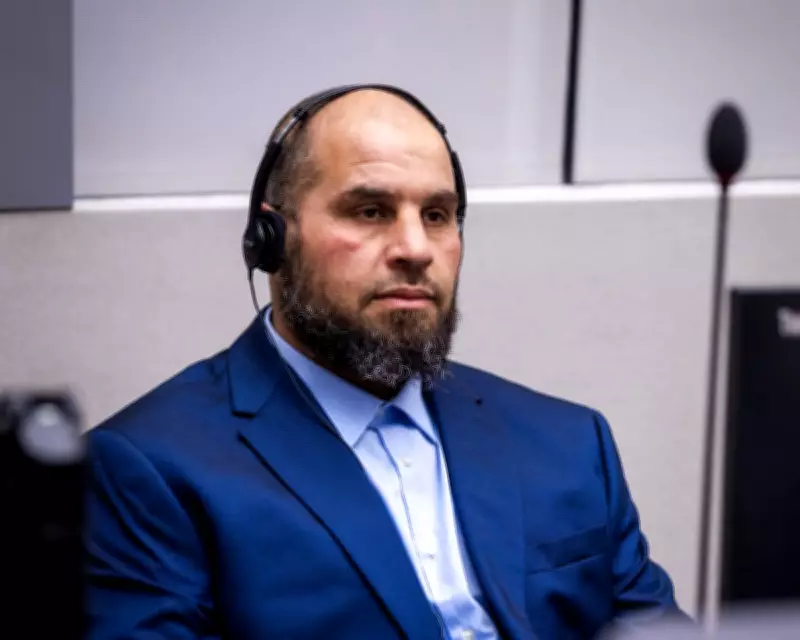
Khaled Mohamed Ali El Hishri, a former militia commander accused of overseeing murder, rape, enslavement, and torture in Libyan detention centres, will appear at the International Criminal Court on Tuesday for a hearing that campaigners describe as a landmark step towards justice for refugees attempting to reach Europe from Africa.
First ICC Case from Libya Investigation
The prosecution of El Hishri on charges of war crimes and crimes against humanity marks the first case to reach a courtroom resulting from the ICC’s investigation into crimes in Libya following the fall of Muammar Gaddafi in 2011. Legal experts view the hearing, where judges will determine if sufficient evidence exists for a trial, as a significant milestone.
Allison West, a senior legal adviser at the European Center for Constitutional and Human Rights, said: “It is a really important development. This is the first case in the ICC’s Libya investigation that has been ongoing for more than 15 years. It’s the first time we have got someone into custody.”

Survivors’ Reactions
David Yambio, who was held in Mitiga prison between 2019 and 2020 and accuses Hishri of beating him, said the hearing is a moment survivors “never thought would happen.” He added: “Now Hishri is in front of the court, it sends a strong message to perpetrators wherever they are that they will be brought to account and justice will be delivered, even if it takes a long time.”
Details of the Case
Hishri was arrested in Germany last year, reportedly while seeking medical treatment for a family member. A senior officer in the Special Deterrence Force, an armed group that ran detention sites in western Libya, he is accused of imposing a brutal regime at Mitiga prison in Tripoli between February 2014 and at least mid-2020. These detention centres became notorious after Gaddafi’s fall, filled with refugees detained in Libya or intercepted by the EU-supported Libyan coastguard while trying to reach Europe.
Amnesty International and other human rights groups have described “harrowing violations” as consequences of Europe’s cooperation with Libya on migration control. Human Rights Watch reported that thousands of detainees were held in overcrowded, unhygienic cells and systematically subjected to violent assaults.
At a December hearing, prosecutors alleged reasonable grounds to believe Hishri personally killed one detainee, with a “significant number” of deaths occurring during his tenure due to torture, exposure to winter conditions, untreated injuries, or starvation. He is also accused of personally torturing, mistreating, sexually abusing, and killing detainees, and imposing prison conditions aimed at increasing suffering. Detainees were allegedly shot, confined in small metal boxes, and beaten with cables, sometimes for guards’ entertainment.
Legal Challenges and Broader Context
Defence lawyers are expected to challenge the ICC’s jurisdiction and call for Hishri’s release. West noted that the case highlights serious crimes but many alleged perpetrators remain free, with eight ICC arrest warrants still pending for violence in Libya after Gaddafi’s fall. “One of the most significant things about this case… is that there are a lot of people who aren’t [in the dock],” she said.
Germany’s arrest of Hishri was praised by campaigners. Alice Autin, a Human Rights Watch researcher, said: “One state finally cooperated… because there’s been many instances in the past where that hasn’t happened.” One of Hishri’s alleged co-perpetrators was arrested in Italy last February but released on a technicality and returned to Libya, causing controversy.
Libya remains divided between eastern forces under Khalifa Haftar and the Tripoli-based Government of National Accord led by Abdul Hamid Dbeibah. The Special Deterrence Force is allied with the GNA and nominally under the interior ministry, making the case politically sensitive.
The ICC, designed as a court of last resort for grave crimes, has faced pressure recently, including US sanctions on judges and an investigation into its chief prosecutor for alleged sexual misconduct, which he denies. Yambio called for an end to European programmes supporting Libyan militias, stating: “The EU is complicit in these crimes.”