
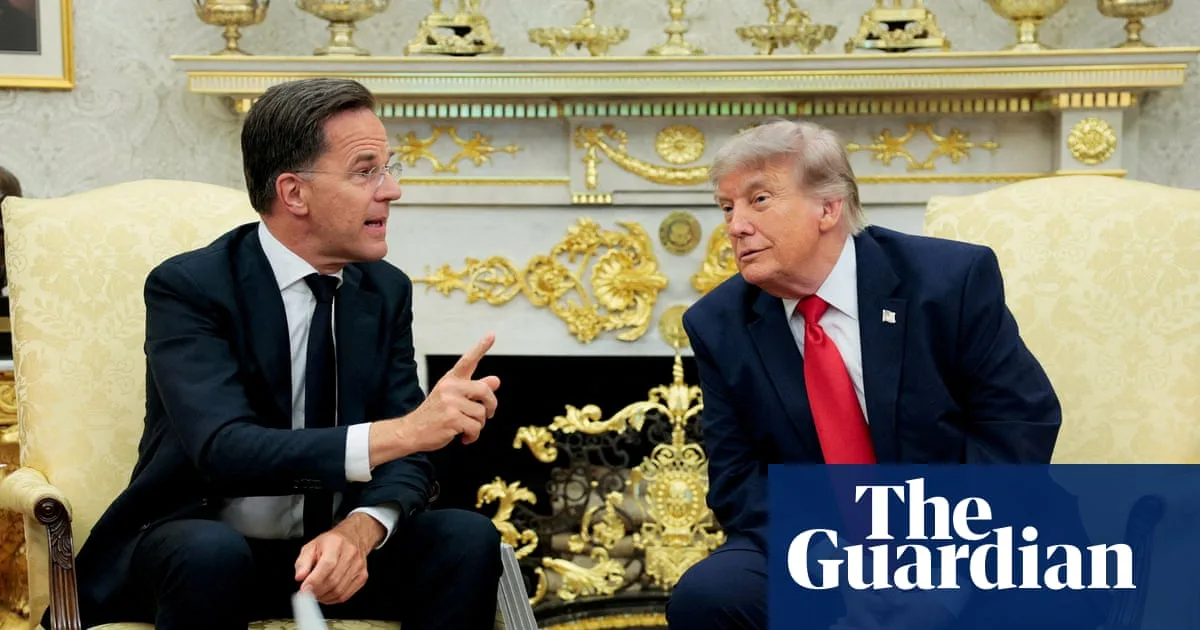
Nato leaders are gathering in Ankara on Tuesday for a summit that comes at a critical time for the alliance, as US President Donald Trump continues to pressure allies to increase defence spending. The meeting of the 32 member states follows a turbulent six months, with tensions over Iran and Greenland straining transatlantic relations.
Mark Rutte, Nato's secretary general, called on allies to present “clear, concrete and credible plans” to reach the organisation's spending targets. “President Trump fully expects that all allies will step up immediately and get on the path to 5% and do it with urgency,” he said. Nato members are expected to unveil tens of billions in new arms contracts at an industry forum on the sidelines of the summit, aiming to demonstrate that they are delivering on defence spending pledges.
The two-day summit is expected to agree on a largely symbolic €70bn (£60bn) in military aid to Ukraine for this year and next, though this largely reflects commitments already made. Last year, European members and Canada pledged to lift defence spending to 5% of their gross domestic product – 3.5% directly and 1.5% on infrastructure to facilitate troop movements.
When Rutte met Trump in the Oval Office last month, he brought charts illustrating increased spending by non-US Nato members since Trump first took office in 2017, highlighting “the Trump trillion”. However, with transatlantic relations at a low, a harmonious summit is not guaranteed. Trump has continued to strain relations, threatening to take control of Greenland from Nato member Denmark, and failing to consult European leaders before the US and Israel launched an attack on Iran.
The US is also planning to cut the number of troops and materiel it assigns to Europe in the event of a war with Russia, reducing F-15 and F-16 jets by a third. Trump is expected to bring 1,400 people to Turkey, including those responsible for his toilet waste, as a standard protocol to prevent intelligence analysis. Despite efforts to Trump-proof the summit, the final communique is expected to be short.




