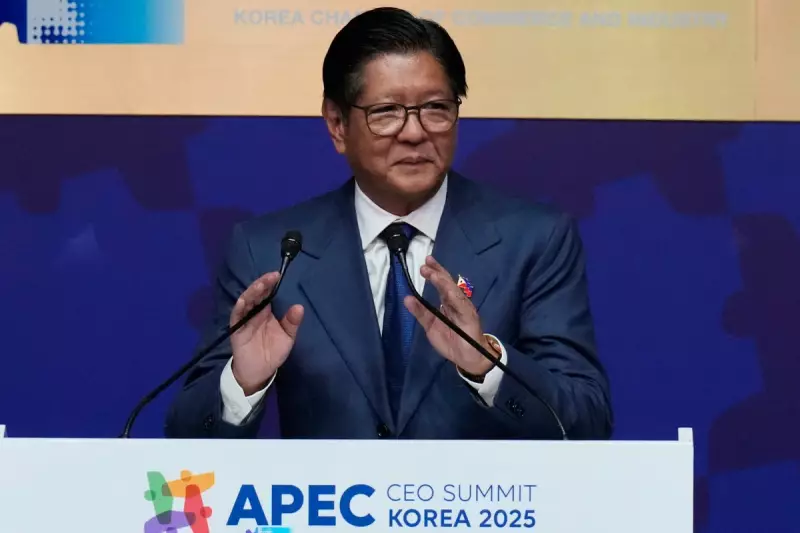
In a significant move to bolster regional security, Japan and the Philippines have formalised a new defence agreement designed to enhance their military cooperation and deterrence capabilities. The pact was signed on Thursday 15 January 2026 in Manila, marking the latest step in deepening ties between the two nations as they confront shared challenges.
Details of the Acquisition and Cross-Servicing Agreement
The agreement, known as the Acquisition and Cross-Servicing Agreement (ACSA), was signed by Japanese Foreign Minister Toshimitsu Motegi and his Philippine counterpart, Foreign Secretary Theresa Lazaro. Its core provision allows for the tax-free provision of ammunition, fuel, food, and other logistical necessities when their forces conduct joint training exercises. This logistical support is aimed at boosting deterrence against what both nations perceive as China's growing aggression in the region.
Beyond military readiness, the pact is also intended to improve the two countries' joint preparedness for natural disasters and facilitate participation in United Nations peacekeeping operations. However, the agreement must still be ratified by Japanese legislators before it can take full effect.

Escalating Tensions and Territorial Disputes
The signing occurs against a backdrop of heightened regional friction. Both Japan and the Philippines have separate, long-running territorial conflicts with Beijing. Japan faces ongoing disputes with China in the East China Sea, where Chinese coast guard vessels and planes routinely enter contested waters and airspace around islands claimed by Tokyo, prompting Japanese jet scrambles.
Similarly, the Philippines is embroiled in increasingly hostile confrontations with China in the South China Sea, where Beijing claims virtually the entire strategic waterway. Under President Ferdinand Marcos Jr., who took office in 2022, Philippine coast guard ships have faced aggressive manoeuvres from their Chinese counterparts. This marks a shift from the more China-friendly stance of his predecessor, Rodrigo Duterte.
Political tensions were further inflamed by a remark from former Japanese Prime Minister Sanae Takaichi, who suggested potential Chinese action against Taiwan could spark Japanese intervention—a statement that angered Beijing.
Deepening the Security Alliance
The ACSA is the latest in a series of accords strengthening the Japan-Philippines security partnership. In mid-2024, both countries signed the Reciprocal Access Agreement (RAA), which allows for the deployment of forces to each other's territory for larger-scale combat exercises, including live-fire drills. The RAA took effect in September of that year.
Officials from both nations are also currently negotiating a further agreement aimed at securing the handling of highly confidential defence and military information they may share. During the announcement of ACSA negotiations in April last year, then-Japanese Prime Minister Shigeru Ishiba underscored their joint opposition to "any attempt to unilaterally change the status quo through force or coercion in the East and South China seas"—a clear, though unnamed, reprimand of China.
The United States, a treaty ally to both Japan and the Philippines, has repeatedly warned China over its escalating actions in the disputed waters. This new bilateral pact further consolidates a network of alliances Washington views as crucial to maintaining a free and open Indo-Pacific based on the rule of law.