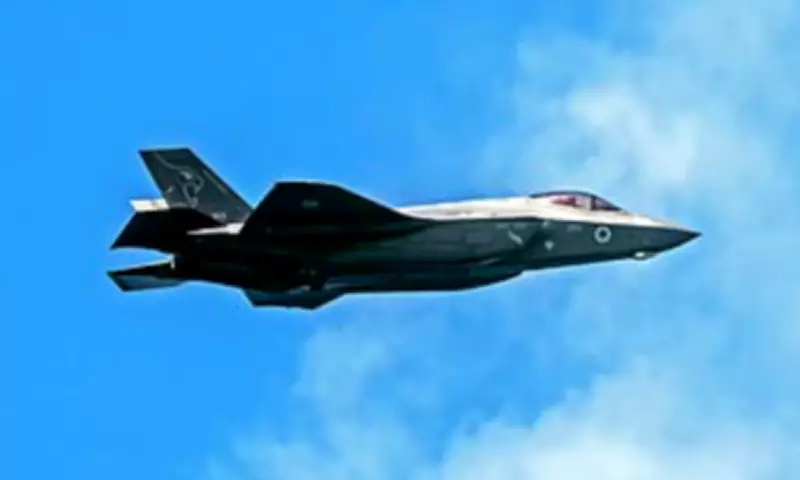
Israeli F-35 Achieves Historic Air-to-Air Victory in Tehran Skies
In a significant escalation of hostilities, an Israeli F-35i 'Adir' fighter jet has shot down a piloted Iranian YAK-130 aircraft over Tehran. This event marks the first aerial dogfight of the ongoing Middle East conflict and represents the inaugural air-to-air kill by an F-35 fighter jet against a manned opponent. The Israeli military confirmed the engagement this morning, highlighting a major milestone in modern aerial warfare.
First Israeli Air-to-Air Kill in Four Decades
This incident is believed to be the first time in forty years that the Israeli Air Force has conducted an air-to-air kill. The last recorded instance occurred in 1985 during the 'War of the Camps,' when an Israeli F-15 destroyed two Syrian MiG-23s over Lebanese territory. Iran has not yet officially acknowledged the loss of its warplane, maintaining silence amid the rapidly developing situation.
Intensifying Conflict on Multiple Fronts
On the fifth day of the war between Iran and the US-Israel alliance, multiple airstrikes targeted Tehran and other Iranian cities. Residents of the capital awoke to dawn explosions, with state television broadcasting images of ruined buildings in central Tehran. The Shiite seminary city of Qom and several other urban centers also came under attack.

The tempo of strikes proved so intense that Iranian authorities postponed mourning ceremonies for Supreme Leader Ayatollah Ali Khamenei, who was killed earlier in the conflict. Iran claims that US-Israeli attacks have resulted in 1,045 fatalities, though this figure remains unverified by independent sources.
Regional and Global Ramifications
The conflict has triggered significant regional and international consequences. Turkey's Defence Ministry reported that NATO defences intercepted a ballistic missile launched from Iran before it could enter Turkish airspace. Meanwhile, an Iranian naval frigate, the IRIS Dena, encountered distress off the coast of Sri Lanka, prompting rescue operations that saved 32 crew members. The vessel's ultimate fate remains unclear.
The US military has declared its objective of sinking Iran's entire navy, claiming destruction of 17 Iranian vessels already. With Iran controlling the strategic Strait of Hormuz—through which approximately twenty percent of global oil shipments pass—Brent crude prices have surged to $84 per barrel. This represents a fifteen percent increase since the conflict began, reaching the highest level since July 2024.
Economic and Infrastructure Impacts
Global stock markets have experienced substantial declines amid concerns that spiking oil prices could cripple the world economy and diminish corporate profits. Iran has also targeted regional infrastructure, with Saudi Arabia reporting another attempted drone attack on its massive Ras Tanura oil refinery. Fortunately, this latest assault caused no damage and did not disrupt supplies.
US diplomatic facilities in Saudi Arabia and the United Arab Emirates faced drone attacks earlier this week, prompting the State Department to authorize evacuation of non-emergency personnel from the kingdom. US Navy Admiral Brad Cooper, head of US Central Command, revealed that Iran has launched over 500 ballistic missiles and 2,000 drones during the conflict. Coalition forces have struck nearly 2,000 targets with more than 2,000 munitions, severely degrading Iran's air defences and destroying hundreds of missiles, launchers, and drones.
Technical Specifications of the Aircraft
The Israeli F-35i 'Adir'—derived from the Hebrew word for 'Mighty One'—became operational in 2017. Israel has ordered 75 of these advanced fighter jets from Lockheed Martin, with 36 delivered as of November 2022. The specially modified F-35is feature new air-to-air missiles, guided bombs in internal weapon bays, and external jamming devices to disrupt enemy signals.
These aircraft measure 51 feet in length with a 35-foot wingspan, achieving top speeds of Mach 1.6 (1,228 mph) at high altitude. Their combat range extends to 870 miles in air-to-air configurations, and they are armed with a 22mm rotary cannon carrying up to 180 rounds.

In contrast, the Russian-designed YAK-130 entered service in 2010, typically performing light-attack and reconnaissance missions while carrying up to 6,600 pounds of armaments. The two-man aircraft measures 37 feet long with a 32-foot wingspan, reaching speeds up to 66 mph with a 1,300-mile range. It features a gun-pod requiring manual operation by the second crew member. Just days before the war erupted, Iran's air force demonstrated the YAK-130's capabilities during military drills, showcasing its ability to strike aerial targets.