Israeli forces established a temporary outpost in the Iraqi desert during the U.S.-Israeli conflict with Iran, according to Iraqi and U.S. officials who spoke to The Associated Press. The existence of this secret Israeli military facility was first disclosed by The Wall Street Journal, which described it as a base housing special forces and serving as a logistical hub for the Israeli air force.
Revelations and Reactions
The reports of a secret base stirred significant controversy in Iraq. Iraqi officials have stated that army forces investigated reports of an unauthorized military presence in the Nukhaib desert—a barren area southwest of the cities of Karbala and Najaf—in early March but came under fire while en route to the location.
Iraqi officials have confirmed the presence of a small, short-term unauthorized force in the desert but have not explicitly identified it as Israeli. However, two Iraqi security and intelligence officials and a senior U.S. military official, speaking on condition of anonymity due to lack of authorization, confirmed that the force was Israeli.

The U.S. official described the Israeli outpost as a "temporary staging area or camp to support operations in Iran," rather than a full-fledged base. The Iraqi intelligence official added that the Israeli force had set up tents in the area with the objective of monitoring rocket launches and drone activity conducted by some Iraqi militias. Iraqi authorities believe the force arrived via an airdrop operation, though the exact timing remains unknown.
Discovery and Aftermath
A shepherd first noticed the presence of the force and reported it to authorities. Representatives of the Israeli military declined to comment, and the U.S. military did not immediately respond to a request for comment.
The U.S. and Israel attacked Iran on February 28, triggering a regional war in which Iraq found itself caught in the crossfire. Iraq hosts a network of Iran-linked militias, which launched attacks on U.S. bases in Iraq and elsewhere in the region, as well as on Israel. U.S. and Israeli forces also struck militia sites in Iraq.
The Iraqi government called on both sides to leave the country out of the conflict. The revelation that an Israeli force may have been conducting military operations under their noses placed Iraqi authorities in an embarrassing position.
On Tuesday, the Iraqi military sent forces into the desert to the site of the alleged Israeli outpost to demonstrate to journalists that there was no indication of a long-term military presence there. General Abdul-Amir Yarallah, chief of the general staff of the Iraqi army, stated, "We believe it was a small force that came and stayed for no longer than 48 hours."
Major General Tahseen al Khafaji, a spokesperson for the Iraqi defense ministry, told the AP that on March 3, the military received information about "a small enemy force in a specific area in the Najaf desert," and Iraqi forces went to investigate the next day. "Within 25 kilometers, the force which went there faced an aerial attack, which led to the martyrdom of one of our fighters and injured two other fighters," he said. Al Khafaji noted that the Iraqi force withdrew after the attack but returned the following day to find no signs of a base or any forces present.
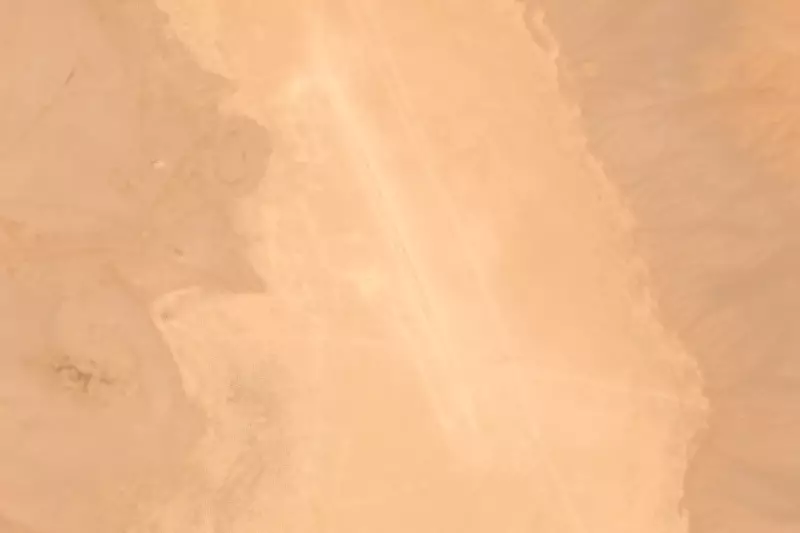
Satellite images from Airbus DS taken on March 8 and analyzed by the AP appear to show a human-made track dug out at the site, approximately 250 kilometers (155 miles) southwest of Baghdad. The track runs in a straight line across a dried-out lake bed from northwest to southeast, measuring about 1.5 kilometers (1 mile)—long enough for warplane takeoffs and landings. The nearest town, al-Nukhaib, lies about 45 kilometers (27 miles) to the northwest along a road leading to the Saudi border. That distance likely allowed the operation to avoid drawing excessive attention, though Iraqi skies were filled with fighter jets from both the U.S. and Israel during the weeks of active war with Iran.