Eurovision's Biggest Stars: From ABBA to Måneskin and Beyond
Eurovision's Biggest Stars: ABBA to Måneskin

The Eurovision Song Contest celebrates its 70th birthday this year. The 2026 final will be staged in Vienna, Austria, with more than 160 million viewers expected to watch the extravaganza on TV. It holds the Guinness World Record for being the longest-running international TV music competition.

The contest is first and foremost a celebration of music. Over the last seven decades, it has made global stars of ABBA, Celine Dion, and Måneskin, and has also seen well-known stars such as Sir Cliff Richard, Julio Iglesias, and Olivia Newton-John compete.

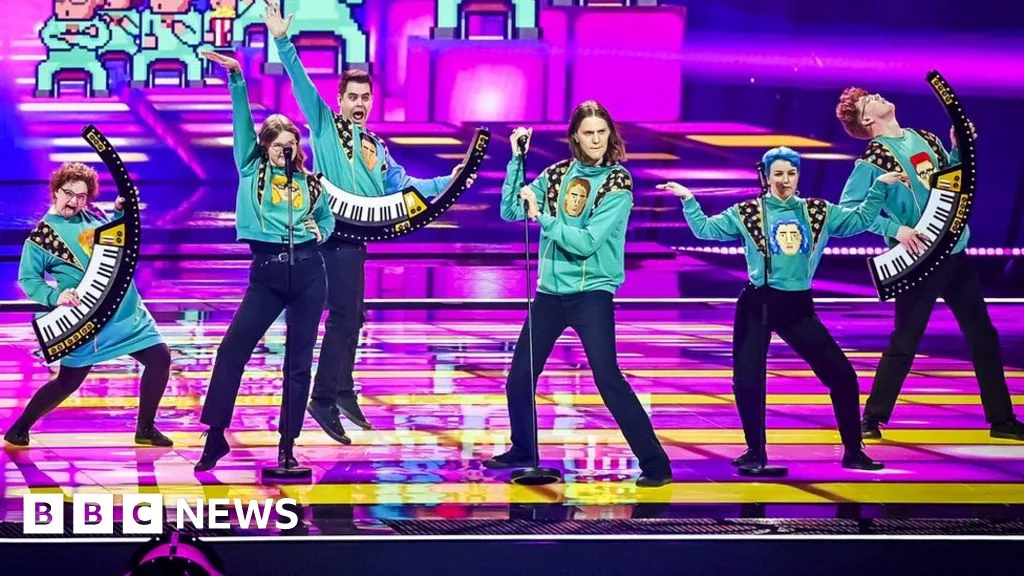
Fans have seen no end of shocking and silly acts on stage, from Russian singing grannies (Buranovskiye Babushki), an Austrian bearded drag queen (Conchita Wurst), an Irish turkey puppet (Dustin), a monster-masked Finnish heavy metal band (Lordi), an Israeli transsexual (Dana International), to a seemingly flesh-flashing pant-less dancer from Finland (Windows95Man).

Wide Pickt banner — collaborative shopping lists app for Telegram, phone mockup with grocery list

The Early Days

The very first Eurovision contest was held on 24 May 1956 in Lugano, Switzerland. It was the brainchild of the European Broadcasting Union (EBU), who thought a music contest would unite post-war Europe through live television technology. The only rules—which still stand today—were that each act had to perform an original song and it must be under three minutes long. Just seven countries took part: Switzerland, Belgium, France, Italy, Luxembourg, The Netherlands, and West Germany. The winner was Swiss singer Lys Assia with "Refrain." As the competition gained popularity, more countries joined, and now around 40 take part.

Expansion and New Rules

Even countries outside Europe have been allowed to compete, including Israel, Morocco, Azerbaijan, and Australia (who gained entry in 2015 because Australians are such Eurovision fans). In 2000, the EBU brought in a new rule that the four largest financial contributors to the contest—Spain, Germany, France, and the UK—be guaranteed a place in the final every year. When Italy joined the group in 2011, it became known as The Big Five.

Controversies and Scandals

No contest would be complete without a few controversies. The voting system has long been criticised for allowing blatant patterns of bloc voting, where neighbouring or culturally similar countries appear to favour each other regardless of song quality. The introduction of professional juries alongside public televoting was meant to stop this, but rows about transparency and fairness persist. Although the event is meant to be free of politics, most years someone oversteps the mark.

In 2007, Ukraine’s comedy silver sequinned drag queen Verka Serduchka was accused of singing the words "Russia Goodbye!" in the song "Dancing Lasha Tumbai." Georgia was axed from the contest in 2009 when it was staged in Moscow, as their song was called "We Don’t Wanna Put In," with lyrics that appeared to attack Russian leader Putin.

In 2016, Russia tried to ban Ukraine’s song "1944," claiming it was a clear reference to the Crimean Tatars—a group subjected to ethnic cleansing by the Soviets in that very year during the war. Israel was ordered to change their song "October Rain" to "Hurricane" in 2024, as Euro bosses claimed the title was a direct reference to the October 7 attacks on the Gaza Strip by Hamas. Even this year, Ireland, Spain, The Netherlands, Slovenia, and Iceland have pulled out of the contest in protest that Israel is taking part because of its war against Palestinians.

The scandals also stretch beyond voting and politics. In 1957, male performers Birthe Wilke and Gustav Winckler kissed on stage for 11 seconds at the end of their song "The Ship Leaves Tonight," which at the time caused outrage among viewers. Flash forward to 2013, and Finnish singer Krista Siegfried caused a similar stir by kissing a female backing singer during her song "Marry Me." In 1986, the youngest-ever winner Sandra Kim from Belgium lied that she was 15 (the lowest legal age limit for the contest); she was actually only 13, but Euro chiefs allowed her victory to stand.

Pickt after-article banner — collaborative shopping lists app with family illustration

Transsexual singer Dana International from Israel received death threats, and there were attempts to stop her taking part in the 1998 show by Orthodox Jews who called her "a disgrace." A stage invader interrupted UK entry SuRie's performance in the 2018 final in Lisbon, grabbing her microphone and shouting. She continued singing and was praised for handling the drama. In 2021, Damiano David, the lead singer of Italian band Måneskin, was accused of using drugs but was later cleared after passing a voluntary test.

The Lighter Side

Thankfully, Eurovision is also about the laughs. No final would be complete—especially in the UK—without a witty commentary. Comedian and presenter Graham Norton has been the main man since 2009, giving hilarious takes on the stage action. But the late great Sir Terry Wogan, who held the job from 1971 until 2008, is regarded as the king of cynical and sarcastic jibes, all delivered with his Irish charm. His view of the contest says it all: "I don't make the mistake of thinking it's a major musical event. I love Eurovision and it will continue long after I'm gone. Just please don't ask me to take it seriously. It's supposed to be bad. And the worse it is, the more fun it is."

The Eurovision Song Contest will be held on Saturday May 16 in Vienna and broadcast live on BBC One.