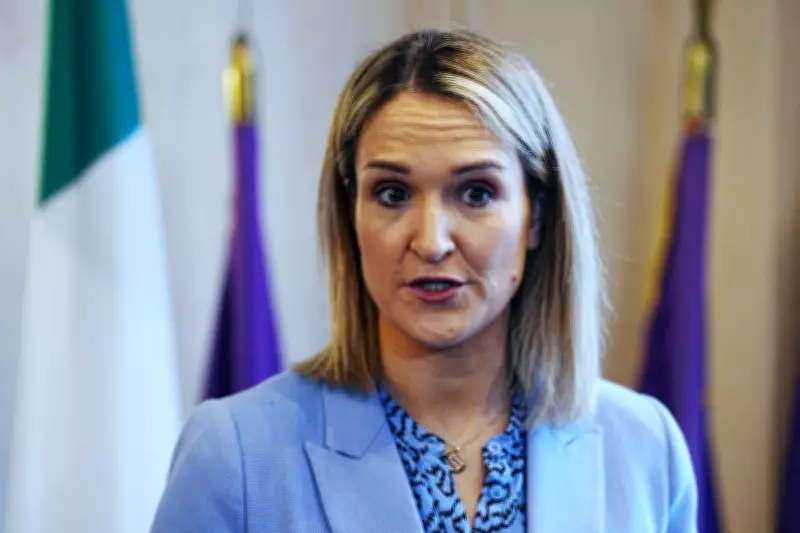
Irish peacekeepers serving with the United Nations Interim Force in Lebanon (Unifil) are confirmed to be "safe and accounted for" according to Ireland's Defence Minister Helen McEntee. This assurance comes amid escalating regional tensions following reports of missile exchanges between Hezbollah and Israel.
Minister Expresses Deep Concern Over Conflict Widening
Minister McEntee stated she is "deeply concerned" by the reports of Israeli military strikes on Lebanon and retaliatory rocket fire on Israel. In an official statement, she emphasized that "the widening of this conflict brings greater risk and suffering to the region."
The minister revealed she has been in regular contact with the Defence Forces Chief of Staff, who has confirmed the safety of all Irish personnel deployed with Unifil in Lebanon. This deployment represents Ireland's ongoing commitment to United Nations peacekeeping operations in volatile regions.

Flight Cancellations and Travel Disruptions
Meanwhile, significant travel disruptions are affecting Irish citizens in the Middle East. All flights between Dublin Airport and Middle Eastern destinations have been cancelled, with Dublin Airport warning that further disruption over coming days is "possible" given the "no certainty" around Middle Eastern airspace.
Minister McEntee, who also serves as Foreign Affairs Minister, provided specific guidance for stranded travelers. She noted that her officials understand "a limited number" of commercial flights are scheduled to depart Abu Dhabi Zayed Airport in the United Arab Emirates on Monday afternoon.
"Passengers stranded in transit are being prioritised and being contacted directly by airlines," McEntee explained. However, she issued a clear warning: "Unless you have been advised by your airline that they have booked you on a flight, Irish citizens should continue to shelter in place."
Government Response to Evacuation Challenges
Minister of State for European Affairs Peter Thomas Byrne provided additional context about the scale of the challenge, revealing that hundreds of Irish citizens are affected by cancelled flight connections. He noted there are approximately 15,000 Irish people living in the UAE alone.
When questioned about evacuation plans during an appearance on RTE's Morning Ireland, Byrne explained the government's cautious approach. "We're looking at all possible eventualities but the simple reality is we can't recommend those land routes because of the sheer numbers of Irish people that are there," he stated.
Byrne elaborated on the risks: "If one or two people do them and it may well be you'll see people on the radio or television who've succeeded in doing this today. The reality is we can't recommend this over 10,000 people because we simply don't know what the consequences could be. It just does not appear to be safe."
The minister raised practical concerns about alternative evacuation routes: "You may get to another country, but the question would be, would you be able to fly out of that country?" He confirmed the government is examining options with EU allies for those wishing to leave the region.
Political Context and Government Priorities
The current escalation follows the killing of Iran's Supreme Leader Ayatollah Ali Khamenei in a US-Israeli attack on Saturday morning, which has dramatically increased regional tensions. When asked why the Irish government had not condemned the US and Israeli strikes on Iran, Minister Byrne emphasized his immediate priorities.
"There'll be time for all of that subsequently," Byrne responded. "The fact of the matter is there is conflict developing. My priority was Irish citizens who were abroad."
This statement reflects the Irish government's current focus on citizen safety rather than political positioning as the Middle East situation continues to evolve unpredictably.